
Borehole Inspection Transducer Performance Unveiled: A Comprehensive Multi-Factor Analysis! [Dayu]
The factors affecting borehole inspection transducers can be categorized as follows, based on the parameters provided by the user and the search results:
1. Mud Parameters
1. Mud Density
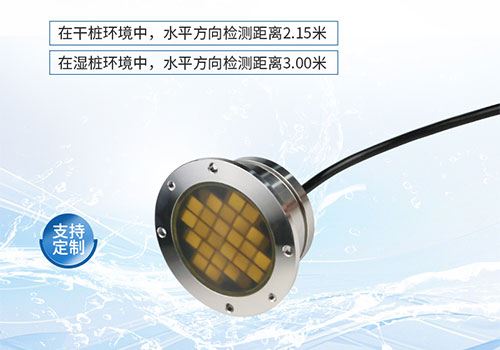
? Density range 1.1~1.3 g/cm? directly affects the penetration capability of ultrasonic signals. At a density of 1.3 (e.g., bentonite mud), sound wave attenuation is severe, and the detection distance is only 5 meters; whereas in clean water (density 1.0), the detection distance can reach 200 meters.
? High-density mud (e.g., 1.3) due to increased solid particles or viscosity significantly weakens signal strength, and may even prevent reception of reflected signals.
2. Solid Particles and Bubbles
? Mud containing 1% fine particles (such as powdered solids) can completely block signal transmission, rendering the transducer unable to receive valid data.
? Bubbles generated during hole cleaning may cause complete signal loss at a density of 1.1, with more noticeable interference especially when mud viscosity is low.
2. Transducer Performance and Design
1. Detection Mode and Circuit Design
? The 1-transmit-1-receive mode can reduce the blind zone to 0.2 meters by optimizing the isolation between the transmitting and receiving circuits (with TGC technology for dynamic signal gain adjustment).
? Poor circuit design (e.g., without time gain compensation) can expand the blind zone to 0.4~0.8 meters, affecting the detection accuracy of shallow borehole walls.
2. Equipment Adaptability
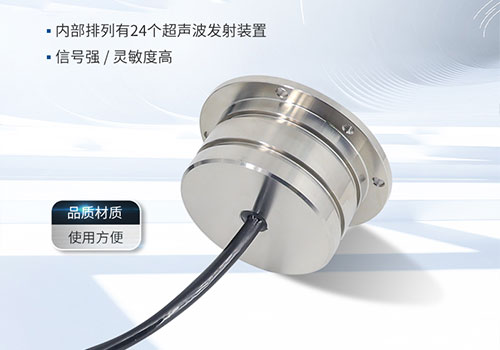
? For instance, the DYW-88K-200B model performs excellently in clean water, but in complex mud it is limited by particles and density; parameters should be adjusted or lower-frequency transducers selected to enhance penetration.
3. Environmental and Operational Factors
1. Soil Properties
? Soil density, porosity, etc., affect sound wave propagation speed; denser soil layers have faster sound velocity, requiring calibration of borehole diameter calculations via acoustic travel time differences.
? Sediment thickness detection should use the "dual-control method" with multiple measurements to avoid misjudgment due to incorrect selection of curve inflection points.
2. Operational Standards
? The transducer must maintain sealing and stability under high-pressure environments (e.g., 200 meters water depth) to prevent water leakage or deformation.
? Insufficient operator proficiency may lead to data errors; regular training and standardized procedures are necessary.
4. Solutions and Technical Optimization
? Mud Conditioning: Control mud density ≤1.2, reduce solid particle content (e.g., use polymer mud to lower sand content), and avoid residual bubbles after hole cleaning.
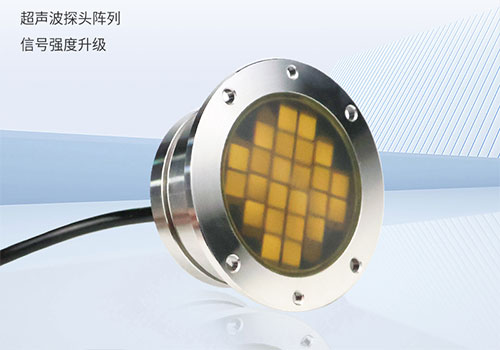
? Equipment Selection: For complex formations, choose lower-frequency transducers (stronger penetration) or dual-mode probes (balancing shallow blind zone and deep detection).
? Data Calibration: Combine sound velocity calibration and TGC technology to dynamically compensate for signal attenuation, improving accuracy in borehole diameter and verticality calculations.
Therefore, the performance of borehole inspection transducers is constrained by multiple factors including mud environment (density, particles, bubbles), equipment design (frequency, circuits), operational standards, and soil properties. In practical applications, mud parameters, equipment configuration, and detection procedures should be optimized based on specific working conditions to ensure data reliability.