
How Ultrasonic Level Meters Precisely "Take the Pulse" of Liquid Levels in Sewage Wells [Dayu Electronics]
Application of Ultrasonic Level Meters in Assessing Liquid Levels in Sewage Wells
Addressing the practical needs for liquid level measurement in sewage wells in Tianjin Binhai New Area, we explore the applicability of ultrasonic level meters in such environments. These sewage wells have depths not exceeding 5 meters, with wellhead diameters ranging from 600 mm to 800 mm, and are planned to use solar energy as the power supply.
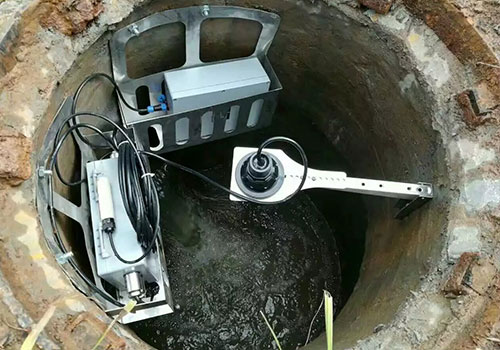
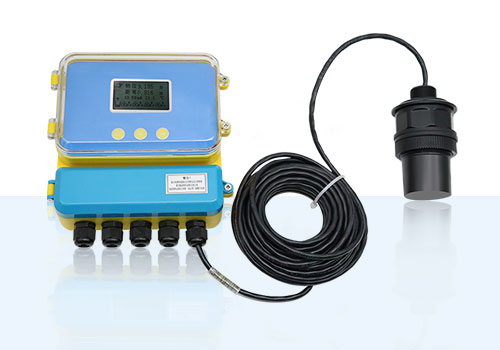
After an in-depth investigation of the on-site working environment, the technical personnel decided to adopt a split-type ultrasonic level meter to meet the measurement needs of the area. However, during implementation, special attention should be paid to the following points to ensure measurement accuracy and equipment reliability:
1. Range Adjustment
Although the maximum measurement range on site is set at 5 meters, considering the relatively high signal strength of the ultrasonic level meter probe in confined spaces, the range should be appropriately reduced to avoid measurement errors caused by secondary echo phenomena.
2. Cable Protection
If there are other attachments on the sewage well wall, ensure that the cable maintains a certain distance from these obstacles. Cables that swing in water for a long time may rub against obstacles, causing damage to the cable. Therefore, during installation, the cable routing should be reasonably planned to reduce potential risks.
3. Water Flow Stability
Unstable water flow may cause fluctuations in measurement data. Therefore, when installing an ultrasonic level meter, priority should be given to sewage wells with stable water flow conditions. If the water flow inside the well is unstable, additional measures should be taken to stabilize the flow or adjust the measurement strategy.
4. Probe Installation Position
When installing the probe, try to keep it as far away from any obstacles inside the well as possible to avoid direct contact between the probe and obstacles. This helps ensure the accuracy of measurement data and extend the service life of the probe.
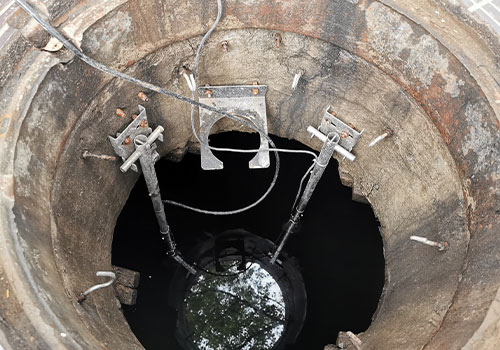
Ultrasonic level meters have broad application prospects in assessing liquid levels in sewage wells. However, during implementation, special attention must be paid to key factors such as range adjustment, cable protection, water flow stability, and probe installation position.