
Unveiling the Guardian of Rail Safety: Precise Analysis of Dayu Flaw Detection Transducer Installation Positions
Professional Analysis of Rail Flaw Detection Transducer Installation Positions
In railway transportation systems, the deployment location of rail flaw detection transducers plays a vital role in ensuring operational safety. To deeply understand the selection of installation positions, we must first clarify the importance of detecting internal cracks in rails.
Rails, as the cornerstone of track structure, not only bear the weight of trains but also guide their direction of travel. Once cracks or fractures occur in rails, they pose a serious threat to operational safety, potentially leading to catastrophic accidents such as train derailment or overturning. Therefore, timely detection and repair of rail cracks is key to ensuring smooth and safe railway transportation.
Rails are mainly divided into two types: long rails and switch rails. The detection range for long rails is extensive, typically covering distances of one to two kilometers, and it is recommended to use 33 kHz (or 25 kHz in some cases) rail flaw detection transducers. The detection range for switch rails, however, is relatively smaller, generally limited to within 100 meters.
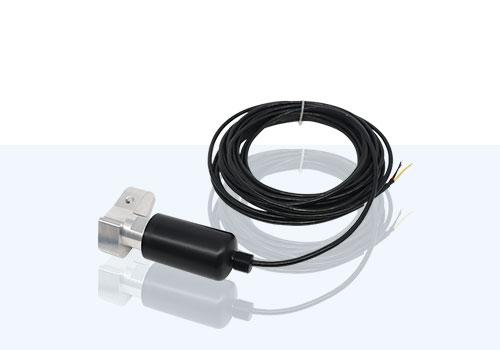
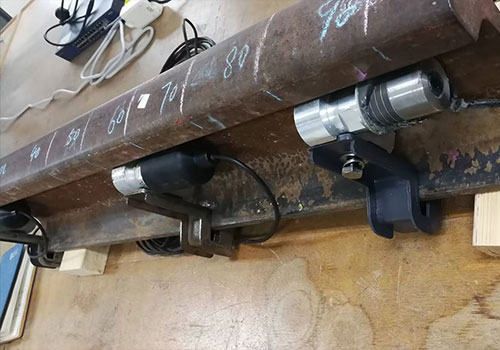
Regarding the installation position of rail flaw detection transducers, through practice and accumulated experience, we have found that in most cases, the transducer is fixed at the web of the rail, while in a few cases, it is installed at the base of the rail. To ensure a tight connection between the transducer and the rail web, tin foil is typically used for coupling, and it is recommended to use silicone rubber with a thickness of 1 to 3 mm as the coupling medium to improve detection efficiency and accuracy.
In practical operations, the distance between two rail flaw detection transducers on long rails is usually set to 800 to 1000 meters, and the transmitting voltage is recommended to be adjusted to 2000 to 2200 volts to ensure signal stability and strength. On switch rails, due to the shorter detection range, the transmitting voltage is significantly reduced, requiring only about 100 volts to meet detection needs.
Therefore, the installation position of rail flaw detection transducers should be comprehensively considered based on rail type, detection range, and detection requirements to ensure the safety and smoothness of railway transportation. Through scientific and reasonable installation and configuration, we can more effectively detect rail cracks, take timely measures for repair, and safeguard railway transportation safety.