
Ultrasonic Insertion Flowmeter Installation Guide at Fuzhou Waterworks [Dayu Electronics]
An insertion ultrasonic flowmeter is a flow measurement device that measures fluid velocity by inserting a probe (sensor) into the pipe. This type of flowmeter is particularly suitable for large pipelines or situations where traditional flowmeter installation would require downtime. Below are some features and advantages of insertion ultrasonic flowmeters:
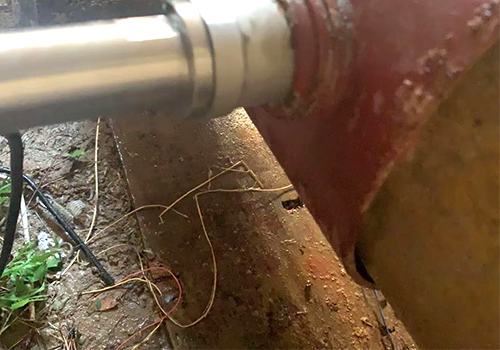
Features:
Non-invasive: Insertion ultrasonic flowmeters do not require cutting into the pipeline; only a small hole needs to be drilled to insert the probe, so installation does not affect normal pipeline operation.
Easy installation: Compared with traditional flowmeters, installation of insertion ultrasonic flowmeters is simpler and faster.
No flow obstruction: Since the probe is inserted directly into the pipe, it does not significantly impede fluid flow.
Wide turndown ratio: Ultrasonic flowmeters can measure a wide range of flow velocities, from low-speed to high-speed fluids, with accuracy.
High accuracy: Ultrasonic flowmeters typically provide high measurement accuracy, suitable for applications requiring precise measurements.
Multi-parameter measurement: In addition to velocity, some insertion ultrasonic flowmeters can measure other fluid parameters, such as flow rate and temperature.
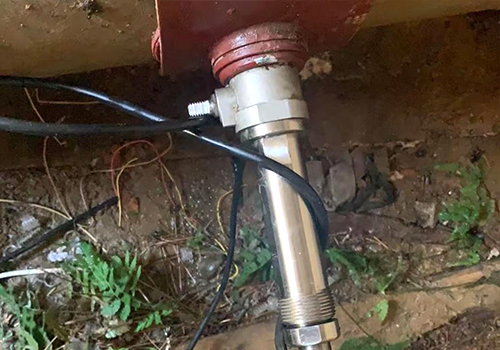
Advantages:
Suitable for large pipelines: Insertion ultrasonic flowmeters are particularly suited for pipes with large diameters, where traditional flowmeters like electromagnetic types may be impractical due to size and cost.
Easy maintenance: Since the probe can be maintained and calibrated from outside the pipe, maintenance is relatively straightforward.
Wide adaptability: Ultrasonic flowmeters can measure various clean and dirty fluids, including corrosive, viscous, or fluids containing suspended solids.
Long-term stability: Ultrasonic flowmeters exhibit good measurement stability, with minimal accuracy degradation over long-term operation.
Application fields:
Wastewater treatment plants, industrial process control, oil and gas industry, chemical industry, drinking water supply systems.
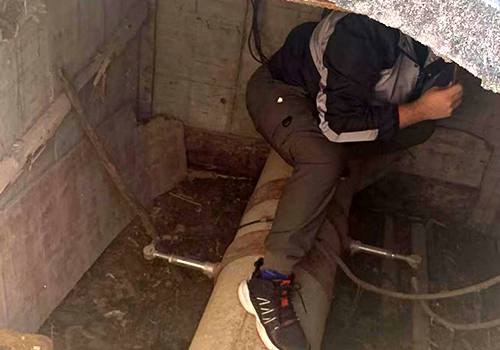
Installation steps:
Determine installation location: Choose a straight pipe section to minimize the impact of fluid turbulence on measurement accuracy.
Drill a hole: Make a hole in the pipe that matches the probe size.
Insert the probe: Insert the probe into the pipe and ensure it is parallel to the inner wall.
Secure and seal: Use specialized clamps and sealing materials to fix the probe and ensure no leakage.
Connect and calibrate: Connect the probe to the flowmeter main unit and perform calibration.
Insertion ultrasonic flowmeters are widely used in industrial and municipal applications due to their unique advantages and broad applicability.
Site description: Xia'nan Waterworks. Due to the aging pipeline infrastructure, the municipal water company and water resources bureau required flow data to ensure the safety of residential water supply, meet the water demand of residents, and regulate water resources. After on-site surveys, an ultrasonic insertion flowmeter was installed to meter water volume and upload stable data for flow regulation.
After the field survey, the installation was confirmed to fully satisfy the customer's requirements.