
The Remarkable Applications of Ultrasonic Flow Meters in Urban Waterways and Sewage Pipe Networks [Dayu Electronics]
Ultrasonic Doppler flow meters are routinely used for water level, flow velocity, and flow rate monitoring in urban waterways, main canals of agricultural irrigation districts, urban sewage pipe networks, and urban stormwater pipe networks. An ultrasonic flow meter is a device used to measure the flow velocity of fluids in pipes or conduits, utilizing ultrasonic technology. It is mainly composed of transducers and a converter, and comes in various types, such as the Doppler method, transit-time difference method, and beam deflection method.
Features
Non-contact measurement: installation is possible without stopping flow or cutting the pipe—simply mount the transducers externally on the existing pipe.
No flow obstruction: causes no additional pressure loss.
Wide applicability: suitable for large circular and rectangular pipes, with no practical limit on pipe diameter.
High accuracy: measurement accuracy can reach within 1%.
Non-invasive: most ultrasonic flow meters are non-invasive, meaning they do not come into contact with the fluid being measured, making them suitable for corrosive, hazardous, or high-purity fluids.
Bidirectional flow measurement: able to measure fluid flow in both directions.
Limitations
Fluid requirements: liquids containing large solid particles or bubbles may cause measurement failures.
Installation requirements: a straight pipe section before and after the meter is required to ensure accurate readings.
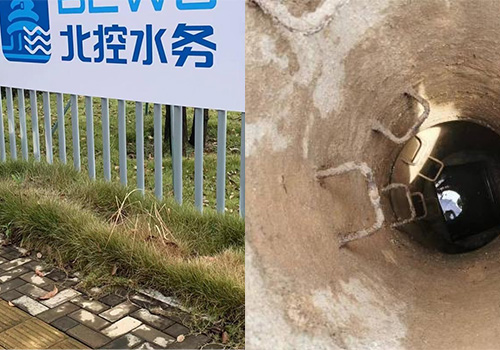
Bottom flow velocity in sewers can also be measured using ultrasonic flow meters. Due to their non-invasive nature, high accuracy, and adaptability to various fluid types, ultrasonic flow meters are well-suited for flow velocity measurement in environments such as sewers.
In practical applications, ultrasonic flow meters can be installed externally on sewer pipes without direct contact with the fluid, thus avoiding any disturbance to the fluid inside the sewer. They can adapt to the various complex conditions present in sewers, such as suspended solids, bubbles, and other impurities in wastewater. By measuring the time difference of ultrasonic signals propagating in the fluid, the flow velocity can be accurately calculated.
The importance of sewer flow velocity measurement lies in its ability to provide essential information for the design, operation, and maintenance of wastewater treatment and drainage systems. Here are some specific applications of ultrasonic flow meters in sewer flow velocity measurement:
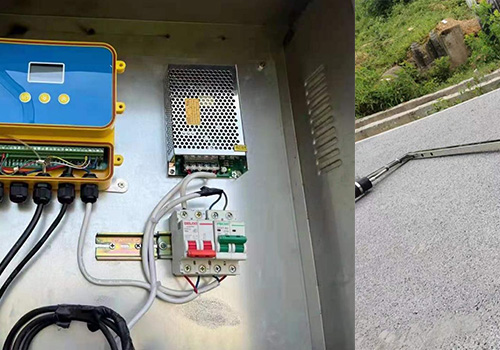
Flow monitoring: understanding flow variations in the sewer system helps optimize wastewater treatment processes.
Blockage prevention: by monitoring flow velocity changes, potential blockage issues can be detected in a timely manner.
Design evaluation: during the design phase of a sewer system, flow velocity data are crucial for determining pipe size and layout.
Environmental impact assessment: monitoring the environmental impact of sewer discharges.
Since the sewer environment can be harsh, when selecting an ultrasonic flow meter, it is necessary to consider the device's durability and ability to withstand harsh environments. For example, ensure the flow meter has a sufficient protection rating to resist corrosive substances in wastewater. Additionally, during installation, the sensor must be positioned correctly to obtain accurate measurement results.
Environmental note: below, we will analyze a special case of river flow monitoring.
This site had a unique environment where installation personnel working in the manhole was inconvenient, so a technician was dispatched to provide on-site guidance for bracket installation and related commissioning.