
Dayu Ultrasonic Sensors Enable Remote Level Monitoring and Automated Control
Ultrasonic sensors are widely used in various fields due to their high precision, non-contact measurement, and strong adaptability. Below are two specific examples of ultrasonic sensor applications or solutions to customer on-site issues:
Example 1: Application of Ultrasonic Sensors in Industrial Automation
Operating Conditions:
On the automated production line of an automobile manufacturing plant, ultrasonic sensors are used to monitor and control the position of objects in real time. The sensors are installed at key positions on the production line. By transmitting ultrasonic waves and receiving the reflected sound wave signals, they accurately calculate the distance and position information between objects.
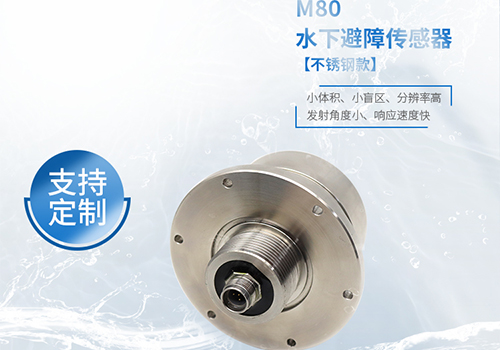
Solving Customer On-site Issues:
In the automobile manufacturing process, precise assembly and positioning of various components are essential. Ultrasonic sensors can monitor the position of objects in real time. When an object deviates from its predetermined position, the sensor immediately triggers an alarm and notifies the control system to make adjustments, thereby preventing production errors and product quality issues.
In addition, ultrasonic sensors enable intelligent management of automated production lines. By monitoring the position and movement speed of objects in real time, the sensors can precisely control the pace and rhythm of the production line, improving production efficiency.
Example 2: Application of Ultrasonic Sensors in Liquid Level Measurement
Operating Conditions:
In the storage tank area of a chemical enterprise, ultrasonic sensors are used to measure the liquid level height of various chemical liquids. The sensors are installed at the top or side of the tanks. By transmitting ultrasonic waves and receiving the sound wave signals reflected from the liquid surface, they accurately calculate the liquid level height.
Solving Customer On-site Issues:
The storage tank area of chemical enterprises typically holds large quantities of chemical liquids, where the liquid level height is critical to production safety and product quality. Ultrasonic sensors can monitor the liquid level in real time. When the level exceeds or falls below the predetermined values, the sensor immediately triggers an alarm and notifies operators to take appropriate measures, thereby preventing safety incidents such as liquid leakage or overflow.
Furthermore, ultrasonic sensors enable remote monitoring and automated control of liquid levels. By connecting to data interfaces and control systems, operators can remotely view liquid level data and make automated adjustments and controls as needed, improving production efficiency and safety.
These two examples fully demonstrate the wide application and important role of ultrasonic sensors in fields such as industrial automation and liquid level measurement. Through precise measurement and real-time monitoring, ultrasonic sensors can help enterprises improve production efficiency, ensure product quality, and reduce safety risks.