
Ultrasonic Distance Sensors Provide Precise Distance and Position Information for Robots
Ultrasonic distance sensors are devices that use the principle of ultrasonic echo ranging to detect the distance between the sensor and a target object through precise time-of-flight measurement technology. Below is a detailed introduction to the product features, usage methods, and application scenarios of ultrasonic distance sensors, including a specific application example featuring Dayu Electronic's ultrasonic distance sensors.
I. Product Features of Ultrasonic Distance Sensors
Non-contact measurement: Ultrasonic distance sensors do not require direct contact with the measured object, avoiding the wear and errors associated with traditional contact-based measurement methods.
High precision: Advanced time-of-flight measurement technology and algorithms ensure accurate measurement results.
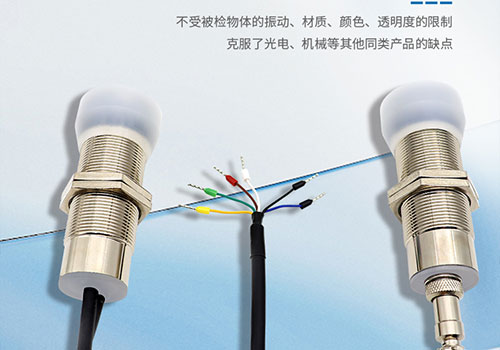
Strong adaptability: Whether facing transparent or colored objects, metals or non-metals, solids, liquids, or even powdery substances, these sensors can easily detect them. Moreover, their detection performance remains almost unaffected even in harsh environments with dense smoke, heavy dust, or pouring rain.
Waterproof and corrosion-resistant: Made from special materials, they offer excellent waterproof and corrosion-resistant properties, suitable for various harsh environments.
Easy installation: The sensors are compact, lightweight, and easy to install and debug.
II. How to Use Ultrasonic Distance Sensors
Connect the power supply: Connect the ultrasonic distance sensor to a stable power source to ensure normal operation.
Set parameters: Set the sensor's measurement range, measurement accuracy, and other parameters according to actual requirements.
Start measurement: Turn on the sensor's power switch to start the measurement process. The sensor will emit ultrasonic pulses and receive the reflected acoustic signals.
Read data: After measurement, the sensor will display the results. Users can read the data directly or transmit it via data interfaces to devices such as computers for further processing and analysis.
III. Application Scenarios of Dayu Electronic Ultrasonic Distance Sensors
Dayu Electronic ultrasonic distance sensors are widely used in various industrial, scientific, and civil fields, including but not limited to:
Industrial automation: Used for object positioning, distance measurement, and obstacle avoidance on automated production lines.
Level measurement: Measures liquid levels in tanks, pools, and other containers for level control and monitoring.
Robot navigation: Provides precise distance and position information for robots, enabling autonomous navigation and obstacle avoidance.
Environmental monitoring: Used in environmental monitoring to measure particulate matter concentration, wind speed, and other parameters in the atmosphere.
Intelligent transportation: Used in intelligent transportation systems for vehicle distance measurement, speed detection, and obstacle avoidance.
IV. Application Example: Dayu Electronic Ultrasonic Distance Sensors in Industrial Automation
On the automated production line of an automobile manufacturing plant, Dayu Electronic ultrasonic distance sensors are used to monitor and control the movement trajectory of robotic arms. The sensor is installed at the end of the robotic arm to monitor the distance between the arm and the target object in real time. When the robotic arm approaches the target, the sensor triggers a corresponding control signal, causing the arm to decelerate or stop to avoid collision. This not only improves production efficiency but also reduces equipment damage and maintenance costs caused by collisions.
From the above introduction, it can be seen that ultrasonic distance sensors have many advantages and a wide range of applications. Dayu Electronic ultrasonic distance sensors play an important role in industrial, scientific, and civil fields due to their excellent performance and reliability.
Ultrasonic sensors, characterized by high precision, non-contact measurement, and strong adaptability, are widely used in various fields. Below are two specific examples of ultrasonic sensor usage scenarios or solving customer site problems:
Example 1: Application of Ultrasonic Sensors in Industrial Automation
Usage Scenario:
On an automated production line in an automobile manufacturing plant, ultrasonic sensors are used to monitor and control the position of objects in real time. The sensors are installed at key positions on the production line. They emit ultrasonic waves and receive the reflected signals to accurately calculate the distance and position information between objects.
Solving Customer Site Problems:
During the automobile manufacturing process, precise assembly and positioning of various components must be ensured. Ultrasonic sensors can monitor the position of objects in real time. When an object deviates from its predetermined position, the sensor immediately triggers an alarm and notifies the control system to make adjustments, thereby avoiding production errors and product quality issues.
In addition, ultrasonic sensors enable intelligent management of automated production lines. By monitoring object positions and movement speeds in real time, the sensors can precisely control the pace and rhythm of the production line, improving production efficiency.
Example 2: Ultrasonic Sensors in Level Measurement
Usage Scenario:
In the tank farm of a chemical enterprise, ultrasonic sensors are used to measure the liquid level height of various chemicals. The sensors are installed at the top or side of the tanks. They emit ultrasonic waves and receive the reflected signals from the liquid surface to accurately calculate the liquid level height.
Solving Customer Site Problems:
The tank farm of a chemical enterprise typically stores large quantities of chemical liquids whose levels are critical to production safety and product quality. Ultrasonic sensors can monitor the liquid level in real time. When the level exceeds or falls below a predetermined value, the sensor immediately triggers an alarm and notifies operators to take appropriate measures, thereby preventing safety incidents such as leaks or overflows.
Furthermore, ultrasonic sensors enable remote monitoring and automated control of liquid levels. By connecting data interfaces and control systems, operators can remotely view level data and make automated adjustments and control as needed, improving production efficiency and safety.
These two examples fully demonstrate the wide application and important role of ultrasonic sensors in fields such as industrial automation and level measurement. Through precise measurement and real-time monitoring, ultrasonic sensors help enterprises improve production efficiency, ensure product quality, and reduce safety risks.