
The Secret Weapon for Precisely Detecting Liquid Flow Noise Without Destroying Pipes! [Dayu Electronics]
A hydrophone, as a device specifically designed for underwater acoustic detection, has the ability to efficiently convert acoustic signals into electrical signals, thereby enabling the monitoring and recording of underwater sound. Among the many hydrophones, the M45 magnetic hydrophone stands out for its excellent performance, especially in environments with significant temperature and pressure variations, where it maintains high precision and sensitivity, making it an ideal choice for monitoring liquid flow noise and fluctuation noise.
Product Features
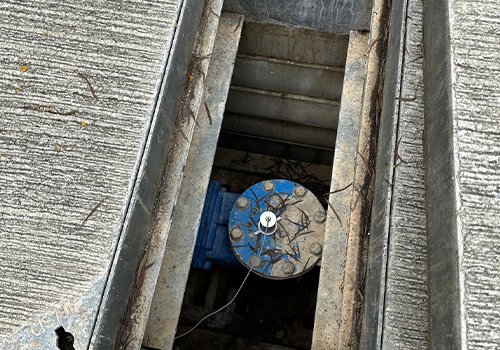
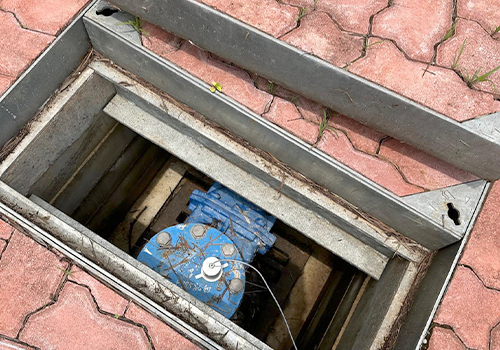
Clamp-mounted installation: The innovative clamp design requires no pipe destruction, making installation simple and fast, greatly reducing construction difficulty and time costs.
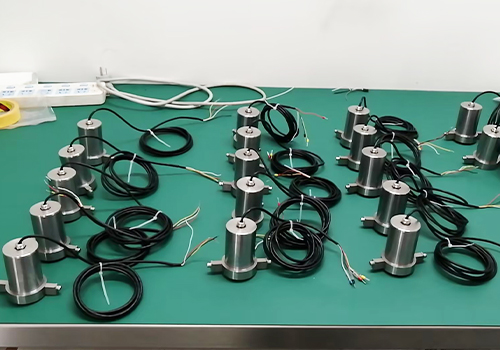
Multiple output types: To meet the needs of different users, the M45 magnetic hydrophone offers two output types: analog output and RS485 communication, flexibly adapting to various monitoring systems and data transmission methods.
High precision, high sensitivity: Even in complex and changing underwater environments, the M45 magnetic hydrophone can accurately capture acoustic signals, ensuring the accuracy and reliability of monitoring data.
Wide applicability: Equipped with two types of preamplifiers, the M45 magnetic hydrophone has broad application prospects in the field of liquid flow noise and fluctuation noise monitoring, including but not limited to underwater pipeline leak detection, marine environment monitoring, etc.
Customer Q&A
Q: What is the approximate monitoring range (measurement span) of the hydrophone in meters?
A: The monitoring range of the hydrophone is affected by many factors, including pipe pressure, leak size, and on-site conditions. Therefore, the specific monitoring range needs to be determined through testing based on actual on-site conditions.
Q: Is it suitable for installation on main pipes and straight pipes?
A: Yes, magnetic hydrophones like the M45 can be attached directly to the pipe wall, whether it is a main pipe or a straight pipe.
Q: Should a coupling agent be used between the probe and the outer wall of the PVC pipe? What kind of coupling agent should be selected?
A: Using a coupling agent can enhance the signal transmission effect between the probe and the outer wall of the pipe, thereby improving the accuracy of monitoring data. It is recommended to use petroleum jelly as the coupling agent, as it has good lubricity and adhesion, effectively improving the transmission efficiency of acoustic signals.
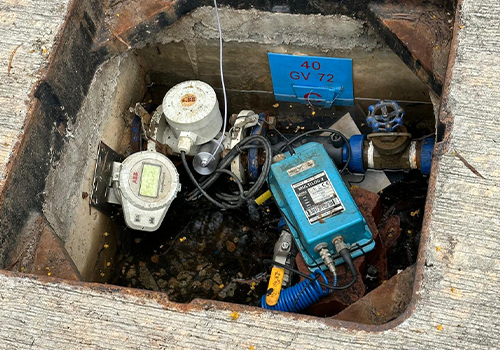
M45 magnetic hydrophone has demonstrated strong competitiveness and practicality in the field of underwater acoustic detection with its unique advantages and broad application prospects. Whether in terms of installation convenience, output type diversity, or monitoring accuracy and sensitivity, it provides users with excellent choices and experience.