
Revealed! Unexpected Applications of Ultrasonic Open Channel Flow Meters
Ultrasonic Open Channel Flow Meter: Unlocking New Possibilities in Underground Pipe Network Flow Monitoring
When discussing flow monitoring technology, the ultrasonic open channel flow meter is often regarded as a dedicated measurement tool for channel or outlet flow. However, have you ever considered that this device is equally capable of handling flow monitoring tasks for underground pipe networks? Today, let us unveil this mystery together.
When ultrasonic open channel flow meters are mentioned, scenes of them performing impressively in wide channels or at outlets may immediately come to mind. In reality, however, they are also fully capable of monitoring underground pipe network flow-a pleasant surprise for many.
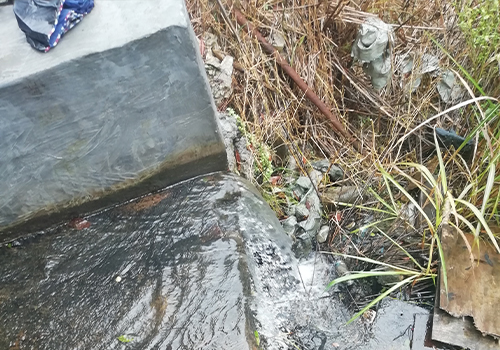
Of course, to ensure measurement accuracy and reliability, a series of technical conditions must be considered. First, regarding pipe inner diameter, pipes ranging from DN100 to DN1000 are ideal for the ultrasonic open channel flow meter. For underground pipes larger than DN1000, the excessive size may render this measurement method unsuitable. However, for surface-level pipes or outlets located above ground, the ultrasonic open channel flow meter can still perform exceptionally well.
In terms of pipe material, whether concrete, cast iron, PE, or PR pipes, as long as the pipe wall is smooth, the ultrasonic open channel flow meter can handle them with ease. Meanwhile, to ensure measurement accuracy, attention must also be paid to liquid level requirements. The minimum liquid level should be maintained above 1 cm, while the maximum level should reach the full-pipe condition. Additionally, the liquid temperature must remain below 50°C, and the flow velocity should not fall below 0.2 m/s.
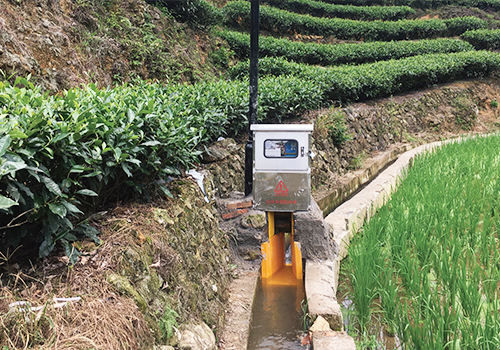
During the measurement process, it is also essential to ensure that downstream water does not impede the discharge of water from the upstream pipe, as this could affect measurement results. To achieve 24-hour continuous measurement, we recommend using an external power supply with a DC voltage of 24V. If intermittent measurement is sufficient-for instance, one reading every 30 minutes-lithium battery power offers a more convenient alternative.
In terms of output signals, the ultrasonic open channel flow meter supports multiple options, including 485 interface, Modbus protocol, or 4-20mA output. Additionally, an external RTU can be added to transmit data to a back-end server via mobile data, enabling remote monitoring and data management.
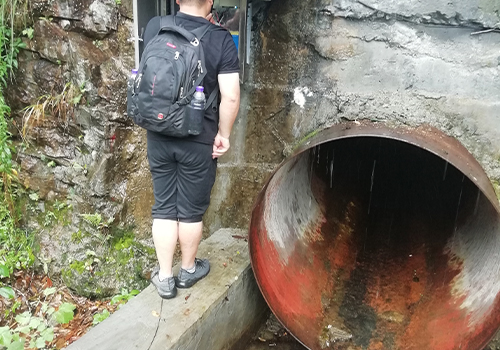
In practical applications, a rectangular channel must be constructed at the pipe outlet, and the flow rate discharged from the pipe is calculated by measuring the water level in this channel. Of course, this measurement method has certain limitations: the maximum water level must not exceed the height of the weir, as any overflow beyond that point cannot be accurately measured.
In summary, the ultrasonic open channel flow meter holds broad application prospects in the field of underground pipe network flow monitoring. As long as certain technical conditions are met, it can provide us with accurate and reliable flow data, helping us better understand the operational status of underground pipe networks.