
Measure Flow Velocity Without Digging? The Incredible Operation of Ultrasonic Doppler Flowmeters [Dayu Electronics]
The sewer ultrasonic Doppler flowmeter is an advanced instrument that uses the physical principle of Doppler frequency shift to measure water flow velocity. Its application fields are wide-ranging and are detailed as follows:
Application Fields
Urban underground pipe networks: Used to monitor and measure water flow velocity and flow rate in urban underground drainage pipe networks, helping city managers understand the operational status of the drainage system and promptly identify and resolve issues.
Urban underground sewer drainage: In underground sewer drainage systems, ultrasonic Doppler flowmeters can accurately measure water flow, providing important data support for urban flood control and drainage.
Industrial enterprise drainage: Suitable for drainage monitoring in various industrial enterprises, ensuring that discharged wastewater meets environmental standards, while helping enterprises optimize drainage systems and improve water resource utilization efficiency.
Hospital wastewater: In hospital wastewater treatment, this flowmeter can accurately measure wastewater flow, providing scientific basis for hospital wastewater treatment and ensuring environmental safety.
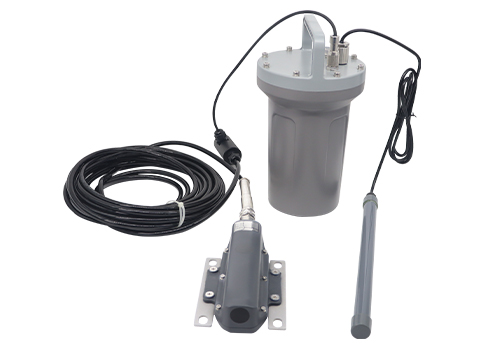
Mining and metallurgy: In the mining and metallurgy industry, ultrasonic Doppler flowmeters can be used to monitor mine pit drainage, smelting wastewater, etc., ensuring rational use of water resources and environmental protection during production.
Agricultural irrigation water: In the agricultural irrigation field, this flowmeter can be used to measure water flow velocity and flow rate in irrigation channels, helping farmers irrigate scientifically and improve crop yield and quality.
Aquaculture: In aquaculture, ultrasonic Doppler flowmeters can be used to monitor water flow conditions in aquaculture ponds or reservoirs, providing a suitable water environment for aquaculture.
Natural river detection: In natural water bodies such as rivers and lakes, this flowmeter can be used to monitor parameters such as water flow velocity and flow rate, providing important data for water resource management and protection.
Detailed Description
Working Principle:
The ultrasonic Doppler flowmeter utilizes the Doppler frequency shift principle, emitting ultrasonic waves and receiving their reflected waves to measure water flow velocity. When ultrasonic waves encounter solid particles or bubbles moving with the fluid, the frequency of the reflected waves changes, and this frequency change is proportional to the fluid velocity. By measuring the frequency change, the water flow velocity can be calculated, and thus the flow rate can be obtained.
Product Features:
High accuracy: Capable of precisely measuring water flow velocity and flow rate, meeting the needs of various application scenarios.
Easy installation and maintenance: No need to cut pipes or install flow-diverting devices; simple installation and low maintenance costs.
Wide applicability: Suitable for measuring both clean water and turbid water, solving the challenge of "non-full pipe measurement."
High reliability: Manufactured with advanced technology and high-quality materials, offering high stability and reliability.
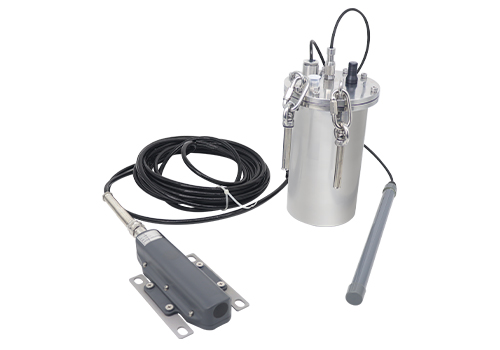
Installation and Use:
During installation, it should be placed parallel to the direction of water flow and elevated by a certain distance to prevent sediment from affecting measurements.
When selecting the installation location, try to choose a straight channel with a standard cross-section or the downstream section of a straight pipe section to ensure measurement accuracy.
Before use, the equipment should be calibrated and set up to ensure the accuracy of measurement results.
During use, the equipment's working status and data output should be regularly checked to promptly identify and resolve issues.
In summary, the sewer ultrasonic Doppler flowmeter has broad application prospects and important practical value in multiple fields such as urban underground pipe networks, industrial drainage, and agricultural irrigation.