
Core Parameters of Ultrasonic Therapy: Dynamic Variation of R1 Impedance in Dayu Electronics Therapy Transducers
Are you confused when selecting ultrasonic therapy transducers? Understanding the impedance range is particularly important, especially for therapy probes of different frequencies. Among these, the R1 impedance parameter is often overlooked, yet it affects power output and equipment matching. Today, we will analyze in detail the R1 impedance range of Dayu Electronics therapy transducers at different frequencies.
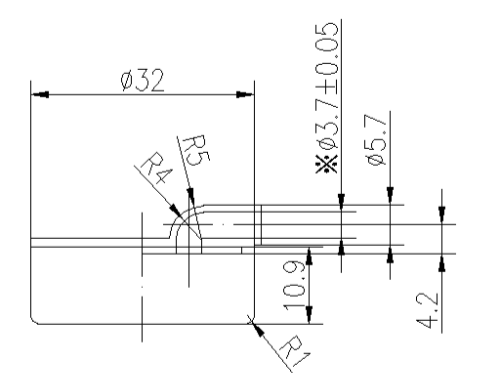
In the world of ultrasonic therapy transducers, stable output of transmission power relies on a fundamental formula: instantaneous transmission power = transmission voltage? ÷ transducer impedance. This means that the impedance value directly determines the efficiency of energy conversion. According to measured data provided by Dayu Electronics, transducers with different center frequencies exhibit distinct fluctuation ranges in R1 impedance.
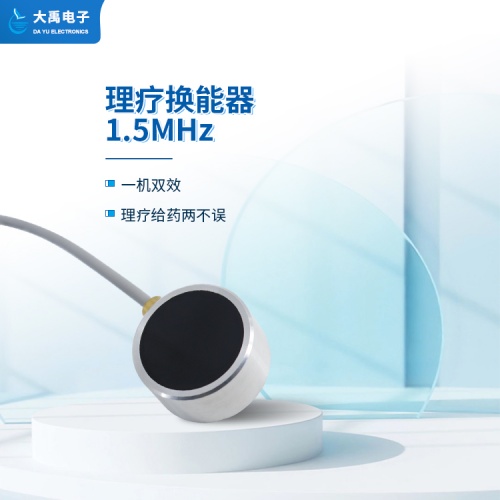
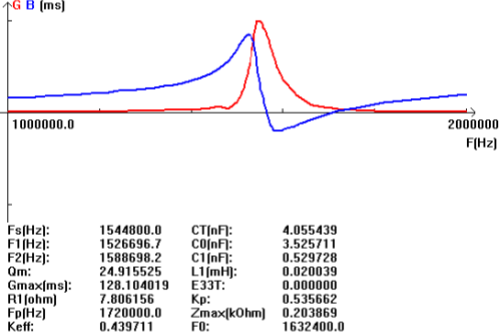
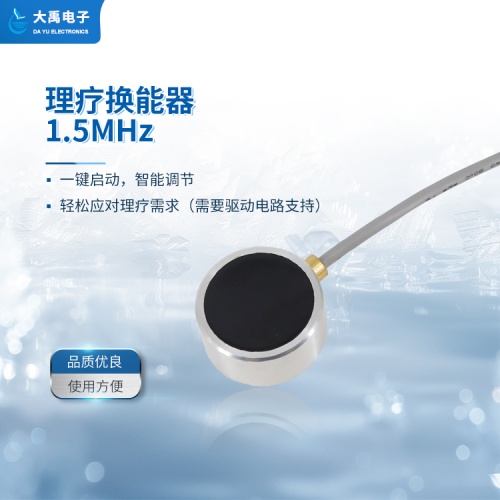
The R1 impedance ranges for Dayu Electronics therapy transducer probes (500kHz/1MHz/1.5MHz) are approximately as follows:
500kHz: between 100 and 250 Ω
1MHz: between 25 and 120 Ω
1.5MHz: between 12 and 50 Ω
Why does impedance vary with frequency? This stems from the piezoelectric ceramic characteristics of the transducer itself. The higher the frequency, the lower the equivalent resistance at resonance typically is. This also reminds us that in actual circuit design, the drive circuit must be matched according to the selected frequency to ensure precise and safe power output. For example, configuring a drive for a 1.5MHz probe requires full consideration of its low-impedance, high-current characteristics.
Another detail that cannot be ignored is the effect of temperature rise. Therapy probes typically operate close to the human body; during continuous operation, the internal temperature rises, causing the resonant frequency point to shift, which in turn leads to slight changes in impedance. Therefore, a stable impedance range is not only a factory specification but also crucial for long-term operational reliability. Dayu Electronics' products specify a wide operating temperature range of -40°C to +80°C, precisely to ensure performance consistency under such dynamic variations.
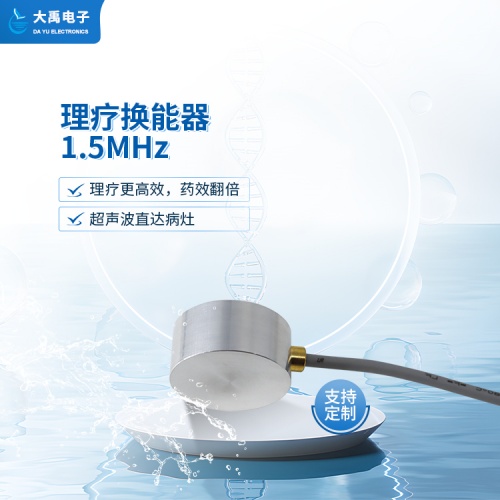
In summary, impedance is not a fixed value but a dynamic range closely related to frequency, temperature, and even the specific model. When selecting a therapy device transducer, clarifying the required operating frequency and understanding the reasonable impedance range within that framework is far more important than pursuing an absolute value. Only with precise matching can every bit of ultrasonic energy reach where it is needed, stably and efficiently.
Dayu Electronics is committed to providing deeply tailored ultrasonic solutions for various industries. We firmly believe that the vitality of ultrasonic technology lies in the boundless expansion of application scenarios.