
Dayu Electronics: How Polyurethane Adhesive Ensures M80 Sensor Stability at 600m Depth
In scenarios such as underwater obstacle avoidance and underwater equipment navigation, the sensor's encapsulation process directly determines its underwater tolerance and operational stability. The Dayu Electronics M80 underwater obstacle avoidance sensor, with its excellent pressure resistance and reliable detection performance, is widely used in various underwater operations. Recently, users have inquired about the type of encapsulation adhesive used. In response, we provide a professional explanation based on product design and application requirements, offering users precise reference.
The encapsulation adhesive for underwater obstacle avoidance sensors is one of the core elements ensuring the device's underwater protection performance. In complex underwater environments, sensors must withstand long-term water pressure and corrosion. The encapsulation adhesive must provide excellent sealing, water resistance, and bonding strength to effectively prevent water ingress, protect internal electronic components, and ensure long-term stable operation of the sensor underwater.
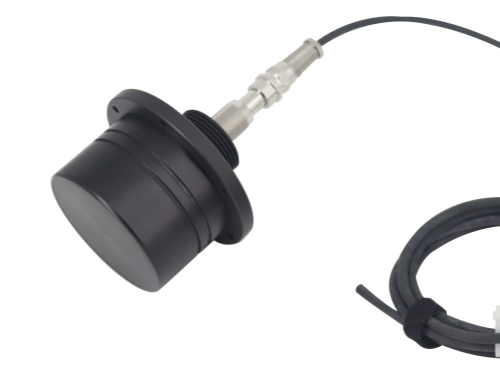
In response to the user's question "What is the encapsulation adhesive used in the M80 underwater obstacle avoidance sensor?", Dayu Electronics provides a clear answer: The M80 underwater obstacle avoidance sensor uses polyurethane adhesive as its encapsulation material. Polyurethane adhesive offers excellent underwater bonding performance, water pressure resistance, and chemical stability, making it perfectly suitable for complex underwater environments. It effectively resists water erosion while providing good electrical insulation to prevent internal circuit short circuits, ensuring detection accuracy and service life of the sensor.
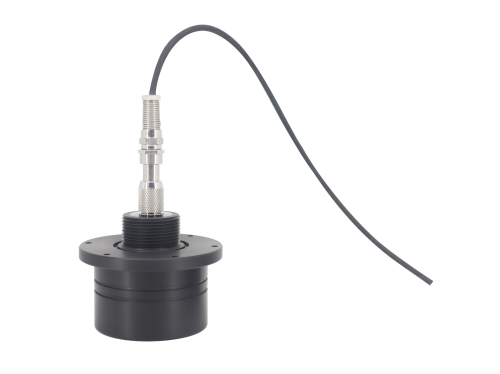
Why polyurethane adhesive? The M80 sensor is designed for underwater environments at depths of 600 meters or more. At such depths, the device must not only withstand hydrostatic pressures up to 60 atmospheres but also cope with seawater corrosion, temperature variations, and potential biofouling. The sensor's "heart"—the circuit board containing precision chips, capacitors, inductors, and connecting circuitry—is highly sensitive to such conditions. Any subtle moisture ingress, salt corrosion, or pressure-induced deformation can lead to signal drift, performance degradation, or even complete circuit failure.
Among various potting materials, polyurethane adhesive stands out for its unique combination of properties, making it the ideal choice for deep-water sensor encapsulation:
Mechanical properties of "rigidity and flexibility": After curing, polyurethane forms a tough yet elastic protective body. This characteristic provides solid support to prevent component displacement under high pressure while absorbing and dispersing external pressure and vibration stress through its own micro-deformations, effectively protecting precision solder joints and chips.
Comprehensive barrier protection: The dense colloid formed after curing perfectly fills every gap on the circuit board, creating a void-free physical barrier that achieves long-term sealing above IP68, fundamentally eliminating the risk of water ingress.
Stable environmental adaptability: High-quality electronic-grade polyurethane adhesive exhibits excellent hydrolysis resistance, temperature resistance, and aging resistance, enabling it to operate across a wide working temperature range, ensuring stable performance whether in freezing deep-sea conditions or areas with significant temperature variations.
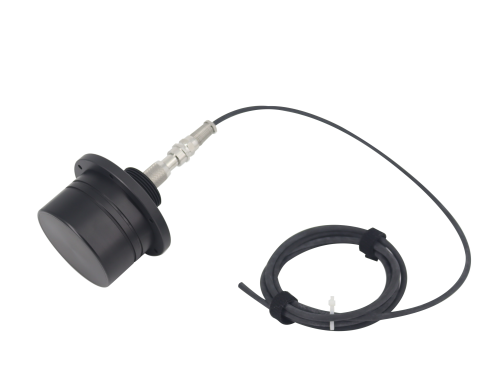
During the production of the M80 underwater obstacle avoidance sensor, Dayu Electronics strictly controls the encapsulation process, selects high-quality polyurethane adhesive, and employs precise encapsulation procedures to ensure the sensor meets the 600-meter pressure resistance standard, making it suitable for various underwater obstacle avoidance scenarios. We always prioritize user needs and place product reliability at the forefront, from core material selection to production process control, ensuring comprehensive product performance. Should users have any related questions during use, they can contact the Dayu Electronics technical team for professional technical support to facilitate efficient underwater operations.