
Dayu Electronics: How to Ensure Bridge Pile Safety? The M80 Single-Beam Sensor Offers a More Reliable Approach
Every flood season, swift currents under bridges can cause localized scour around pier foundations to develop unnoticed. The water surface may appear calm, but scour holes can already be forming beneath—if left unaddressed, they pose a direct threat to bridge structural integrity. Therefore, real-time monitoring and risk prediction of pile scour have become critical in bridge maintenance.
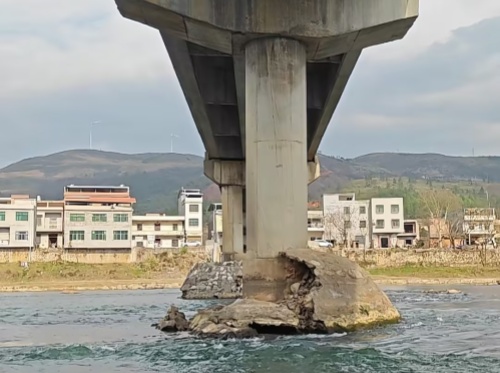
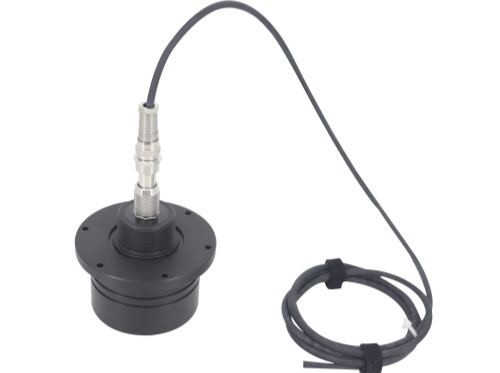
Among various monitoring methods, the Dayu Electronics M80 single-beam underwater depth sensor stands out as a solution that better fits real-world conditions. Designed specifically for underwater distance measurement and mudline change monitoring, it reliably delivers real-time riverbed data around piles, providing a solid basis for safety assessments.
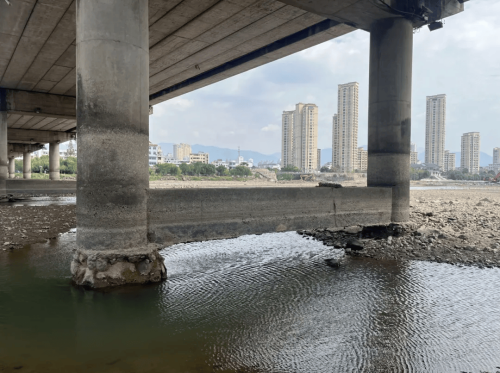
Scour around bridge piers does not occur uniformly. Influenced by flow direction and velocity, the upstream side may experience siltation, the downstream side may be scoured, and the flanks may exhibit asymmetric scour. If only single-point monitoring is deployed, high-risk areas are likely to be missed. Therefore, in practical applications, the “eight-direction layout” scheme is recommended—install two M80 sensors in each of the four directions around the pier, forming a surrounding monitoring network. This upgrades single-point blind measurement to multi-point synchronized sensing, enabling precise tracking of scour trends from all directions.
The core design of the M80 addresses these on-site challenges:
First, it is compact and easy to install. The sensor diameter is approximately 30mm, and it can be fixed to the pier sidewall or embedded in a sleeve, with minimal impact on navigation and water flow, making installation convenient.
Second, it offers strong depth measurement capability. In clear water, the range can reach 100 to 300 meters, fully covering the depth requirements of typical bridge scour monitoring.
Most importantly, it supports real-time data output. The system calculates the distance from the sensor to the riverbed based on ultrasonic round-trip time. Once the mudline is lowered, the water depth data changes immediately and can be transmitted remotely to the monitoring platform, enabling trend analysis and automatic alerts.
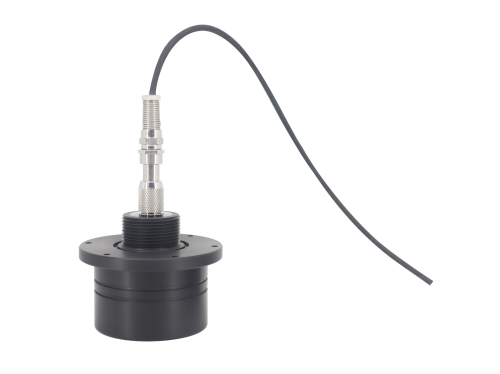
Compared with traditional manual periodic underwater inspections, the M80 ranging and obstacle avoidance sensor builds a continuous, online, and traceable data system. When the scour depth approaches a warning threshold, the system provides advance notice, buying crucial time for measures such as riprap protection or reinforcement.
In bridges, docks, and other water-immersed pile foundation projects, the Dayu Electronics M80 sensor is more than just a measuring tool—it is a reliable underwater safety perception solution. By turning scour from “post-event detection” into “real-time warning,” it truly secures the first line of defense for bridge safety.