
Dayu Electronics M80 Ultrasonic Sensor Eight-Point Pier Monitoring Solution
During flood season, the most dangerous thing is never the surface waves, but the pits silently scoured beneath the pier by water currents. By the time they are discovered, it is often too late.
For monitoring a pier with a diameter of 80 cm, the customer's core requirements are clear: accurate measurement and stable transmission. Our solution: deploy 8 Dayu Electronics M80 ultrasonic distance sensors around the pier, paired with an RTU for real-time data transmission, so you can see what is happening underwater from your office.
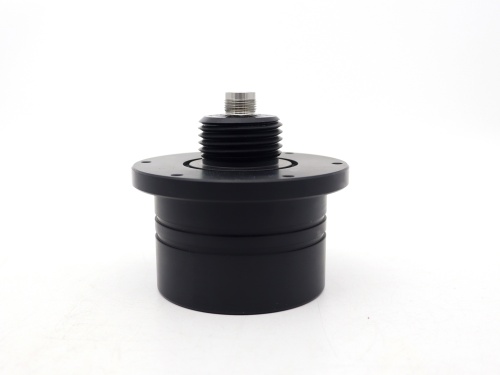
Why not just measure a single point?
Water flowing past a pier causes asymmetric scour—upstream may experience siltation, while downstream and the sides may be scoured. Single-point monitoring can easily miss the real hazard. With 8 sensors arranged in an "eight-direction array," it is like equipping the pier with 8 underwater eyes—any direction that has a problem can be detected immediately.
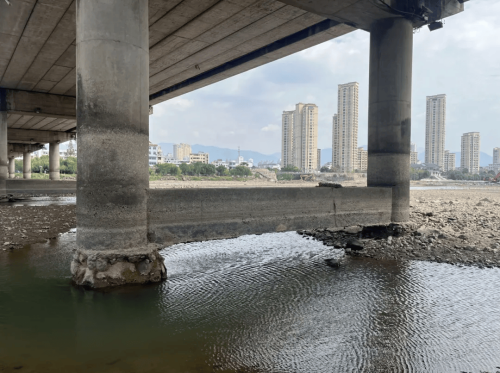
What does the M80 measure?
Simply put, it measures the distance from the sensor to the riverbed.
Scour causes the riverbed to cut down, increasing the distance value; siltation raises the riverbed, decreasing the distance value. By continuously monitoring changes in this distance, you obtain a "health curve" for the pier foundation, not just a static report that makes sense only after the fact.
How is the data used?
The RTU aggregates and uploads data from the 8 points to the backend, allowing you to:
Track trends: Compare data from pre-flood, during-flood, and post-flood periods to determine whether scour is intensifying or slowing down;
Set alarms: Once scour depth approaches a safety threshold, the system automatically alerts, leaving a golden window for countermeasures such as riprap reinforcement.
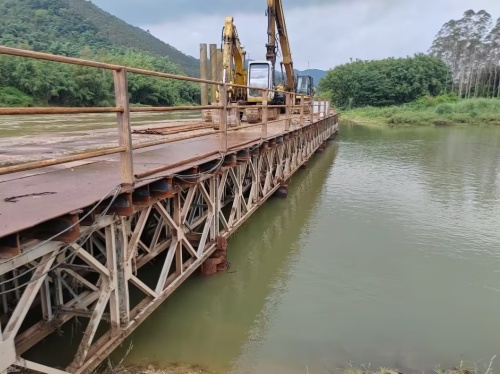
Why choose the M80?
For underwater installation, ease of installation and stability are key. The M80 sensor has a diameter of only about 30 mm and can be mounted directly on the side of the pier or inside a pre-embedded sleeve, without affecting navigation or hydrological morphology. In clear water, its range reaches 100–300 meters, fully covering the typical scour depth of bridge foundations, which is usually only a few meters to 20–30 meters.
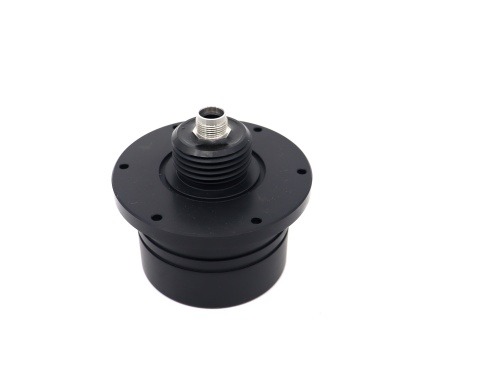
For pier monitoring, the problem is not that issues occur, but that "monitoring only begins after the problem is visible."
Use 8 M80s in a ring, add an RTU for remote transmission—what you get is not just hardware, but a risk management mechanism that provides early warning.
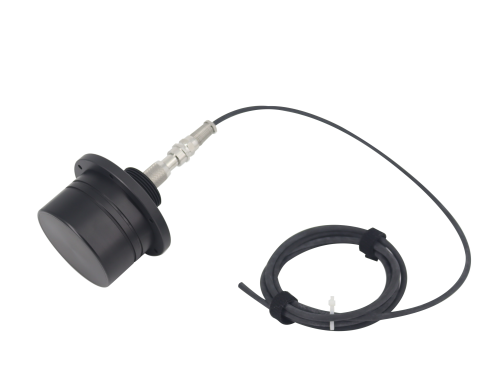
If your project is also facing scour monitoring challenges for bridges, docks, or water-immersed foundations, feel free to discuss the site's water conditions, installation locations, and key monitoring directions. The key to a solution is often not "whether to install," but "how to position the points so that the most dangerous corner is not missed."