
Protecting Bridge Safety: Dayu Electronics M80 Sensor Enables Real-Time Pier Scour Monitoring
Local scour around bridge pier and abutment foundations has always been a major hidden hazard threatening the safety and stability of bridge structures. Especially under the impact of floodwaters during flood season, scour holes that are difficult to detect are easily formed around bridge piers, like buried "time bombs." Facing this engineering pain point, many bridge maintenance and monitoring agencies have asked us: "What product can be used for precise measurement of bridge pier scour depth?"
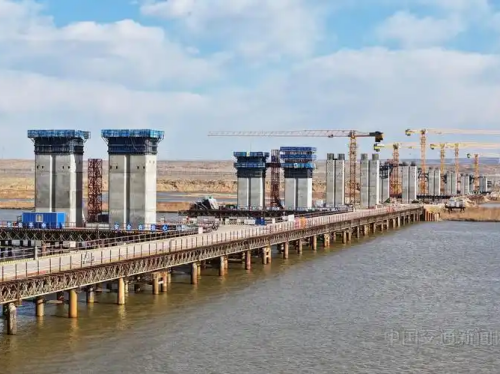
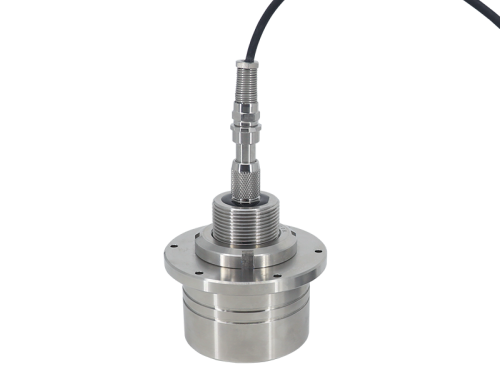
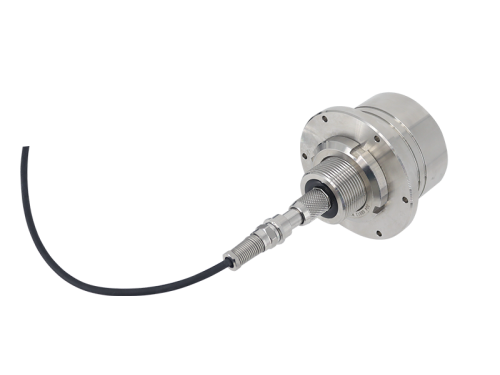
The answer is: the Dayu Electronics M80 underwater depth sounding sensor, designed precisely for such scenarios.
With its high-precision, high-stability distance measurement performance, the M80 underwater depth sounding sensor is perfectly suited for monitoring local scour around bridge piers. To comprehensively grasp the evolution of the riverbed around bridge piers, we recommend a multi-point array deployment scheme: that is, install two M80 depth sounding sensors on each of the four main directions of the pier—east, west, south, and north.
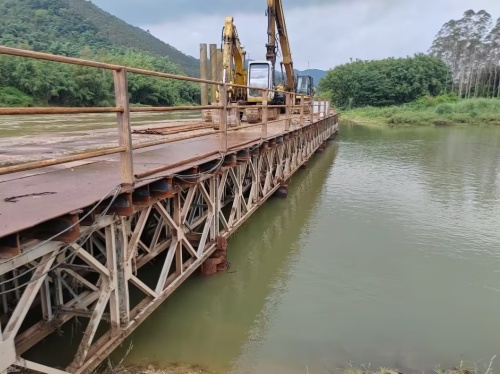
Why does bridge pier scour require "multi-point measurement"? Water flow is not uniform. The presence of a pier alters local flow direction, causing scour depths to vary completely by direction—upstream may experience deposition, downstream may be undercut, and the sides may show asymmetric scour. If only one point is measured, dangerous areas can easily be missed.
Why is the M80 suitable for this task?
? Compact and easy to install: The sensor diameter is approximately 30 mm, and it can be directly fixed to the side of a pier or embedded in a pre-installed sleeve without affecting navigation or water flow.
? Strong underwater depth measurement capability: In clear water, the range can reach 100–300 meters, fully covering the typical scour depth range of ordinary bridges (usually a few meters to 20–30 meters).
? Real-time data output: When paired with a separate display host or data acquisition module, water depth and mudline height at each measurement point can be transmitted to the monitoring room in real time, supporting automatic alerts.
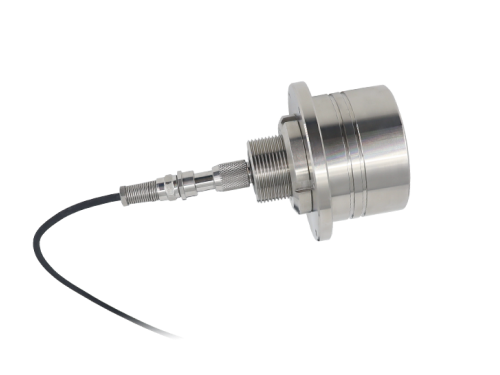
With this "eight-direction point deployment" monitoring layout, the system can collect water depth data from all directions around the pier in real time and synchronously. The M80 sensor continuously emits ultrasonic waves toward the riverbed and receives the echoes, and by calculating the round-trip time of the sound waves, it accurately determines the distance from the sensor to the riverbed bottom. When floodwaters or strong currents cause scour around the pier foundation, the water depth values measured by the sensor change accordingly. By comparing water depth data from different periods, the backend system can intuitively reflect the scour depth and evolution trends of the soil in each direction around the pier.
This distributed real-time monitoring approach not only overcomes the blind spots and lag of traditional periodic manual underwater inspections, but also provides timely alerts when scour depth approaches warning levels, offering scientific and accurate data support for bridge management departments to implement emergency reinforcement measures such as riprap protection.
Dayu Electronics has been deeply involved in the ultrasonic sensing field for many years, and our M80 series sensors have accumulated extensive practical experience in various underwater engineering monitoring applications. If you are looking for a cost-effective solution for scour monitoring of bridges, docks, or offshore wind turbine pile foundations, please feel free to contact the Dayu Electronics technical team. We will provide professional selection guidance and deployment support.