
Dayu Electronics M80 Ultrasonic Depth Sounder Application Case on Unmanned Surface Vessels in Smart Water Conservancy
In smart water conservancy applications, an unmanned surface vessel (USV) is a fully automatic surface robot equipped with satellite positioning and sensing systems that can navigate autonomously. The core advantage lies in its maneuverability and flexibility, overcoming the limitations of traditional water conservancy data collection, which is often "fixed, discrete, and point-based." It enables mobile continuous monitoring of water quality and high-precision three-dimensional mapping of underwater terrain and landforms. As the Ministry of Water Resources accelerates the construction of an integrated "sky-ground-water-engineering" monitoring and sensing system and vigorously promotes digital twin water conservancy construction, USVs work in coordination with drones, satellite remote sensing, and other equipment, and have been deeply applied in key scenarios such as flood control and emergency rescue, water quality monitoring, underwater hazard investigation, reservoir capacity management, and emergency response. They are gradually transforming from traditional auxiliary tools into indispensable key nodes in the smart water conservancy sensing system.
I. Operating Conditions
1. Mounting Platform: Unmanned surface vessel, 4 meters long, cruising speed 2-3 m/s, mounted on both sides of the vessel, as shown in the figure:
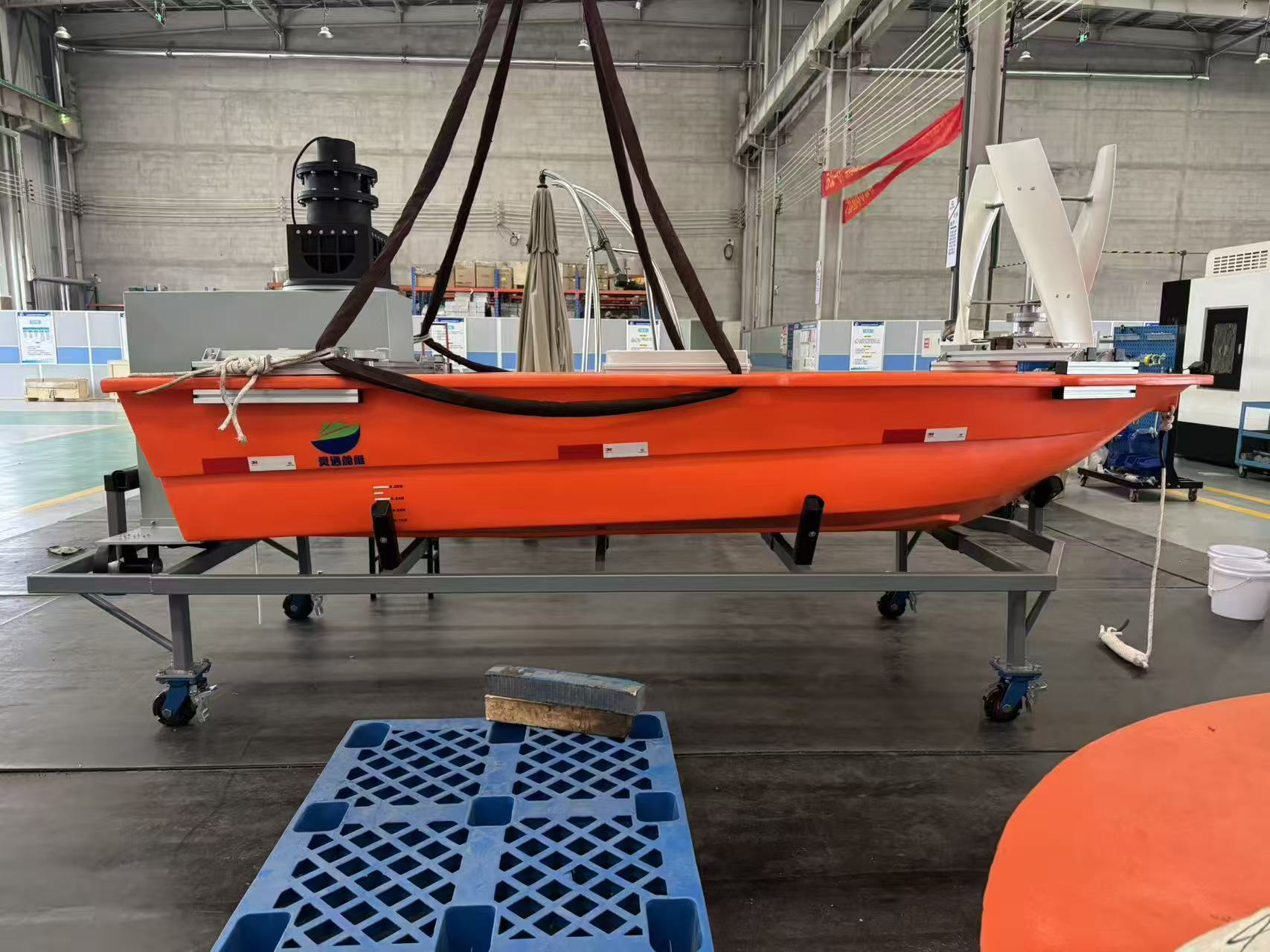
2. Working Environment: Natural river channel, slightly turbid water but with very low sediment content, riverbed is a mixed soft-hard type.
3. Customer Requirements: Maximum depth measurement of 20 meters, continuous measurement while navigating, real-time data upload, and data transmission to their platform via DTU.
II. Analysis and Model Selection
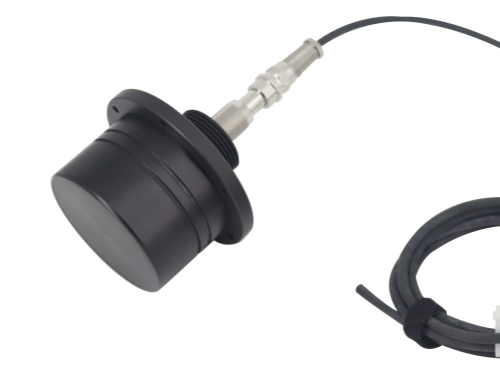
1. For a maximum depth of 20 meters, the recommended main model is the M80 depth sounder.
2. Since the water is not clear but has low sediment content and the riverbed is not hard-bottomed, the recommended range is narrowed to the 300K/50m range and the 200K/200m range models. Considering possible use during flood seasons where sediment content may increase, the primary recommendation is the 200K/200m range model, with the 88K/300m range model as a special-case option.
3. Real-time upload and wireless transmission support are required, so the RS485 output mode is selected. After consideration, the customer ultimately chose the 300K/50m model.
III. After-Sales Issues and Analysis
1. During navigation, there are moments or periods when the depth reading becomes larger. The main suspected cause is that during speed changes or turns, the vessel tilts and the sensor may not be perpendicular to the riverbed. Also, at high speeds, the vessel bow rises, causing the sensor to tilt. When the vessel sails steadily at low speed, the data is normal.
2. At the beginning of installation, the data fluctuated significantly. The cause was determined to be interference from the shared power supply with other detection equipment such as the in-board water quality analyzer. After switching to independent battery power, the depth readings returned to normal.
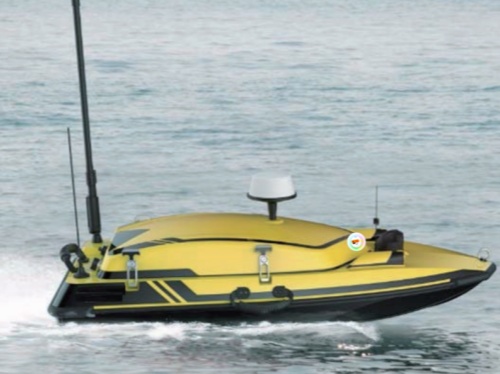
3. After the overall USV test was completed, the vessel was docked at the shore for maintenance, and upon restart, the depth readings were found to be fluctuating. The cause was determined to be the battery, which powers the test instrument, being charged during the maintenance period. When the depth sounder was started while the battery was charging, the charging interference affected the depth sounder. The readings returned to normal once battery charging was stopped.
In the future, as USVs are deployed on a large scale in the water conservancy sector, the depth sounder, as the core sensor for underwater perception, will have its stability, anti-interference capability, and communication openness directly impact the data quality of the entire "measure, transmit, use" chain in smart water conservancy. We will continue to optimize our products to provide a more solid underwater data foundation for digital twin water conservancy.