
Dayu Electronics: Application of the M80 Ultrasonic Underwater Ranging Sensor on Floating Platforms and Vessel-Mounted Scenarios
Recently, a customer approached our company regarding the need for continuous monitoring of seawater depth in sea areas, inquiring about a sensor capable of long-term, uninterrupted measurement of seawater depth. This sensor must accommodate two typical installation methods: one is long-term continuous operation on a permanent underwater floating platform (buoy); the other is installation on a survey vessel, collecting depth data during slow navigation or while stopped. Dayu Electronics provided the M80 ultrasonic underwater ranging sensor for this purpose, and it has demonstrated excellent adaptability in actual deployments.
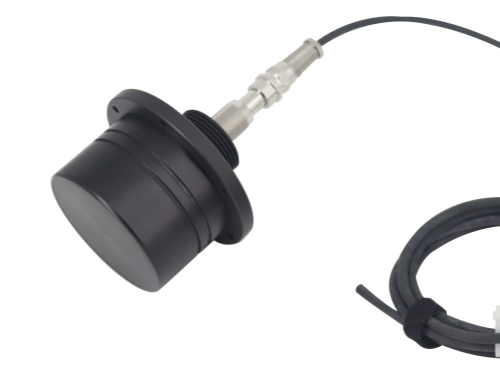
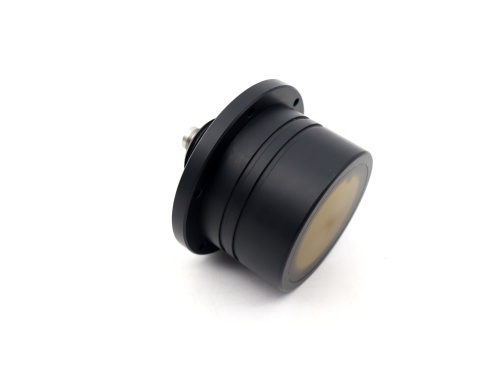
The marine environment is characterized by high salinity, strong corrosion, and variable water flow disturbances, imposing stringent requirements on the long-term stability of underwater ranging equipment. The M80 ultrasonic underwater ranging sensor features a fully sealed stainless steel or engineering plastic housing, offering high resistance to seawater corrosion and capable of withstanding prolonged submersion and pressure fluctuations. The sensor operates on the principle of ultrasonic pulse reflection: the transducer emits an ultrasonic pulse toward the seabed, and the pulse is reflected back upon encountering the bottom sediment layer or hard interface. By measuring the time difference between transmission and echo, combined with the sound velocity in water, the sensor calculates the current water depth.
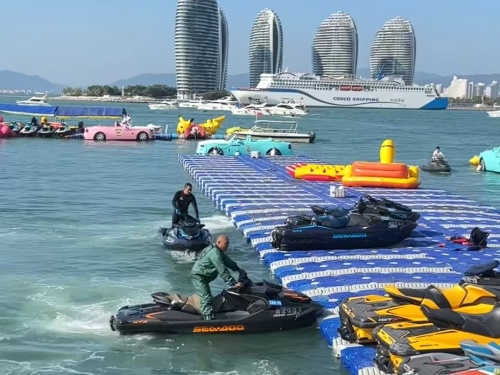
For permanent underwater installation on floating platforms, the M80 sensor supports 24-hour continuous operation. Its low-power circuit design and intelligent sleep-wake mechanism enable stable data acquisition even during prolonged unattended operation. Ultrasonic ranging is unaffected by water turbidity, suspended solids, or light variations, providing inherent reliability in turbid coastal or harbor waters compared to optical ranging methods. Field tests show that in such scenarios, the M80's effective ranging distance can reach 20 to 50 meters (depending on water quality and bottom reflection conditions), with a blind zone of less than 0.3 meters and repeatability accuracy of ±0.5% to ±1% of full scale.
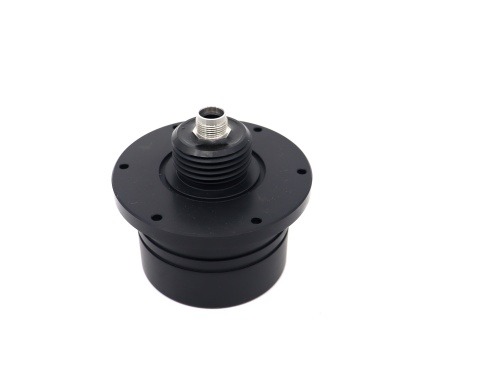
When the sensor is installed on a survey vessel, the customer explicitly noted that measurements are taken while the vessel is moving slowly or stopped. This is because ultrasonic transducers may experience reduced signal-to-noise ratios when encountering bubbles, turbulence, or flow noise caused by excessive vessel speed in moving water. The M80 integrates adaptive gain control and time-domain filtering algorithms to effectively suppress weak disturbance interference during slow vessel drift. At standstill or speeds below 2 knots, the sensor can still stably track bottom echoes and output continuous, smooth depth data. Additionally, an optional temperature sensor can be equipped for real-time sound velocity compensation, further enhancing the accuracy of seawater depth measurements.
The Dayu Electronics M80 ultrasonic underwater ranging sensor has been successfully applied in scenarios such as offshore buoy monitoring systems, harbor depth early warning, and auxiliary sounding on research vessels. If you have similar long-term underwater ranging requirements, we welcome you to further communicate with our technical team through our official website channel.