
Dayu Electronics: How to Accurately Avoid Obstacles in Turbid Water? The Small Blind Zone Advantage of the M80 Sensor
In scenarios such as underwater robot navigation, river channel monitoring, and reservoir operations, turbid water with sediment and turbulence is a typical complex condition that affects the reliable operation of ultrasonic sensors. Users often ask: How will the range of the M80 underwater obstacle avoidance sensor change in such environments? Dayu Electronics provides professional answers based on acoustic principles and field measurement experience.
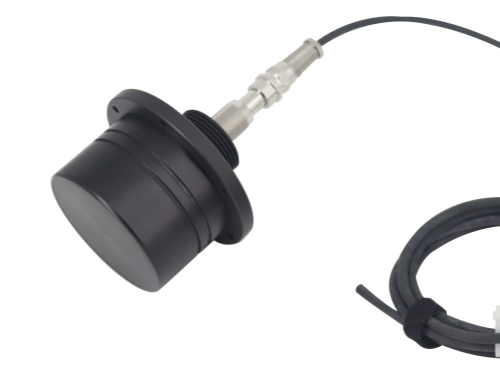
Underwater ultrasonic ranging relies on sound wave propagation and echo analysis. In turbid, turbulent water, suspended particles continuously scatter and absorb sound wave energy, while turbulent flow disrupts the propagation path and introduces environmental noise. Combined, these factors lead to a significant reduction in effective range. According to field application data, under such conditions the range attenuation typically falls between 50% and 95%, depending on sediment concentration and flow disturbance intensity. This attenuation is a physical law of underwater acoustic propagation, not a limitation of product performance, so sufficient margin should be reserved during product selection to ensure stable operation.
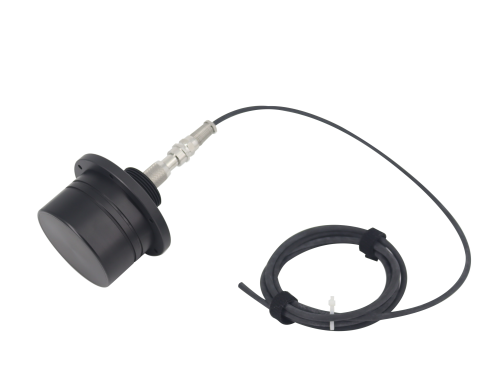
In terms of short-range detection, the M80 underwater obstacle avoidance sensor demonstrates reliable performance. Concerning the minimum blind zone that users focus on, it can be controlled to as low as 0.15 meters, meeting the requirements for high-precision short-range obstacle avoidance and adapting to scenarios such as close-range perception for underwater equipment and operations in confined spaces. This performance has been validated through engineering testing, maintaining the stability and reliability of short-range measurement even in complex underwater environments.
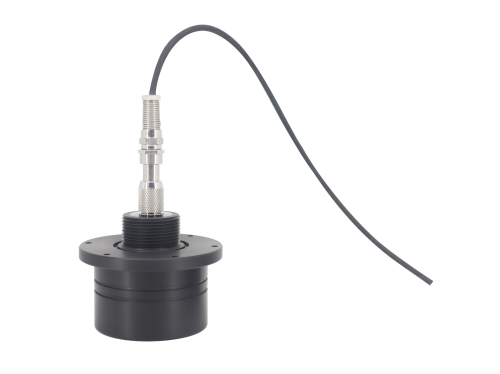
Dayu Electronics always presents product performance boundaries with a rigorous approach. The M80 underwater obstacle avoidance sensor combines adaptability to complex environments with short-range detection accuracy. It clearly defines the objective laws of range attenuation while also providing reliable short-range measurement capability. We recommend that users reasonably evaluate the range margin based on actual operating conditions to fully leverage the sensor's value in turbid water and turbulent environments, providing stable perception assurance for underwater operations.