
Applications of Dayu M50 Underwater Obstacle Avoidance Sensor [Dayu Electronics]
The M50 underwater obstacle avoidance sensor is a high-precision measurement device specifically designed for underwater environments. Its applications in China's coastal water depth measurement can be demonstrated in the following aspects:
1. Marine surveying and terrain mapping: The M50 sensor can be mounted on survey vessels or underwater robots to conduct detailed mapping of marine terrain. By measuring seabed depth and topography, precise nautical charts can be produced, which are vital for marine resource development, environmental monitoring, and navigation safety.
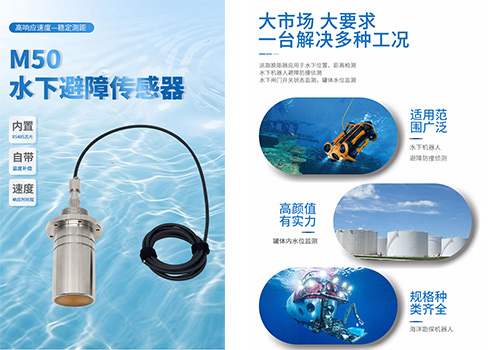
2. Underwater structure inspection: In marine engineering, the M50 sensor can be used to inspect underwater structures such as bridges, docks, and pipelines to ensure their safety and stability. By measuring the distance between these structures and the seabed, potential risks and damage can be detected in a timely manner.
3. Environmental monitoring and protection: The M50 sensor helps scientists monitor changes in the marine environment, including water depth variations, sediment distribution, and the condition of marine habitats. This is crucial for protecting marine ecosystems and conducting scientific research.
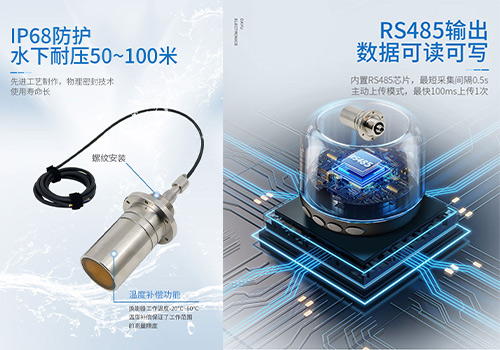
4. Underwater archaeology: In the field of underwater archaeology, the M50 sensor can be used to detect and map shipwreck sites, ancient ports, and other submerged relics. By precisely measuring the depth and distribution of these sites, archaeologists can gain a better understanding of history and preserve cultural heritage.
5. Military applications: In the military domain, the M50 sensor can be used for submarine navigation and obstacle avoidance, ensuring the safety of submarines during missions. Additionally, it can be used for mine detection and clearance, improving the efficiency and safety of military operations.
6. Underwater robot navigation: The M50 sensor can be integrated into underwater robot systems to assist robots in autonomous navigation and obstacle avoidance in complex underwater environments. This is essential for underwater robots performing search, rescue, and maintenance missions.
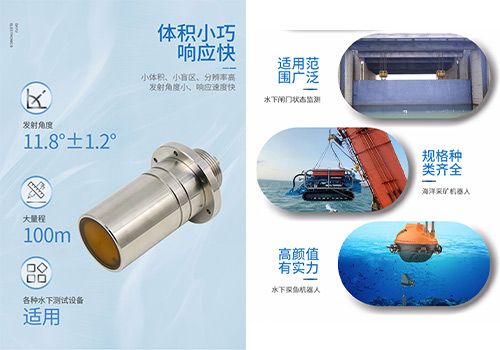
7. Marine scientific research: In marine scientific research, the M50 sensor can be used to collect data on the physical, chemical, and biological properties of the ocean. These data are critical for understanding the functioning and changes of marine ecosystems.
From the applications above, it is clear that the M50 underwater obstacle avoidance sensor plays a multifaceted role in China's coastal water depth measurement. It not only improves the accuracy and efficiency of measurement but also provides strong support for marine resource development, environmental protection, and scientific research.