
Dayu Electronics: Key Factors in Measurement Accuracy of the M50 Underwater Obstacle Avoidance Sensor
In the safe navigation and intelligent obstacle avoidance of underwater vehicles, robots (ROV/AUV), and various underwater operation platforms, the accuracy of distance perception directly impacts mission success and equipment safety. The Dayu Electronics M50 underwater obstacle avoidance sensor, with its high-frequency, high-resolution acoustic ranging capability, has become a reliable "eye" in many critical applications. However, complex real-world water environments pose severe challenges to any precision measurement. If a systematic deviation between the measured distance and the true value occurs (e.g., close to a factor of two), it is usually not a fault of the device itself but is caused by site-specific factors. Systematically troubleshooting the following two core aspects is the key to quickly identifying and resolving the issue and restoring the sensor's optimal performance.
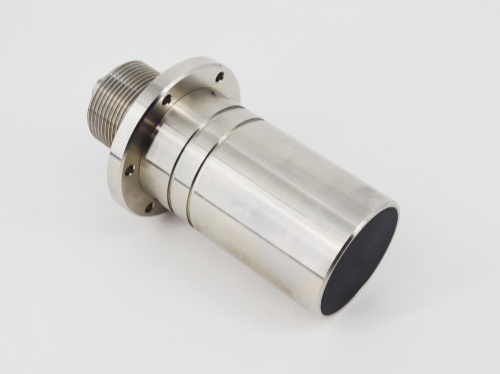
The influence of the on-site underwater acoustic environment. Underwater acoustic measurement is fundamentally different from optical measurement in air; the propagation characteristics of sound waves in water are highly susceptible to environmental interference. First, changes in water temperature, salinity, and depth directly alter the speed of sound in water. If the sound speed setting in the device parameters does not match the actual water environment, a fixed proportional error will occur. Second, water turbidity, suspended particle concentration, and the presence of bubbles can severely attenuate and scatter acoustic signals, potentially causing the received effective echo to originate not from the nearest obstacle but from a more distant interface with weaker reflection, leading to misjudgment. Additionally, complex bottom topography (such as slopes or pits) or proximity to pool walls or pipes may introduce strong multipath reflections that interfere with the identification of the primary echo signal. Therefore, before installation and commissioning, conducting a basic assessment of the acoustic characteristics of the operating water area and selecting an installation position that is open and away from strong reflecting surfaces is fundamental to ensuring measurement accuracy.
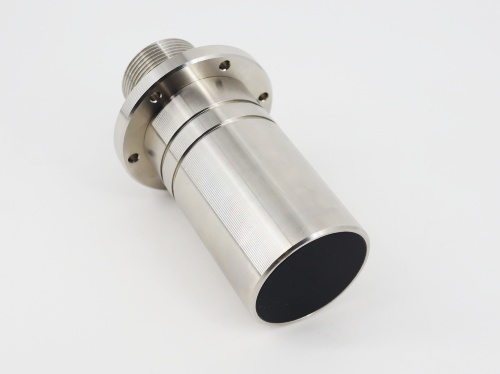
Underwater sensors are precision electro-acoustic systems, and their stable operation relies heavily on a clean and stable electrical supply. Power supply interference is a common cause of measurement errors, especially regular multiplicative errors. If the supply voltage fluctuates significantly, has high ripple noise, or experiences transient pulses, it may directly interfere with the sensor's internal timing circuits or the reference clock of the signal processing unit, leading to systematic deviations in transmit/receive timing. On the other hand, interference in the RS-485 communication line cannot be overlooked. If long-distance communication lines do not use shielded twisted pair cables, or if the shield is not properly grounded, environmental electromagnetic noise can easily be introduced. When noise couples into the communication signal, it can cause data misalignment or multiplication during transmission or parsing, resulting in multiplied errors in the readings. Ensuring the use of a stable, adequately powered dedicated power supply and strictly following specifications for wiring and terminating communication lines are necessary measures to eliminate such electrical interference.
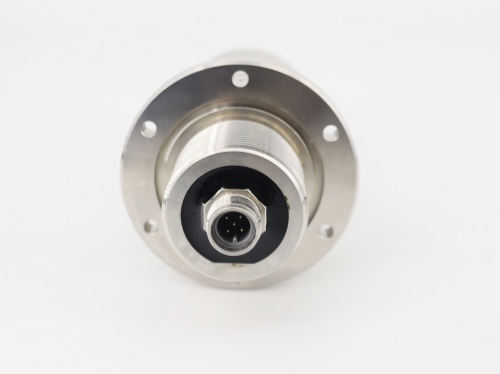
Dayu Electronics is always committed to providing customers with reliable products and professional support. The M50 sensor undergoes strict calibration and testing before leaving the factory. When measurement concerns arise in the field, we recommend that you first conduct a systematic check from the two dimensions of "on-site underwater acoustic environment" and "electrical connection quality." Our technical support team is available at any time to provide more detailed troubleshooting guides and on-site diagnostic recommendations. Choosing Dayu means you not only receive a high-performance sensor but also a professional commitment to ensuring the stable operation of your system.