
Dayu Electronics External Magnetic-Suction Hydrophone M45 Applied to Leak Detection in Municipal Water Supply Networks
Background
In urban water supply systems, leakage in municipal water supply networks has long been a challenge for water utilities. According to statistics, many cities experience high leak rates in their water supply networks, which not only wastes water resources but also increases supply costs and may even affect residents' normal water usage. Traditional leak detection methods are inefficient and inaccurate, failing to meet the demands of modern water supply management. As a device capable of sensing underwater acoustic signals, the hydrophone monitors a sound frequency range of 20 Hz to 20 kHz, covering the entire frequency range of water pipeline leaks (20 Hz to 2.5 kHz). It can effectively detect leak signals, providing a new approach to solving the problem of leak detection in municipal water supply networks.
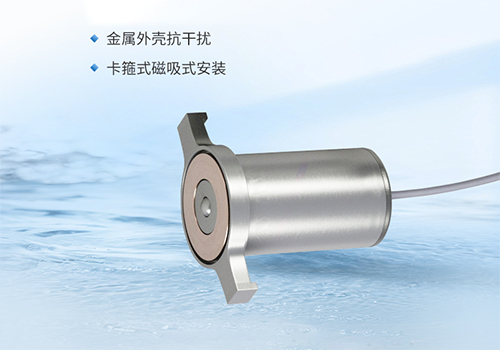
· Equipment Selection: Taking the external magnetic-suction hydrophone as an example, this hydrophone is installed on metal pipelines using an external magnetic clamp, eliminating the need to damage the pipeline. It is easy to install and offers high accuracy and sensitivity, maintaining excellent performance in various environments. Additionally, it provides two types of preamplifiers, which can be used for leak point identification and monitoring of noise generated by various liquid flows and fluctuations.
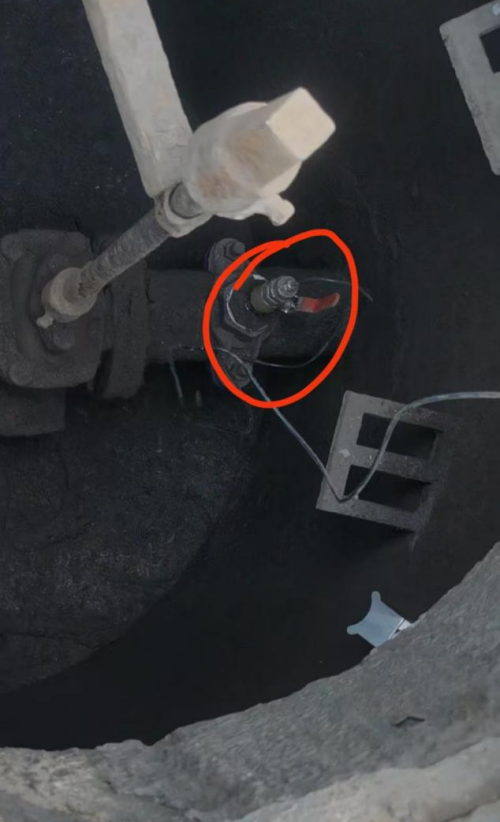
· Installation Layout: Hydrophone monitoring points should be reasonably arranged in the municipal water supply network. For areas with severe leakage issues, such as older urban districts, the density of monitoring points should be increased; for newly developed areas, a uniform layout can be planned based on the network design. For example, a county-level water company in Foshan installed 3 network hydrophones on its water supply pipelines, which, combined with other zone metering devices, provides a scientific basis for leak control.
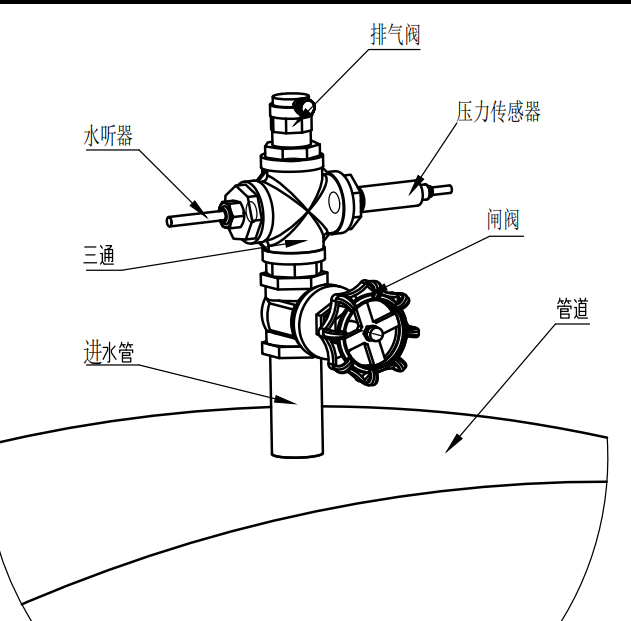
· Monitoring Method: The hydrophone captures sound signals from within the water supply pipes and transmits them to a signal processor for amplification and filtering, with the results then displayed on a host computer screen in the background. Operators can determine whether a leak exists based on sound characteristics and decibel changes. Leak detection is typically performed between 10 PM and 2 AM, when ambient noise is lower, making it easier to detect the sound of leaks.
Parameters
· Frequency Range: The hydrophone monitors a sound frequency range of 20 Hz to 20 kHz, covering the frequency range of water supply pipeline leak sounds (20 Hz to 2.5 kHz).
· Sensitivity: A high-sensitivity hydrophone can more accurately capture weak leak sound signals, improving the accuracy of leak point detection.
· Installation Requirements: When installing the external magnetic-suction hydrophone, it must be firmly attached to the pipeline to ensure stable signal transmission. Insertion-type hydrophones require the pipeline to be drilled for installation.
Applications
· Leak Point Location: Operators listen to water supply pipelines using equipment connected to the hydrophone. If abnormal sounds are detected, such as increased water flow or sharp sounds, and the decibel level on the display rises, it can be preliminarily judged as a leak point. Combined with various instruments, such as pipe locators, the accuracy of leak point location can be further improved. For example, a water supply group in Hunan uses listening sticks and leak detectors (incorporating hydrophone technology) to capture pipeline vibration sounds, leak overflow sounds, and collisions between sand and stones. Combined with pipe material characteristics and the surrounding environmental medium, they accurately analyze the layering of sounds to determine whether a leak exists and the exact location of the leak point.
· Network Condition Assessment: Long-term monitoring of sound data collected by hydrophones allows for an overall assessment of the condition of the municipal water supply network. For example, by analyzing sound variation trends, it is possible to determine whether pipelines have potential damage risks and take timely maintenance measures to prevent leak issues from escalating.
Conclusion
The application of hydrophones for leak detection in municipal water supply networks offers significant advantages. It effectively improves the accuracy and efficiency of leak point detection, reduces water resource waste, and saves costs for water utilities. Through reasonable equipment selection, installation layout, and monitoring methods, hydrophones can play an important role in the management of municipal water supply networks. However, in practical applications, it is necessary to continuously optimize monitoring plans and combine other technical means to further improve the precision and reliability of leak detection, thereby ensuring the safe and stable operation of urban water supply systems.