
Dayu Electronics: Application Assessment of M36 Underwater Obstacle Avoidance Sensor with Multiple Acoustic Devices in Coexistence
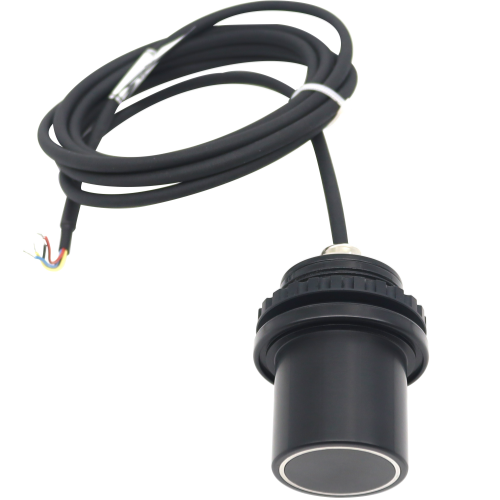
With more and more underwater devices, it's common for sonar, DVL, and obstacle avoidance sensors to work together. Recently, a customer asked a very practical question: his sonar operates at 1.2MHz, DVL at 1.0MHz, and he wants to place a Dayu Electronics 300kHz M36 underwater obstacle avoidance sensor nearby, worried that the high-frequency devices might cause significant interference to the low-frequency transducer.
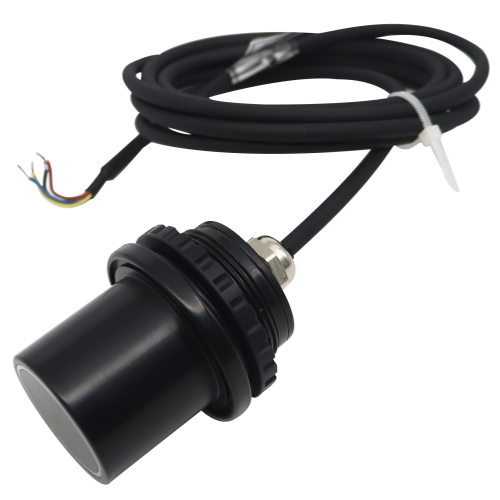
This concern is understandable, as underwater acoustic devices are most afraid of "fighting" with each other.
Theoretically, the answer is clear: there should generally be no problem. The frequency gap between 300kHz and 1.0MHz or 1.2MHz is very large, three to four times apart. Transducers are frequency-selective by nature, and the receiving end is only sensitive to signals near the center frequency. A 300kHz transducer is essentially "blind" to high-frequency signals above 1.0MHz. For analogy, it's like a radio tuned to the FM band can't receive AM stations—when frequencies are far apart, they naturally don't interfere with each other easily.
But theory is one thing; the underwater environment is much more complex than air. Factors like harmonic interference, power supply noise, equipment installation position, housing resonance, and even cable coupling can all bring unexpected effects under certain conditions. That's why our answer has always been practical: theoretically no problem, but the final judgment should be based on your actual tests.

This is also why we always recommend customers to arrange a joint debugging test during system integration. Install the M36 on your equipment, run the sonar and DVL simultaneously, and check whether the obstacle avoidance sensor's data is normal, whether there are false triggers or SNR degradation—everything becomes clear. After all, the real acoustic environment in water, the most reliable answer comes from running it on site.
If you encounter any interference issues during testing, feel free to provide us with the test results and we'll analyze and troubleshoot together.