
Dayu M36 Underwater Distance Sensor: Installation Causes and Correction Methods for Pool Test Distance Deviation
During on-site commissioning, the most unsettling situation is not “no data,” but “data that is stable yet clearly wrong.”
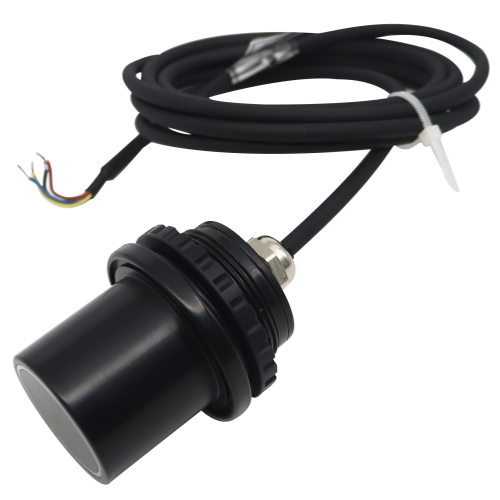
In one project, two Dayu Electronics M36 underwater distance sensors were installed in a pool measuring 20 meters long, 13 meters wide, and 3 meters deep, with the installation height about 30 cm above the pool bottom. During testing, it was found that the measured distance was consistently 4-5 meters less than the actual value. With such an error within a 20-meter range, the first reaction is often: could the sensor accuracy be the problem?
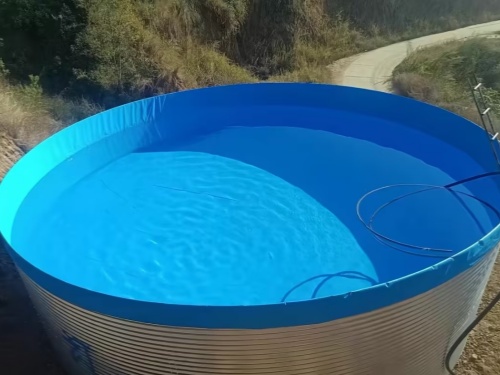
However, after in-depth analysis, it was found that the issue was not in performance but in installation.
Why is the reading “4-5 meters less”?
The basic principle of underwater ultrasonic distance measurement is to transmit an acoustic pulse, receive the echo reflected from the target, and then calculate the distance based on the time difference. The key point is: the system defaults to identifying the first valid echo that returns.
When the sensor is installed too low and too close to the pool bottom, the pool bottom becomes a strong and stable reflecting surface. After the sound wave is emitted, it propagates downward, quickly hits the pool bottom, and reflects back. Since the path is the shortest, the echo arrives first, so the system naturally determines the “distance to the pool bottom” as the target distance.
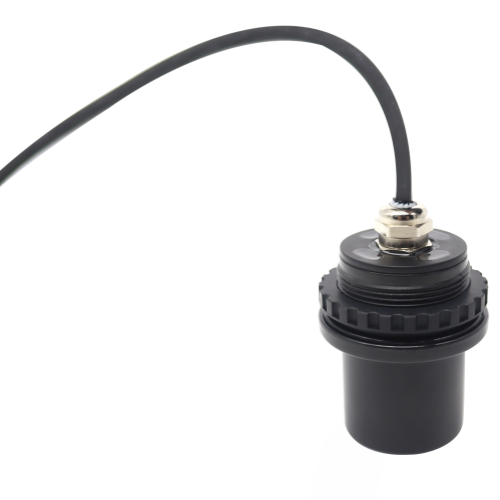
The result is:
The installation height is only 30 cm above the ground, so the pool bottom is within the near-field range.
The pool bottom has strong reflection and a short echo return time.
The system preferentially locks onto the pool bottom signal.
The actual displayed value is 4-5 meters shorter than the expected distance to the distant target.
This is not inaccurate measurement; it is measuring an object that should not be the target.
Why is this situation more likely to occur in a pool environment?
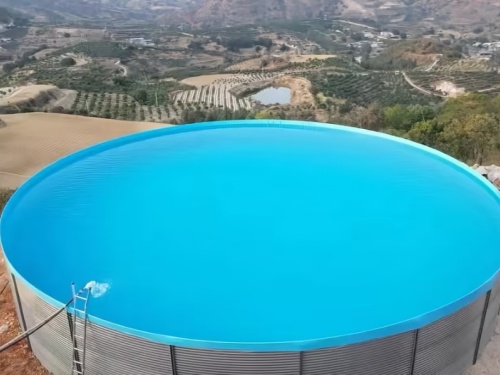
In a regular pool, the bottom is usually flat and hard, making it an extremely stable reflecting interface. When the installation height is insufficient or the transmitting surface is slightly tilted downward, the main lobe of the acoustic beam can easily cover the pool bottom area. In contrast, the echo paths from the distant pool wall or other targets are longer and suffer greater attenuation, so they naturally rank after “priority identification.”
In other words, the sensor is not malfunctioning; it is simply and faithfully selecting the “nearest, strongest” echo.
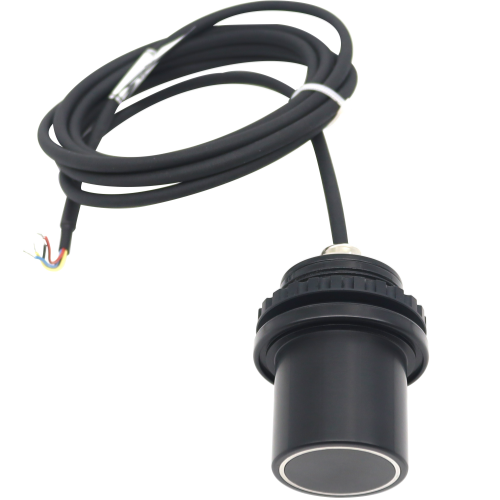
How can we restore normal distance measurement?
The solution is actually simple: ensure that the first valid echo comes from the true measurement target, not the pool bottom.
Adjustments can be made from three aspects:
1. Increase the installation height
Keep sufficient distance between the sensor and the pool bottom to prevent strong near-field reflections from becoming the main echo.
2. Calibrate the transmitting direction
Ensure that the transmitting surface is directly facing the target to be measured, avoiding the acoustic beam from tilting downward or being interfered with by structural components.
3. Secure the mounting structure
Prevent changes in orientation that could cause the echo source to switch between the pool bottom and the target, resulting in reading fluctuations.
When underwater distance measurement shows “stable data but obvious deviation,” it is better to first investigate the echo source rather than immediately suspecting accuracy. Many problems are essentially a mismatch between installation logic and on-site conditions.
Dayu Electronics, with its outstanding custom development capability and one-stop service system, provides deeply adapted ultrasonic solutions for various industries. We firmly believe that the vitality of ultrasonic technology lies in the unlimited expansion of application scenarios.