
Application of Dayu Electronics M36 Underwater Obstacle Avoidance Sensor in the Compressed Air Chamber of Unmanned Underwater Vehicles
When it comes to Unmanned Underwater Vehicles (UUVs), the first thing that comes to mind is often 'underwater obstacle avoidance' or 'seafloor mapping.' However, in the real engineering details, what often determines system reliability is a more hidden corner: the compressed air chamber.
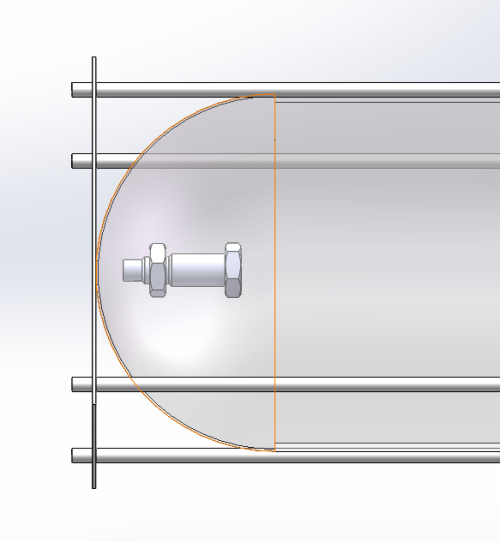
In this space, the core task is to monitor a key parameter—the displacement distance of the piston. This may seem like a simple 'distance measurement,' but it faces three major challenges: the medium is compressed air with constantly changing density, the installation space is extremely compact, and the sensor must be as lightweight as possible. It is precisely to address these pain points that the M36 underwater obstacle avoidance sensor is introduced, taking on the critical task of 'clearly seeing the piston position.'
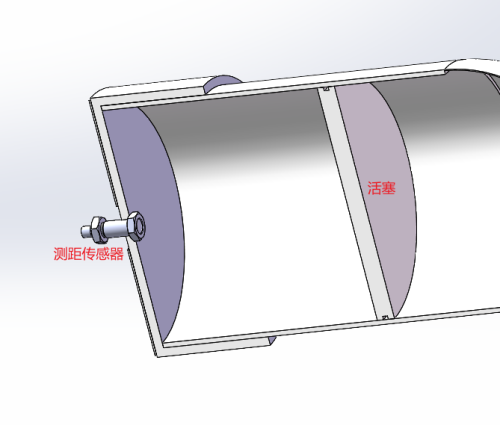
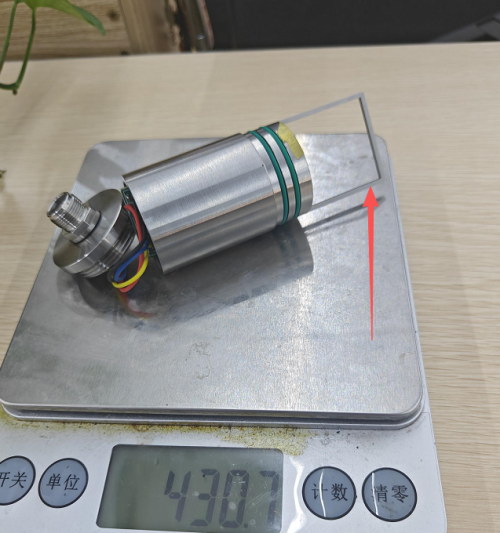
Why 'lightweight' matters more than anything in the air chamber
UUVs are extremely sensitive to the weight and volume of onboard equipment, and space inside the chamber is at a premium. If the sensor is too heavy or too large, it not only takes up valuable chamber space but can also affect the overall attitude and hydrodynamic performance of the vehicle.
The core advantage of the M36 lies in its small size, lightweight design, and integrated transducer construction. Placing it in the compact chamber of a UUV means installation is more flexible: there is no need to 'make extra room' for it, and adding it won't cause chain reactions that affect the overall structure.
Air with varying density: how to ensure accurate measurement
In the compressed air chamber, air density changes constantly, which poses a significant challenge for acoustic distance measurement. With the same transmission and echo reception, if the geometric position is unstable, the influence of medium changes can easily be amplified into errors that appear as 'distance variations.'
To solve this problem, a 'crossbar' is typically introduced in practical applications for physical calibration. By using a clear geometric reference, fixing the sensor's installation position and measurement orientation, the uncertainty caused by medium variations is kept within a controllable range as much as possible.
From interface to protection: engineering demands rigorous standards
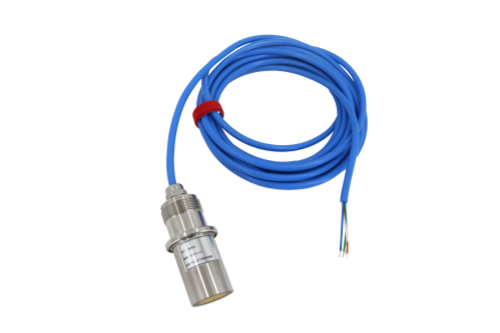
The M36 features RS485 digital output based on the Modbus-RTU protocol, offering strong anti-interference capability and stable communication with the main control system. In terms of protection, it achieves IP68 rating, and the transducer is fully sealed, allowing long-term immersion in fresh or seawater.
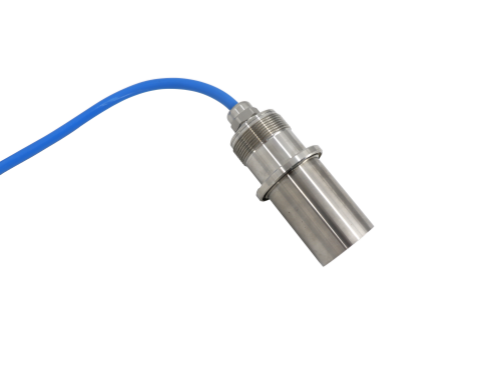
In terms of performance, the M36 has a blind zone of only 0.50 meters and an accuracy of ±0.5% of the maximum range. This means that when the UUV approaches a target and needs careful judgment, it won't suddenly 'go blind' in the near zone; the data is fully usable for engineering purposes.
Leave complexity to the system, and leave certainty to measurement. Lightweight design allows for more flexible mounting, stable installation and calibration make measurements more reliable, and standard interfaces and high protection make integration easier—together, these are the real value of the M36 in the compressed air chamber of unmanned underwater vehicles.