
M36 Underwater Obstacle Avoidance Sensor: Technical Specifications and Impact Analysis of Acoustic Wave Incident Angle [Dayu Electronics]
M36 Underwater Obstacle Avoidance Sensor measurement accuracy and stability are directly influenced by the angle between the ultrasonic transmission direction and the reflective medium surface. The physical mechanism follows the law of sound wave reflection: the angle of incidence equals the angle of reflection. When the sensor axis is perpendicular to the measured medium surface (i.e., the angle is 0°), the returned ultrasonic energy is the strongest and the measurement data is the most accurate. If there is an angular deviation, the sound wave undergoes specular reflection, causing the echo to deviate from the receiving end. This may lead to measurement errors in minor cases or signal loss in severe cases.
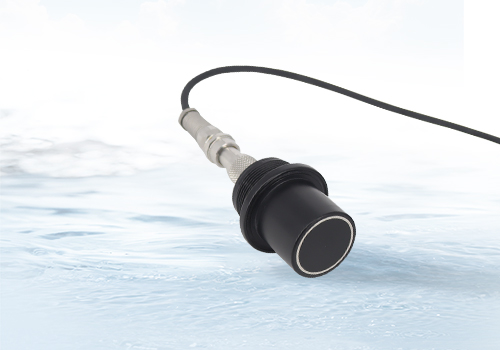
For different beam angle specifications of the M36 sensor, there are significant differences in angular tolerance. The sensor offers three transmission angles: 4.6°, 8.7°, and 19.4°. Among them, the 4.6° specification is an extremely narrow beam with strong directivity, requiring the highest installation parallelism; even a slight angular deviation can cause "blindness." In contrast, the 19.4° wide beam specification has a relatively higher fault tolerance, making it suitable for scenarios requiring broader coverage or constrained installation conditions.
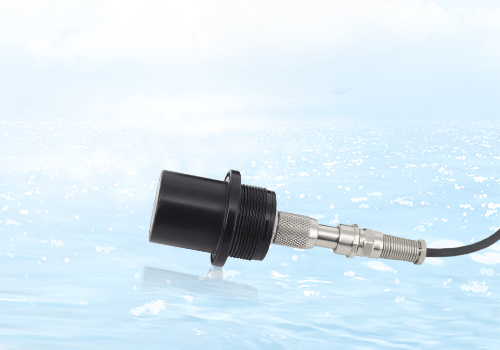
In engineering practice, if installation under non-perpendicular conditions is unavoidable, the following principles must be strictly followed: for smooth, hard surfaces, the installation angle deviation should be controlled within 3° to retain approximately 88% of the reflected energy; for rough or porous media, due to diffuse reflection, the deviation can be relaxed to 5° to 10°, but this will be accompanied by range attenuation.
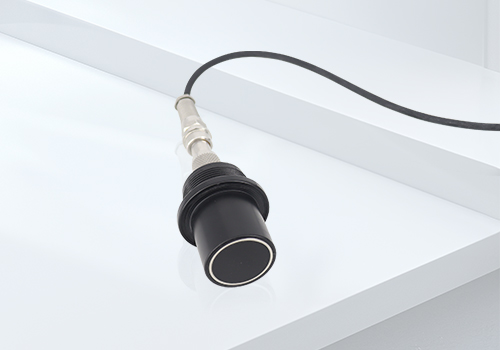
Additionally, attention must be paid to the cosine error, i.e., when installed at an angle, the sensor measures the slant distance rather than the true vertical distance, and cosine compensation must be applied in precision control. Therefore, to ensure data reliability, perpendicular installation is recommended as the preferred option, and angle compensation algorithms should be incorporated into the firmware.