
How Dayu M33 Sensors Help Enterprises Solve Long-Term Tank Oil Level Monitoring Challenges with Ultrasonic Technology
In the field of industrial automation, how can liquid level monitoring be achieved with precision, economy, and ease of implementation without hindering production? This is a question that almost every engineer and procurement professional considers when dealing with storage tanks. Especially when budgets are not unlimited and a stable, reliable solution must be built within constrained costs, product selection becomes a balancing act between technology and cost.
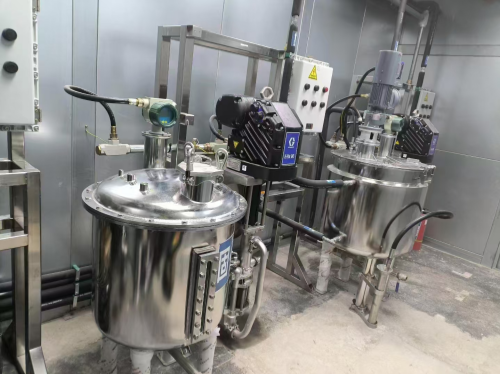
A semiconductor company in Shenzhen faced just such a typical need: they required reliable oil level monitoring for their storage tanks. The traditional approach of drilling holes for installation meant shutdowns, retrofits, potential leakage risks, and significant overall costs. This was clearly not the optimal solution. Ultimately, they settled on a lighter, smarter technical path—ultrasonic external mount measurement—and turned their attention to Dayu Electronics' M33 external mount liquid level sensor.
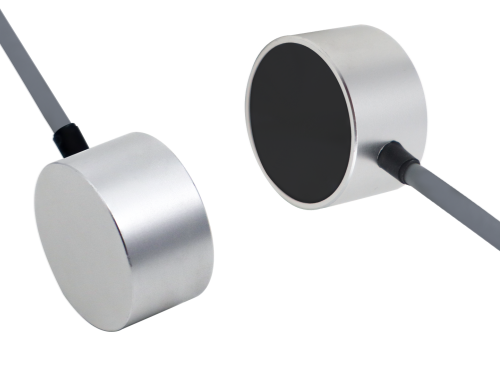
The reasons for their choice were clear and pragmatic. The core appeal of the M33 external mount liquid level sensor lies in its "non-contact" nature. It requires no "surgery" on the tank; the sensor is simply mounted externally on the tank wall at an appropriate location, and ultrasonic pulses penetrate the vessel wall to perform the measurement. This mode perfectly aligns with the customer's core requirements of "no drilling, no shutdown, no direct media contact," fundamentally eliminating the risks of leakage and production interruption caused by installation, while greatly simplifying engineering implementation.
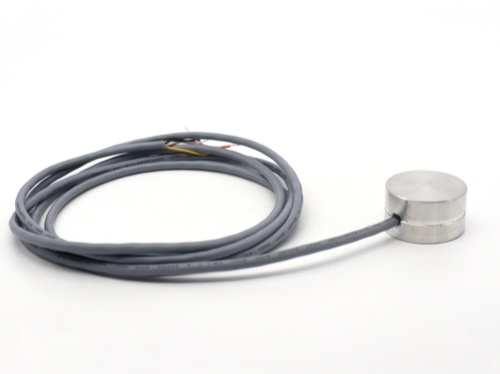
However, the key to project success lies not only in selecting the right sensor, but also in maximizing value within the customer's cost framework. The company had a clear budget control target—between 70 and 100 RMB. How could core measurement performance still be guaranteed within such a tightly constrained budget? Dayu Electronics' answer was: break the whole into parts, and focus on core value.
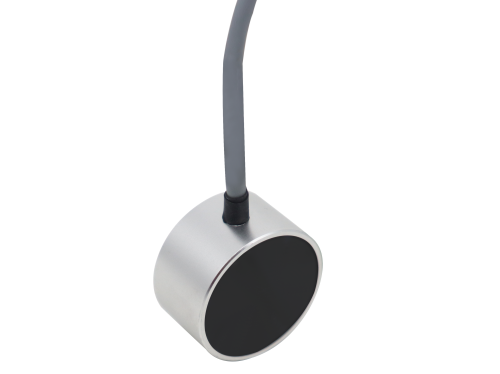
The recommended solution was to directly adopt the ultrasonic transducer (probe) to handle the most critical tasks of sound wave transmission and echo reception. The transducer is the "sensing organ" of the entire liquid level measurement system, and its performance and reliability directly determine the success or failure of the measurement. By concentrating the budget here, the quality of front-end signal acquisition is ensured. The subsequent signal processing, amplification, conversion, and output circuitry were then left to the customer's own technical team to design and complete.
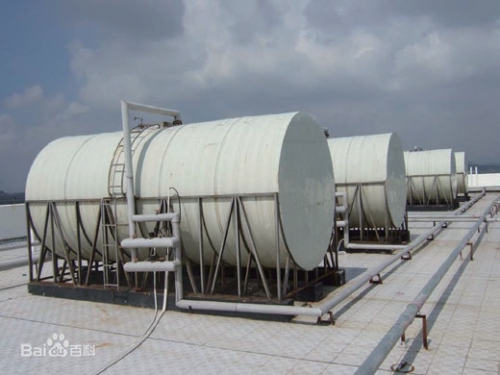
This is a highly flexible and cost-effective cooperation model. It gives the customer significant autonomy: they can customize the back-end circuit design based on the specific interface requirements of their own system (such as 4-20mA, RS485, or TTL); they can allocate and control costs more flexibly, putting resources where they matter most; and crucially, this deep involvement enhances the adaptability and technical controllability of the solution. For a company like CIMC Semiconductor, which has circuit design capabilities, this is undoubtedly an ideal path that not only ensures core measurement performance but also allows them to leverage their own technical strengths while strictly adhering to the cost budget.
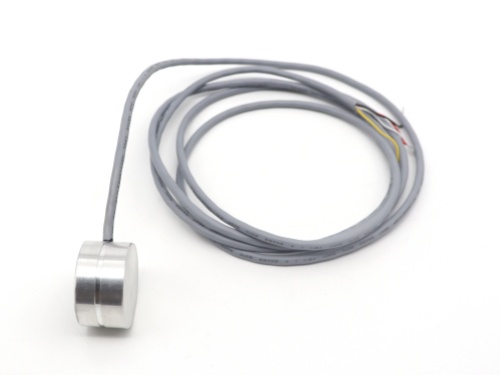
Dayu Electronics' M33 external mount solution, combined with this flexible model of "providing core sensing components and supporting customer secondary development," together offers a pragmatic and efficient approach to tank liquid level monitoring. It does not pursue large, fully integrated solutions, but instead focuses on solving the most fundamental problem—"how to achieve non-contact precision sensing"—and returns the initiative of system integration to the user. This is not only a successful