
Does the M33 Patch Underwater Distance Sensor Need Full Contact When Mounted Under the Oil Conservator? [Dayu Electronics]
From a working principle perspective, the M33 patch sensor relies on ultrasonic pulses penetrating the oil conservator wall and receiving reflected echoes from the oil surface to achieve distance measurement and obstacle avoidance. Ultrasonic waves reflect and attenuate at interfaces between different media. The acoustic impedance of air is much lower than that of metal walls and transformer oil. If there is an air layer between the sensor and the oil conservator, the sound wave will be strongly reflected at the "sensor-air-oil conservator" interface, most energy cannot penetrate the wall, resulting in weak echo signals and a sharp drop in signal-to-noise ratio, directly causing data drift, jumps, or even no valid readings. Full contact builds a continuous acoustic conduction path, minimizing signal loss and ensuring stable penetration and precise reflection of sound waves through the wall.
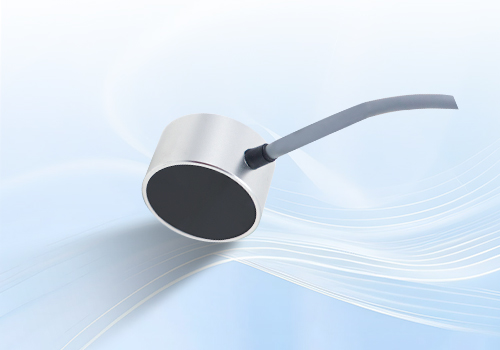
From the perspective of working condition adaptation, transformer oil conservators are exposed to outdoor environments for long periods. Temperature fluctuations, vibration, and slight deformation can easily enlarge installation gaps. Non-contact installation exacerbates signal instability, especially at low temperatures where thermal expansion and contraction of the air gap further disrupts acoustic coupling and affects monitoring reliability. Full contact installation enhances the sensor's resistance to vibration, prevents positional shifts caused by equipment operation, and suits long-term continuous monitoring of the oil conservator.
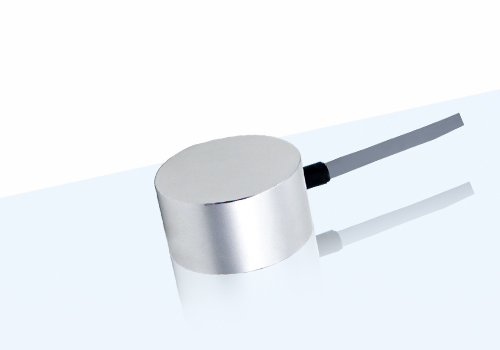
Actual installation must follow standard procedures: first clean the installation area on the oil conservator, remove oil, rust, and coatings, and ensure a smooth and flat surface; evenly apply a dedicated acoustic coupling agent on the sensor's emitting surface to completely eliminate tiny air bubbles; press the sensor vertically against the underside of the oil conservator to ensure gap-free contact between the emitting surface and the wall, with angle deviation controlled within ±1°; finally, secure it with the provided fixtures to prevent loosening or displacement.
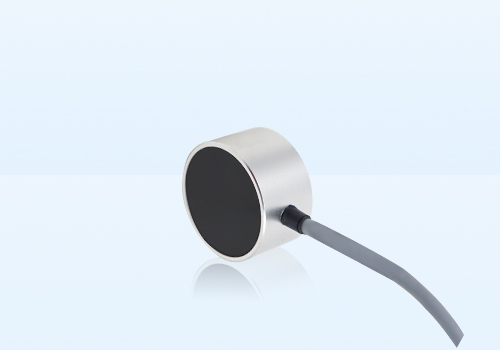
When installing the M33 underwater obstacle avoidance sensor under the oil conservator, full contact is the foundation of acoustic coupling, a necessary condition to avoid signal attenuation and ensure measurement accuracy, and a key to adapting to complex outdoor conditions and achieving long-term stable monitoring. During installation, the gap-free contact requirement must be strictly enforced.