
Dayu Electronics M33 Bolt-On Liquid Level Sensor for High-Temperature Liquid Level Monitoring in the Laboratory
In the laboratory, there are always some "difficult" measurement targets—for example, a stainless steel container with a water depth of only 150 to 160 mm and a water temperature as high as 100°C. The top is also covered with a lid, leaving only 10 to 50 mm of clearance above the liquid surface. Want to insert a probe? Not enough space. Want to drill a hole in the bottom to install a sensor? The experimental equipment cannot be modified.
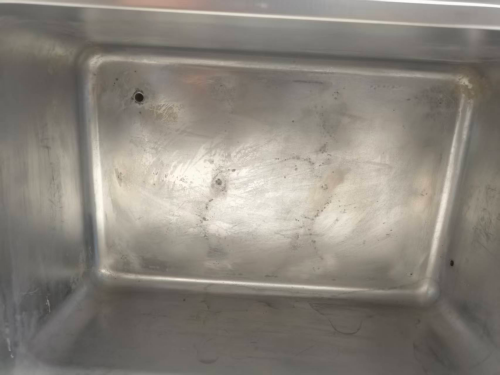
Recently, a customer came to us with this exact requirement: without contacting the liquid and without modifying the container, measure the water level from the outside with an accuracy of within ±5 mm. They also raised a critical concern—if there are air bubbles in the container, will the measurement data remain stable?
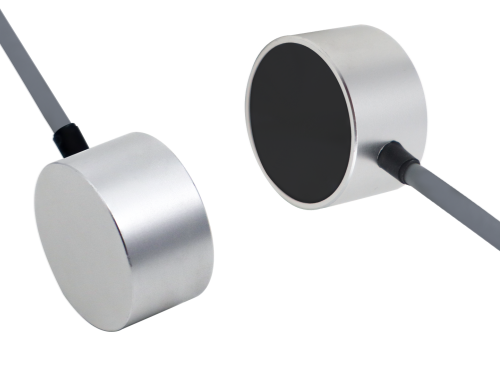
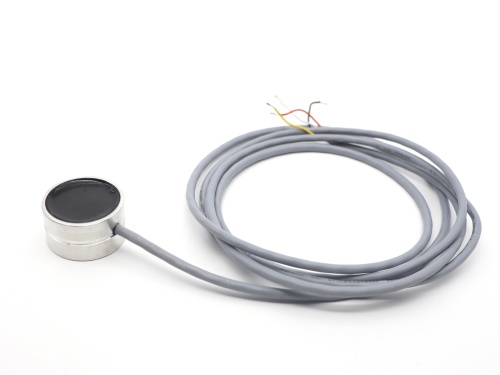
To address this scenario, we recommend the M33 bolt-on liquid level sensor. Its working principle is simple: the sensor probe is attached to the outside wall at the bottom of the container, emitting ultrasonic waves that penetrate the stainless steel wall, propagate through the liquid, and are reflected back upon reaching the liquid surface, from which the liquid level is calculated.
Why choose it?
Bolt-on installation: no drilling required, no contact with the liquid, suitable for high-temperature, corrosive, or sealed environments.
Range suitability: a water depth of 150–160 mm is well within the M33's measurement range.
Sufficient accuracy: the ±5 mm requirement is a routine level for ultrasonic bolt-on technology and can be met.
High-temperature handling: the sensor is mounted on the external stainless steel wall; while the steel conducts heat, the sensor itself can withstand temperatures above 80°C, and with proper insulation or heat sinks, long-term stable operation is feasible.
Insensitive to top clearance: even if the liquid surface is only 10 mm from the lid, it does not affect the measurement—since the ultrasound is emitted from the bottom upward, top clearance doesn't matter.
The customer's concern about air bubbles is very professional. When a large number of tiny bubbles are present in the liquid, the ultrasonic signal will experience significant attenuation—bubbles reflect and scatter acoustic waves, weakening or even losing the echo signal. In actual testing, vigorous boiling-induced bubbles can indeed cause reading jumps or temporary signal loss.
But the good news is:
1. Static or slight bubble state: if there are only a few bubbles, the M33's built-in intelligent echo algorithm can filter out the interference and the data remains stable.
2. Vigorous boiling: near the boiling point at 100°C with continuous churning, we recommend practical testing. Different container shapes, liquid properties, bubble sizes, and distributions have varying effects on acoustic waves.
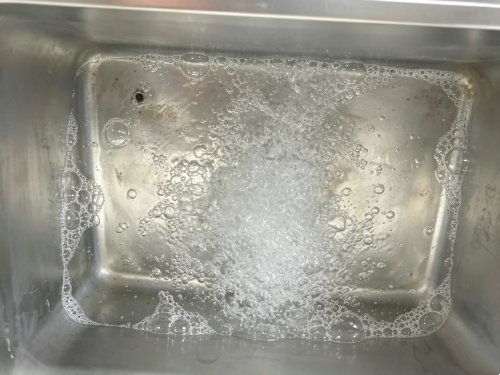
3. Feasible measures: if the test shows that bubble interference is too significant, you can try mounting the sensor at a non-central position on the bottom of the container (e.g., near the edge), where bubbles are usually fewer; or use a short-term averaging filter setting, sacrificing a bit of real-time response for stability.
Our recommendation: test first, let the data speak
The customer's approach is very rational—we suggest directly taking an M33 sample unit and conducting actual measurements under field conditions. You can simulate bubbles in room-temperature water (e.g., using an air pump), then heat the water to high temperatures and observe the changes. We provide full technical support, including installation location guidance, parameter tuning, and echo waveform analysis.
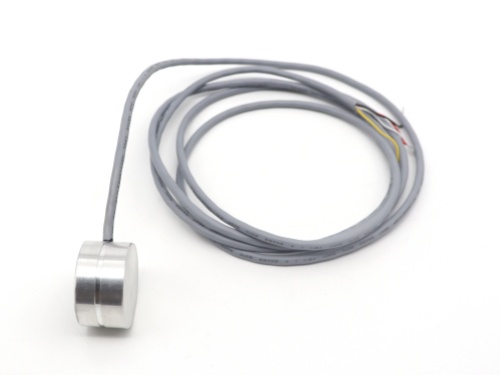
If the test goes well, this solution will perfectly solve the multiple challenges of "high temperature, confined space, bolt-on installation, and air bubbles." If the bubble effect proves too severe, we will honestly report that and recommend alternative approaches (such as guided-wave pipe bolt-on or non-contact radar).
Dayu Electronics believes: there is no universal sensor, but there is a suitable test. Rather than just theoretical discussion, let the M33 have a "field trial" on your test bench. Contact our technical engineers to apply for a free sample test—success or failure, you'll know after testing.