
Dayu Electronics: Analysis of Coupling and Fixing Operations for the M33 Underwater Obstacle Avoidance Sensor
During the integration of underwater robots, autonomous vehicles, and similar equipment, ensuring accurate and reliable obstacle avoidance sensor measurements is fundamental to operational safety. During the actual installation of the Dayu Electronics M33 underwater obstacle avoidance sensor, a common step involves applying coupling agent to the emitting surface. Users often have two concerns: How long does the coupling agent take to cure? Does curing affect measurement accuracy? This article will explain the correct technical understanding and installation practices.
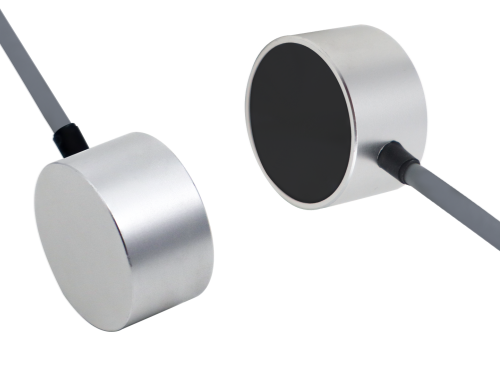
The Core Function of Coupling Agent and the Relativity of Curing Time
The core function of a coupling agent (such as specialized acoustic silicone grease) is to fill the microscopic gaps between the sensor's emitting surface and the object being measured (or the mounting base), expel air, and establish an efficient acoustic transmission path. Regarding its curing time, it is not a fixed value but depends on the specific product formulation, environmental temperature and humidity, and application thickness. Therefore, excessive focus on curing duration is not the technical key. As long as the coupling agent effectively excludes air and maintains its filling state during installation, its subsequent curing process (such as transitioning from a paste to a more stable state) typically does not have a destructive effect on the already established acoustic coupling interface.
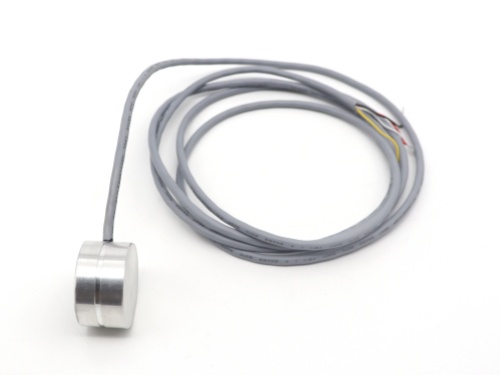
What truly determines measurement accuracy is whether the air gap between the sensor's emitting surface and the object being measured is completely eliminated during installation. The attenuation coefficient of ultrasound in air is much higher than in water or solids. Even an extremely thin air layer can cause most of the acoustic energy to be reflected or scattered at this interface, severely weakening the transmitted signal strength and interfering with echo recognition, directly leading to increased ranging errors, expanded blind zones, and even false triggering.
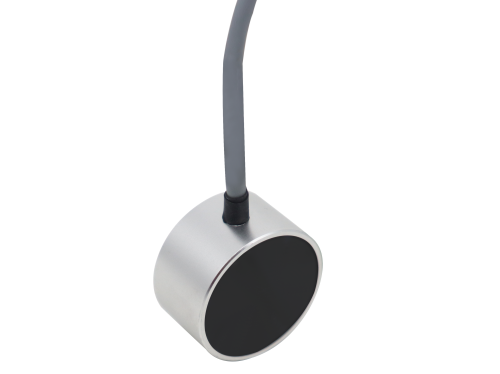
Therefore, to answer the user's second question: curing itself generally does not affect a well-formed coupling interface; however, if air is not effectively expelled during installation, measurement accuracy will significantly degrade regardless of whether the coupling agent has cured.
Correct Installation Practice: External Force Fixing to Ensure Tight Contact
Based on the above principles, Dayu Electronics' installation guidelines emphasize physical compression rather than waiting for curing. The specific steps are as follows:
1. Surface preparation: Clean the sensor's emitting surface and the installation area to ensure they are free of oil, grease, and dust.
2. Uniform application: Apply an appropriate, uniform layer of coupling agent on the sensor's emitting surface.
3. Apply pressure for fixing: This is the most critical step. After aligning the sensor to the installation position, a stable and uniform compressive force must be applied to the back of the sensor using mechanical means such as bolts or clamps. This pressure is intended to expel any air entrapped in the coupling agent and to force the emitting surface and the base to achieve maximum actual contact area.
4. Inspection and tightening: After installation, confirm that the coupling agent uniformly overflows from the edges of the contact surface (indicating good contact), and ensure that the fasteners do not loosen under operational vibration.
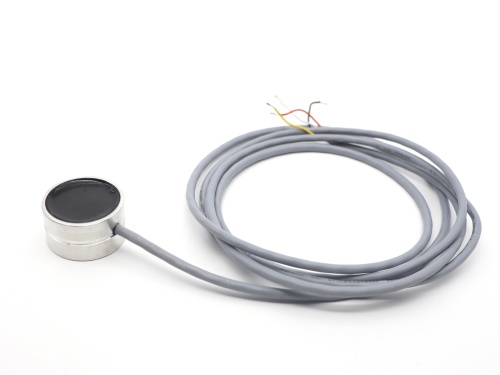
In summary, for the M33 underwater obstacle avoidance sensor, the key to ensuring measurement accuracy lies in achieving and maintaining a tight, air-free contact between the emitting surface and the object being measured through reliable mechanical external force during installation. Users should shift their focus from the curing time of the coupling agent to how to perform correct compression installation. Following this principle is the foundation for ensuring the sensor delivers optimal detection performance in complex underwater environments.