
Dayu Electronics: Installation Guidelines for Accurate Measurement with the M33 Patch-Type Underwater Ranging Sensor
In the fields of underwater inspection, equipment maintenance, and infrastructure monitoring, precise and reliable obstacle avoidance and ranging capabilities are critical. The Dayu Electronics M33 patch-type underwater ranging sensor, leveraging its advanced ultrasonic technology, is widely used in underwater operations, underwater structure inspection, and various liquid level and thickness measurement scenarios. During installation, ensuring proper contact between the sensor and the surface of the target object is fundamental to achieving optimal performance. Addressing common user installation questions, this article clarifies the key factors for the M33 sensor to achieve accurate measurement.
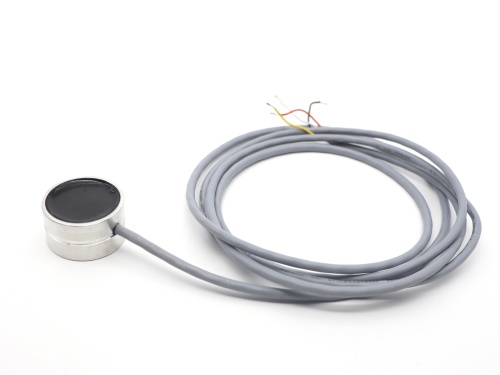
In a typical application scenario, such as mounting the sensor beneath an oil conservator of a transformer for oil level or wall thickness monitoring, users often ask: “Does the sensor need to be in full contact with the conservator surface?” The answer from Dayu Electronics is: full contact is mandatory, with absolutely no air gap in between. This is not merely an installation suggestion, but an inherent requirement based on the physical principles of ultrasound. The M33 patch-type ranging sensor works by transmitting ultrasonic signals and receiving their echoes. When an air layer exists between the sensor and the conservator surface, the acoustic wave experiences severe signal attenuation and reflection as it crosses the interface between the two different media—air and the conservator—causing most of the energy to fail to penetrate into the conservator effectively, thus preventing the reception of a valid echo signal.
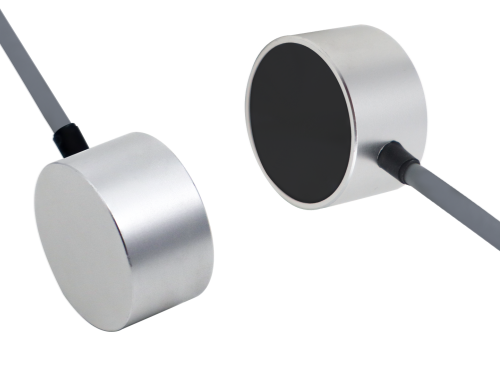
This requirement profoundly reflects the core principle of underwater ultrasonic sensor operation: good acoustic coupling. The sensor must ensure efficient transmission of acoustic waves into the object under test through solid coupling (e.g., tight contact) or liquid coupling (e.g., through water or oil media). Therefore, when installing the M33 patch-type sensor, it is essential to ensure that its detection surface is in close, flat contact with the surface of the object under test. If necessary, a dedicated acoustic coupling agent can be used to eliminate microscopic air bubbles and establish a stable, reliable acoustic transmission path.
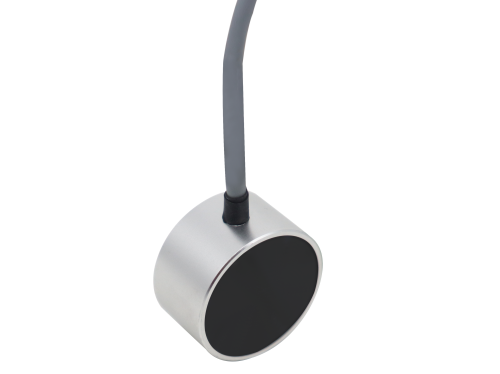
The M33 patch-type underwater ranging sensor was designed from the outset with adaptability to complex underwater environments in mind. Its housing is made of high-strength, corrosion-resistant material, with an ingress protection rating of IP68, capable of withstanding certain water pressure and prolonged immersion. It offers high measurement accuracy, a small blind zone, and an adjustable detection range selected to meet actual requirements, delivering stable and reliable performance. However, even the finest equipment relies on correct installation. Before proceeding with projects such as conservator monitoring that require direct contact measurement, always ensure that the mounting surface is clean and flat, and that the sensor achieves gapless contact. This is the first step toward obtaining accurate data.
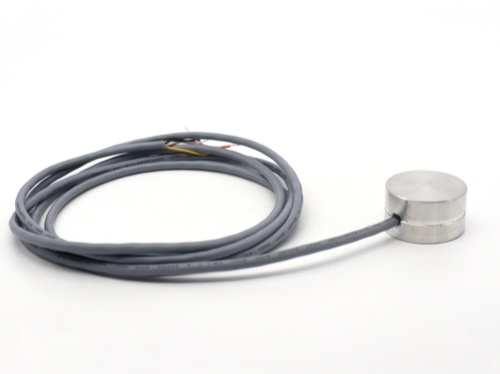
Choosing Dayu Electronics means choosing mastery over professional details. Our technical team is available at any time to provide installation consultation and solutions tailored to your specific application scenarios, ensuring that every M33 sensor performs at its best in its role, safeguarding your safe operations and precise monitoring.