
Dayu Electronics: How Does the M30 Sensor Achieve Front-Down 3D Obstacle Avoidance?
As intelligent unmanned surface vessels (USVs) increasingly become the mainstay of river patrol, water mapping, and environmental monitoring, ensuring the safe navigation of these 'surface robots' in complex and variable underwater environments has become a common industry challenge. Submerged rocks, shallow banks, underwater structures, suspended obstacles—these invisible underwater threats constantly test the autonomous navigation capabilities of USVs. Dayu Electronics leverages its mature M30 series underwater ranging sensors to provide customers with a reliable front-down 3D perception solution, granting USVs a true 'collision-avoidance vision.'
1. Challenge: How to Guard Against Invisible Risks?
With the widespread application of intelligent USVs in scenarios such as water patrol, hydrological monitoring, environmental sampling, and river mapping, real-time detection of underwater obstacles and autonomous obstacle avoidance have become core requirements for ensuring navigation safety and operational continuity.
Traditional USVs primarily rely on above-water cameras, radar, and GNSS for navigation, but are nearly 'blind' to the underwater world. In unfamiliar or complex waters (e.g., mountain reservoirs, urban rivers, nearshore areas), hidden hazards such as submerged rocks, shallow banks, submerged hydraulic structures, suspended fishing nets, or large debris can easily cause hull scratches, propeller entanglement, or even grounding and capsizing, leading to mission interruption, equipment damage, economic losses, and safety risks. The market urgently needs an underwater perception solution that can penetrate water, cover key areas, provide accurate ranging, and operate reliably.
2. Solution: Front-Down 3D Layout to Build a Blind-Spot-Free Protection Network
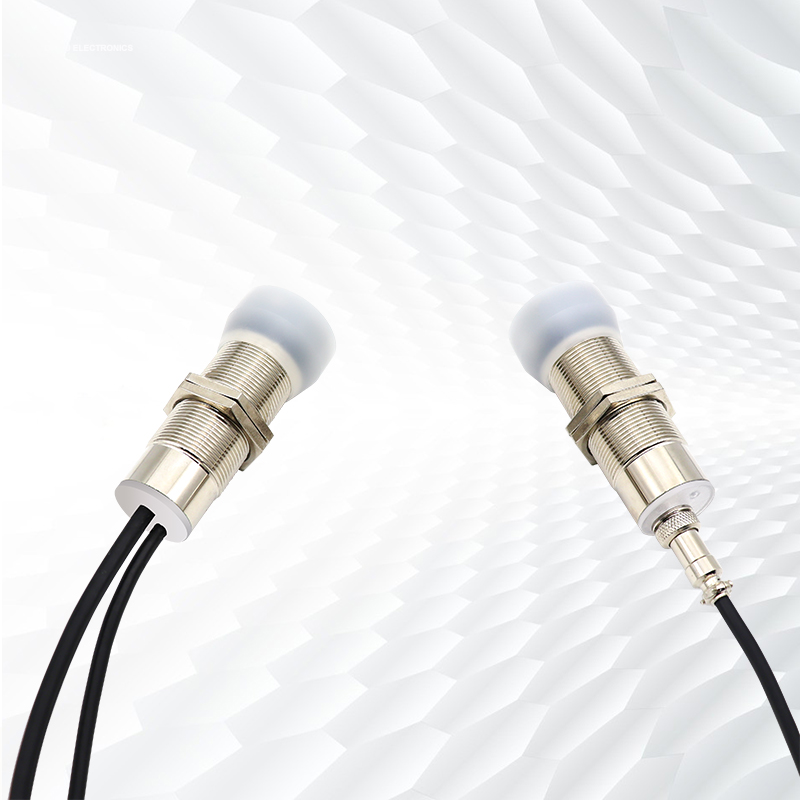
To address the urgent need for omnidirectional underwater perception in USVs, we propose a 3D obstacle avoidance solution based on a combination of M30 underwater ranging sensors. This solution achieves comprehensive coverage of risks in front of the vessel and beneath the hull through the coordinated deployment of sensors with different ranging capabilities.
? Core Configuration:
? M30-50m sensor x 1 unit: Responsible for long-range early warning.
? M30-20m sensor x 1 unit: Responsible for short-range precise detection.
? 3D Installation Layout and Tactical Division:
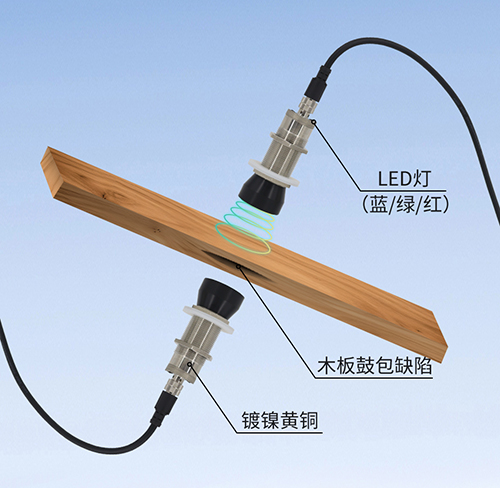
1. Front 'Telescope' (50m range): Installed at the bottom of the bow, pointing forward and downward. Its core mission is long-range channel scanning. It can detect large underwater obstacles (such as dams, bridge piers, reef clusters) dozens of meters ahead of the vessel's path, providing the control system with ample early warning time and distance information for proactive route planning and smooth avoidance.
2. Bottom 'Microscope' (20m range): Installed vertically or slightly tilted forward on the hull bottom. Its core responsibility is real-time, high-precision monitoring of water depth and terrain changes directly beneath the vessel. It can sensitively detect rising shallow banks, sudden seabed protrusions, and small suspended obstacles, effectively preventing grounding or collisions with nearby obstacles.
? System Workflow:
Both sensors operate continuously, transmitting real-time, precise underwater distance data to the USV's central control system or autopilot via interfaces such as RS485/CAN. The control system fuses this dual data stream with GPS, inertial navigation, and other information to calculate a safe channel in real time. When risks are detected, it automatically triggers deceleration, stopping, or avoidance commands, achieving closed-loop autonomous obstacle avoidance from perception to decision-making to execution.
3. Core Advantages of the Solution: Precision, Reliability, and Comprehensive Coverage
1. Front-Down Coordination Eliminates Perception Blind Spots: Traditional single sensors cannot cover both long-range and short-range needs. This solution employs a 3D layout of 'front-looking long-range warning' plus 'down-looking short-range monitoring' to achieve seamless coverage of the primary navigation threat direction (ahead) and the highest-risk area (under the hull), establishing a true 3D protection network.
2. Dual-Range Precise Matching Maximizes Efficiency: The 50m sensor optimizes long-range detection capability, focusing on 'detection'; the 20m sensor provides higher measurement accuracy and refresh rates in the short range, focusing on 'precise avoidance.' Working together, they ensure sufficient early warning time and the accuracy of final avoidance maneuvers, perfectly adapting to complex waters from wide lakes to narrow rivers.
3. Rugged and Durable Underwater, Consistent Data Stability: The M30 sensors feature an industrial-grade pressure-resistant sealed design with IP68 protection, allowing long-term submersion. Their acoustic design and signal processing algorithms are optimized for complex underwater conditions such as turbid water, flow disturbances, and aquatic life interference, ensuring stable and reliable ranging data output during continuous day/night operations and across different seasonal hydrological conditions.
4. Plug-and-Play for Rapid Integration: The sensors are compact, easy to install, and offer standard electrical interfaces and rich communication protocols (e.g., Modbus RTU). They can be quickly integrated with mainstream USV autopilot systems, flight controllers, or industrial PCs, significantly shortening the customer's system development and deployment cycle.
4. Application Outcomes: From 'Blind Navigation' to 'Smart Navigation'
After deploying this solution, the navigation safety performance of USVs has achieved a qualitative leap:
? Significantly Enhanced Safety Level: Achieves proactive warning and automatic avoidance of underwater obstacles, significantly reducing collision and grounding incidents.
? Increased Operational Autonomy: Vessels can confidently execute automated tasks in more complex hydrological environments, expanding the navigable waters and reducing reliance on remote human intervention.
? Reduced Operating Costs: Avoids repair costs and mission interruption losses caused by collision damage, improving equipment utilization and mission success rates.
? 24/7 Operation Becomes Possible: Optical-independent underwater acoustic sensing enables safe navigation at night, in turbid water, or under low-light conditions, achieving all-weather operational capability.
5. Broad Application Prospects
This front-down 3D obstacle avoidance solution has become the standard choice for enhancing the safety level of various intelligent surface platforms, widely applied in:
? Intelligent Inspection USVs: For underwater structural inspection of reservoirs, dams, river embankments, and pipeline routes.
? Hydrographic Survey and Mapping Vessels: Effectively ensures vessel safety during underwater terrain mapping, preventing contact with shallow banks or obstacles.
? Environmental Monitoring and Sampling Vessels: Ensures precise positioning and avoids underwater risks during fixed-point or mobile sampling.
? Water Surface Cleaning Vessels: Avoids underwater obstacles during floating debris collection, protecting collection devices.
? Security Patrol Vessels: Achieves all-weather autonomous safe navigation during perimeter water patrols.
By equipping USVs with the M30-built 'underwater eyes,' we not only solve a technical pain point but also set a new standard for surface autonomous navigation safety across the industry. Dayu Electronics will continue to deepen its expertise in underwater perception technology, using reliable solutions to safeguard the voyage of every intelligent vessel.