
Safeguarding the Urban Water Supply Lifeline: M26 Hydrophone Enables Precision Leak Monitoring in Pipelines
In urban water supply systems, the buried pipeline network serves as the city's lifeline, yet leakage has long been a persistent challenge for water utilities. According to incomplete statistics, the average leakage rate of urban water supply networks in China exceeds 15%, with tens of billions of cubic meters of tap water wasted annually due to leaks. Efficiently and accurately detecting and locating pipeline leak points has become the key to ensuring water resource security and reducing transmission and distribution losses. The M26 hydrophone launched by Dayu Electronics was designed precisely to address this challenge. It acts like a tireless pipeline doctor, safeguarding the safety of urban water supplies.
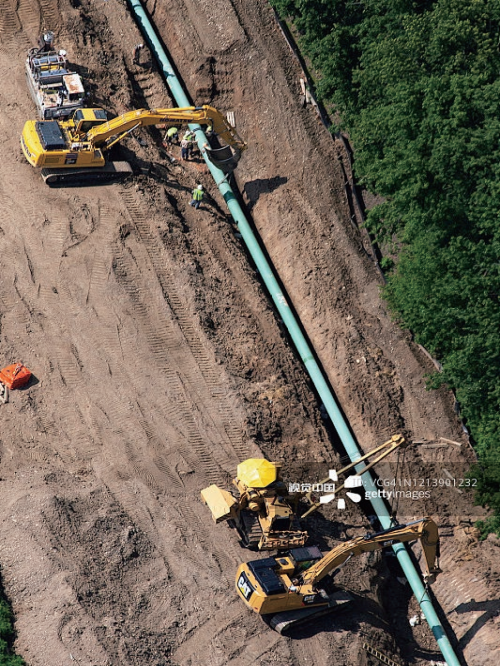
Many people assume a hydrophone is similar to an ordinary microphone. In reality, the M26 hydrophone is specifically designed for contact-based monitoring of acoustic and vibration signals generated by fluid inside pipes. When a leak occurs at a point in the pipeline, high-pressure water jets out from the damaged area, exciting vibrations and noise at specific frequencies. These signals propagate along the pipe wall and through the water body. By attaching the M26 hydrophone to the outer wall of the pipe or installing it at interfaces such as valves and fire hydrants, these abnormal acoustic waves can be captured in real time.
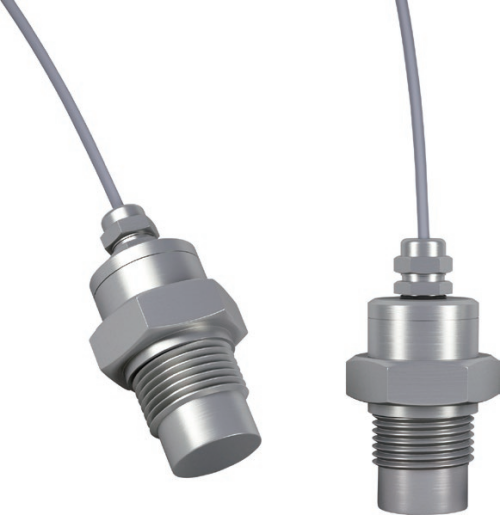
Traditional manual inspection methods using listening rods or ground microphones are not only inefficient but also highly susceptible to environmental noise, often requiring nighttime operations. The M26 hydrophone can be permanently or semi-permanently installed at critical nodes, automatically collecting signals 24/7 and uploading them to a monitoring platform via the Internet of Things (IoT).
More critically, it enables leak localization. By deploying multiple M26 hydrophones at both ends of a pipeline or along its route, the system can calculate the precise location of the leak based on the time difference of arrival of the same leak signal at different sensors, combined with the propagation speed of acoustic waves in the pipe material. The error is typically controlled within a few meters—which for maintenance crews essentially means pinpointing the exact excavation spot.
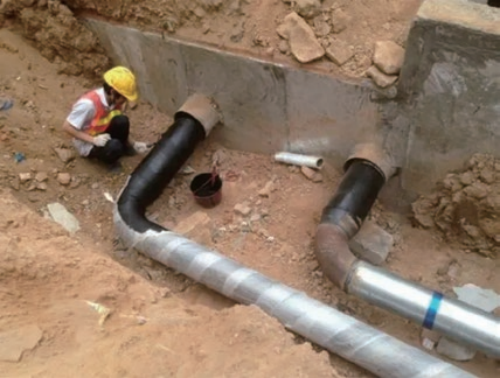
In a water supply network renovation project in a provincial capital city, the local water utility deployed over 200 M26 hydrophones, establishing a leak monitoring system covering the main urban area. During six months of system operation, a total of 37 leak points were detected and located, with the smallest leak aperture measuring only 2 millimeters, preventing significant water waste. According to statistics, after the system was put into operation, the city's water supply network leakage rate dropped by 8 percentage points, with annual water-saving benefits exceeding 3 million yuan, while also reducing the risk of secondary hazards such as road collapse caused by pipe bursts.

The project manager stated: "The performance of the M26 hydrophone has exceeded our expectations. It not only accurately locates leak points but also assesses the severity of leaks by analyzing acoustic characteristics, providing a scientific basis for our maintenance planning. Previously, we had to send personnel to patrol the pipeline route at night—inefficient and prone to oversights. Now we can monitor the real-time operational status of the pipeline network from the control center, significantly reducing work pressure."
Safeguarding Water Resource Security—Dayu in Action
With the accelerating pace of smart city development, intelligent monitoring of water supply networks has become an inevitable trend. The Dayu Electronics M26 hydrophone, with its outstanding performance and reliable quality, is safeguarding water supply security in cities across the country. In the future, we will continue to deepen our focus on the water monitoring sector, continuously innovating technology and optimizing products to contribute greater efforts toward the sustainable utilization of water resources.