
M26 Hydrophone for Urban Water Supply Pipeline Leak Monitoring [Dayu Electronics]
Application Solution for 24-Hour Continuous Monitoring of Urban Water Supply Pipeline Leaks Using the M26 Hydrophone
1. Technical Background and Requirements Analysis
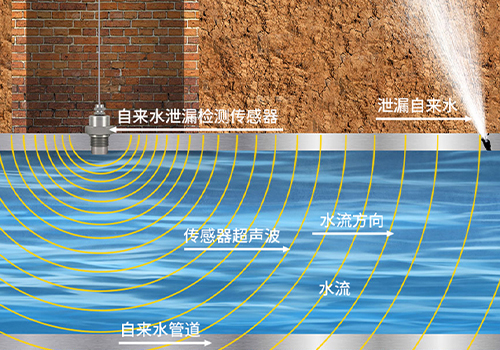
Urban water supply pipeline leak monitoring is a core measure for safeguarding water resources and reducing distribution losses. Traditional manual inspection methods are limited by slow response times and low positioning accuracy, making it difficult to meet the demands of modern urban pipeline network management. As a high-sensitivity acoustic sensor based on piezoelectric ceramic technology, the M26 hydrophone can achieve 24-hour continuous leak monitoring and precise positioning by collecting vibration signals generated by fluid leaks in the pipeline in real time. Its 16-bit resolution acquisition capability (dynamic range ≥ 96 dB) can capture weak acoustic signals, providing high-precision data support for leak event identification.
2. M26 Hydrophone Technical Parameters and Performance Advantages
2.1 Core Parameters
• Operating Frequency: 20 Hz to 20 kHz, covering low-frequency leak acoustic waves (<300 Hz) to high-frequency noise range
• Sensitivity: ≥ -166.5 dB re 1V/μPa, capable of detecting micro-leaks with pressure fluctuations ≤ 0.01 Pa
• Resolution: 16-bit ADC sampling, supporting signal resolution of 0.0015% of full scale
• Environmental Adaptability: IP68 protection rating, wide operating temperature range from -40°C to +85°C, static pressure resistance up to 68 Bar (1000 psi)
2.2 Technical Advantages
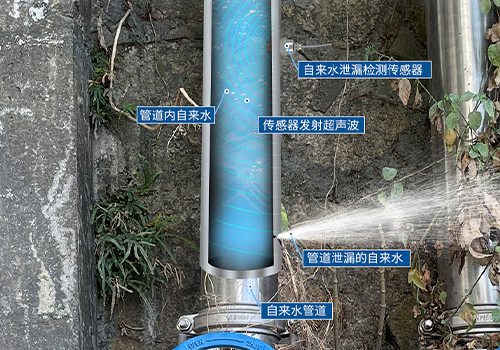
• Non-Intrusive Monitoring: Installed on the outer wall of the pipeline using clamp-type fastening, no need for water shutdown during installation
• Low Power Consumption: Total device power consumption ≤ 150 mW, supports long-term operation with solar power systems
• Anti-Interference Capability: Four-core shielded cable for signal transmission, effectively suppressing electromagnetic noise
3. System Architecture for 24-Hour Continuous Monitoring
3.1 Sensor Deployment Scheme
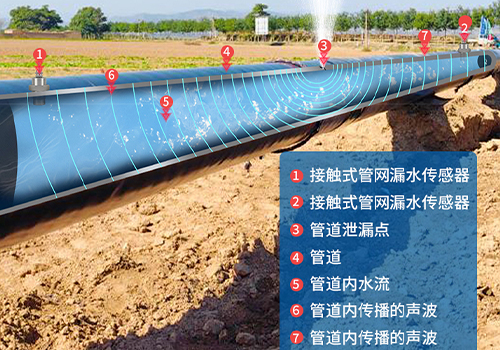
• Installation Locations: Monitoring nodes set every 500–1200 meters along the main water supply line, with priority coverage of stress concentration areas such as valve chambers, elbows, and tees
• Installation Method: 3/4" NPT threaded connection for direct mounting on the outer wall of the pipe, ensuring tight contact between the sensor's emitting surface and the pipe wall
3.2 Data Acquisition and Transmission Module
• Front-End Acquisition Unit: RTU device with integrated 16-bit ADC, supporting dual-mode output of 4–20 mA / RS485
• Communication Protocol: LoRaWAN wireless networking, with transmission distance ≥ 5 km in open areas, supporting Mesh self-organizing networks
• Edge Computing: Built-in spectrum analysis algorithm that filters background noise (e.g., traffic vibrations, pump station interference) in real time
3.3 Backend Analysis Platform
• Leak Identification Model: Machine learning-based acoustic signature library to distinguish between normal operating noise and leak signals
• Localization Algorithm: Uses Time Difference of Arrival (TDOA) technology combined with cross-validation of multi-node data, achieving positioning accuracy ≤ ±2 m
• Visualization Interface: GIS map displaying leak point coordinates in real time, supporting historical data retrieval and leak trend analysis
4. Technical Verification and Standards Compliance
4.1 Laboratory Testing
• Sensitivity Test: At a pressure of 0.1 MPa, leakage signals from an artificial hole with a diameter of 0.5 mm can be clearly identified
• Durability Test: After 5000 hours of continuous operation, sensitivity attenuation ≤ 0.5 dB
4.2 Industry Standards Compliance
• Meets the requirements of CJ/T 266-2017 "Standard for Leakage Control and Assessment of Urban Water Supply Pipeline Networks"
• Passed EMC electromagnetic compatibility certification (GB/T 17626 series standards)
5. Conclusion and Outlook
The M26 hydrophone, with its 16-bit high-resolution acquisition capability, wide operating temperature range, and intelligent analysis algorithms, provides a reliable technical solution for urban water supply pipeline leak monitoring. In the future, with the integration of 5G and AIoT technologies, the hydrophone system will achieve more efficient edge computing and cloud collaboration, driving the upgrade of smart urban water management toward comprehensive perception and precise decision-making.