
Choosing the Right Model Makes Short-Range Measurement Easy: Dayu Electronics M18 vs. M30 Blind Zone Differences
In ultrasonic sensor selection consultations, the blind zone size is one of the key indicators determining measurement accuracy. Recently, a customer asked: "Can the blind zone of the M30 ultrasonic distance sensor be less than 100mm?" Dayu Electronics gives a direct and responsible answer: the M30 model has a blind zone of 200mm, which cannot meet the requirement of measuring below 100mm. If your application scenario demands strict standards for near-field detection, we recommend the M18 ultrasonic distance sensor, specifically designed for a small blind zone.
The blind zone of ultrasonic sensors is an inherent characteristic determined by their physical operating principle.
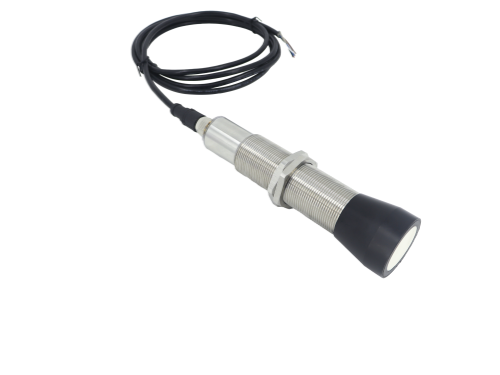
After transmitting an ultrasonic pulse, the sensor needs a certain amount of time to switch from "transmit mode" to "receive mode". During this period, it cannot effectively receive echo signals, and the distance that cannot be detected is the blind zone. Due to the design of the probe size and frequency characteristics of the M30 sensor, its blind zone is stable at 200mm, making it suitable for medium-to-long distance measurement scenarios that do not require high near-field accuracy.
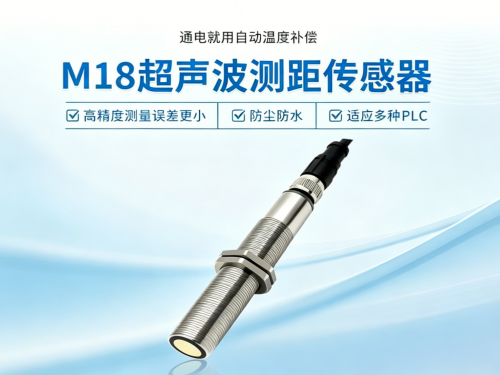
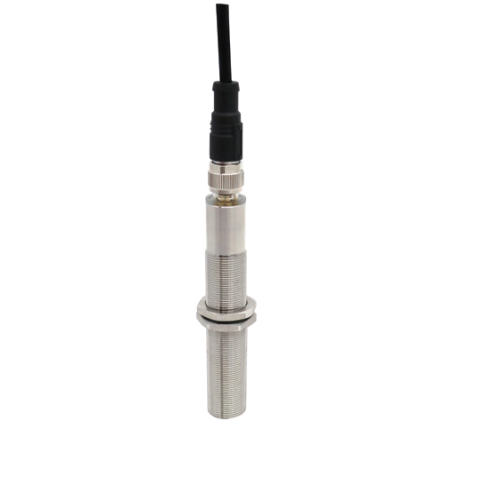
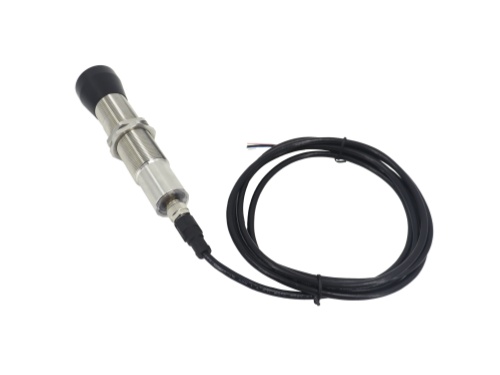
In contrast, the M18 sensor, through optimized transducer structure and signal processing algorithms, significantly compresses the blind zone to within 100mm, enabling precise capture of short-range targets and filling the application gap in small blind zone distance measurement.
The key to choosing between the M18 and M30 lies in clearly defining the measurement requirements of the actual working conditions.
If your project needs to detect objects within 100mm of the distance sensor, such as obstacle avoidance for precision robotic arms, liquid level monitoring in small containers, or near-field navigation for robots, the M18 is the only reliable choice. Its small blind zone ensures stable and accurate distance data even at extremely short ranges, avoiding missed detections or misjudgments caused by excessive blind zones.
Conversely, if the measurement distance is always greater than 200mm and there are specific installation space requirements, the M30 offers better cost-effectiveness and installation convenience.
Therefore, during the selection phase, be sure to clarify core parameters such as minimum measurement distance, blind zone requirements, and installation space. If you still have questions about the specific performance, installation methods, or application scenarios of the M18 or M30, please feel free to contact the Dayu Electronics technical support team. We will provide one-on-one selection guidance and solution validation services based on your actual working conditions, ensuring that every sensor delivers maximum value in the most suitable scenario.