
Acoustic and Structural Design of Dayu Electronics' Garmin LVS34 Fish Finder Transducer Clone
In modern fisheries and recreational angling, fish finders have become indispensable tools. The Garmin LVS34 fish finder transducer clone launched by Dayu Electronics offers users a more precise and efficient detection experience thanks to its outstanding technical features. This article provides a detailed introduction to the core technologies and advantages of this transducer.
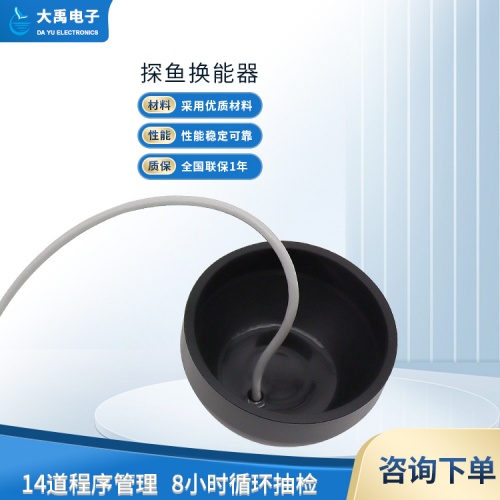
The fish finder transducer is the acoustic sensing core of the entire device, and its performance directly affects detection results. The Dayu Electronics Garmin LVS34 fish finder transducer clone achieves a source level of 160–166 dB, ensuring its detection capability in complex waters. Whether in deep sea or shallow water, this transducer delivers clear and accurate detection results.
Core Technical Features
Boat-Like Streamlined Shape Design
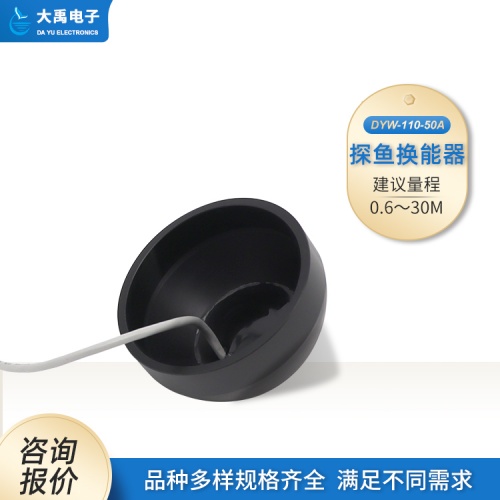
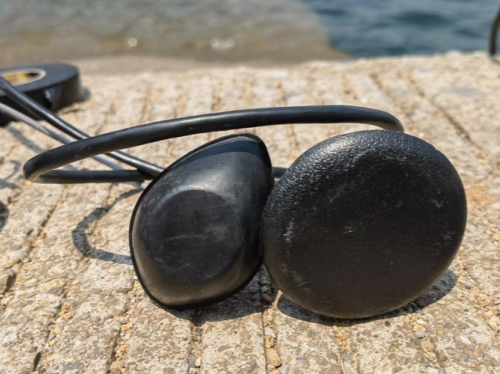
The Dayu Electronics fish finder transducer features a streamlined shape design. This design is not only aesthetically pleasing but, more importantly, it minimizes water flow resistance, reducing shaking caused by water impact and water disturbance. Whether under boat movement, towing, or stationary floating conditions, the transducer maintains a stable detection posture, providing a solid physical foundation for the transmission and reception of acoustic signals.

Dual Ceramic Element Structure
The internal structure of the fish finder transducer consists of two ceramic acoustic elements with different functions. The circular ceramic element is responsible for vertical depth detection, accurately sensing the bottom contour, depth variations, and the depth distribution of fish schools, enabling point-specific distance and depth measurement. The rectangular ceramic element handles wide-range side-scanning tasks, broadening the detection coverage angle for screening fish schools and underwater terrain over a larger area. The two ceramic elements operate independently without interference and, combined with the internal encapsulation matching structure, achieve low signal loss and excellent directivity, balancing depth measurement accuracy with scanning range.
Intelligent Environmental Adaptation System
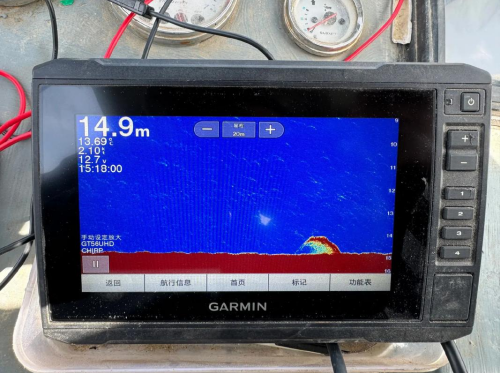
The Dayu Electronics fish finder transducer also integrates an intelligent environmental adaptation system. It monitors the sound field distribution in real time through an integrated hydrophone array and dynamically compensates for sound speed drift caused by water temperature and salinity changes using a PID control algorithm. Additionally, a turbidity sensor can adjust the transmission power in response, ensuring effective penetration in waters with high suspended solids. This system enables the transducer to maintain efficient and stable detection performance across different aquatic environments.
Future Development Directions
Based on the existing transducer, Dayu Electronics will focus on optimizing signal processing algorithms and adaptive adjustment capabilities to improve detection stability in different aquatic environments, and will continue to accumulate acoustic signature data for various fish species and terrains, laying the foundation for future intelligent feature development, aiming to provide users with a more convenient and reliable fish finding experience.