
Dayu Electronics IP68 Level Gauge Wiring Explained: The Technical Choice Between Two-Wire and Four-Wire Systems
In industrial water level monitoring projects, the wiring method often determines the architecture and cost of the entire measurement and control system. "Does your IP68-rated ultrasonic level gauge come in a two-wire version? You know, the kind that only needs two wires, providing both power and a 4~20mA signal?" This is a question a client recently asked us. This person clearly cares a lot about on-site wiring—two-wire systems indeed save one cable, which is very attractive for long-distance transmission or retrofit projects.
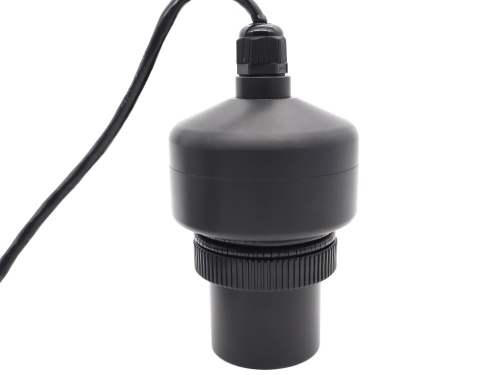
Our answer was also straightforward: currently, Dayu Electronics' IP68 ultrasonic level gauges are not available in a two-wire configuration. We manufacture four-wire systems.
To answer this question, we first need to discuss the "appetite" and "voice" of ultrasonic level gauges.
The essence of two-wire systems lies in "having it both ways"—it attempts to simultaneously provide power (consumption) and transmit signals (communication) over the same pair of wires. This is fine for micro-power sensors, but for ultrasonic level gauges that require a sudden burst of power to drive the transducer, a two-wire system is like asking someone to whisper on the phone while running—extremely prone to unstable power supply or signal distortion.
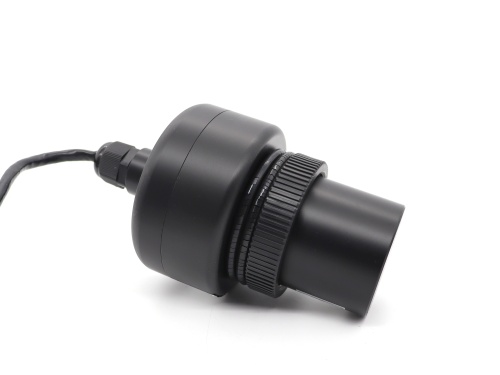
Our IP68 level gauge is essentially a complete ultrasonic sensor—internally containing a transmitter circuit, receiver circuit, signal processing unit, and output module. It requires stable power to drive the ultrasonic transducer, especially at larger ranges or higher operating frequencies, where power consumption significantly exceeds the limits of typical two-wire instruments (usually, two-wire loop power is superimposed on the 4~20mA signal line, strictly limiting total power consumption).
Therefore, our standard solution is four-wire: two wires for power (e.g., 24V DC positive and negative); the other two wires for signal output (either RS485 or 4~20mA). Separating power and signal ensures unrestricted power consumption, more stable output, and stronger anti-interference capability.
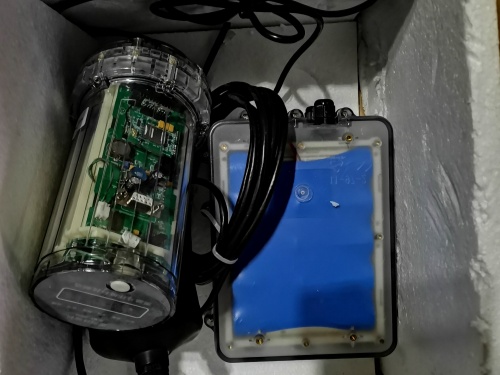
Can 4~20mA output be done? Yes, but not in two-wire form.
Although we don't offer two-wire systems, to accommodate your preference for 4~20mA analog signals, we provide highly flexible customization services:
1. Standard factory configuration (recommended): Four-wire + RS485 output. RS485 offers excellent anti-interference and can transmit over several kilometers, making it ideal for large plants or complex electromagnetic environments.
2. Custom version: Four-wire + 4~20mA output. If your on-site PLC or acquisition system only accepts analog signals, we can certainly customize a 4~20mA output version—just specify it when placing your order.
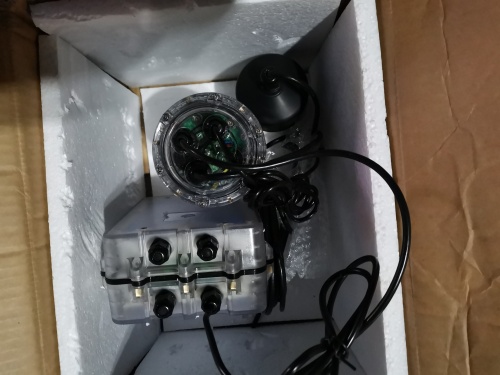
Additionally, our IP68 protection isn't just about "waterproofing"; it's designed to withstand long-term submersion and corrosive environments. Combined with the stable four-wire architecture, this solution has stood the test of time in manholes, reservoirs, and wastewater treatment plants.
When it comes to industrial products, sometimes "adding features" is easy, but "exercising restraint" is hard. Dayu Electronics refuses to compromise on IP68 level gauges by using two-wire systems, driven by our relentless pursuit of product reliability and measurement accuracy.
If you are currently selecting a product, or have any concerns about wiring or output signals, feel free to contact our technical team. We will provide free planning for the most reasonable wiring and output solution based on your site conditions, control cabinet distance, and acquisition requirements.