
Dayu Electronics: Driving and Signal Attenuation of the DYW-88K-200D Transducer
Dayu Electronics' DYW-88K-200D transducer is rated for a no-load driving voltage of 500 Vpp, with a 0.6 m distance and an echo amplitude of 5 V. If a user drives it with 200 Vpp, will it still work? At a distance of tens of meters, will the echo amplitude be less than 1 V?
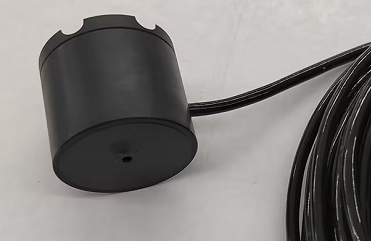
Dayu Electronics would like to remind everyone: 200 V can drive it, but the signal amplitude will be significantly reduced. At distances of tens of meters, the echo signal will indeed be less than 1 V.
1. About the driving voltage:
200 V works, but with reduced amplitude.
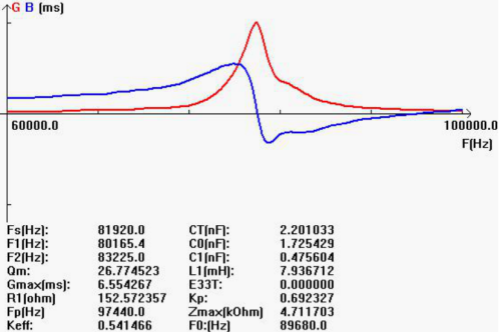
The rated 500 Vpp for the DYW-88K-200D is the recommended driving voltage, under which the output power and signal amplitude reach the optimal design conditions. With 200 Vpp, the transducer can start and operate normally without any theoretical issues. However, because the excitation voltage is reduced, the intensity of the acoustic wave emitted by the transducer decreases, and the received echo amplitude will be lower than when driven with 500 V. The 5 V echo amplitude at 0.6 m under rated conditions is a reference baseline, and it does not mean the transducer can only be used at 500 V.
2. About the transmission distance:
The signal is indeed less than 1 V after tens of meters.
When sound waves propagate in water, signal attenuation comes from two aspects: first, the propagation attenuation of the sound wave itself (acoustic energy spreads as distance increases), and second, environmental losses such as impurities in the water and boundary reflections. When two transducers are separated by tens of meters, the echo signal amplitude is much lower than at close range, and actual measurements confirm it will be below 1 V.
Practical recommendations for customers:
If the customer's application requires transmission over tens of meters, there are two options: first, drive with the rated 500 Vpp to maximize the transmitted sound pressure level and achieve greater margin; second, if only 200 Vpp is available, then the receiving end needs to use a high-gain amplification circuit to amplify the weak echo signal to a recognizable amplitude.
The DYW-88K-200D itself is a transmit/receive dual-purpose transducer. In ranging scenarios over tens of meters, the key is not to ensure a large echo amplitude, but to ensure sufficient signal-to-noise ratio — as long as the echo signal can be distinguished from noise, the amplitude can be compensated with circuitry.
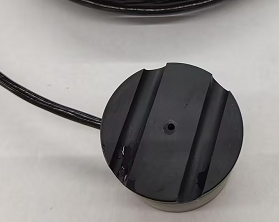
Summary: 200 V can drive it, and the signal will indeed be less than 1 V at tens of meters, which is a normal physical phenomenon and not a defect in the transducer itself. Customers can design their downstream circuits accordingly with this expectation.