
Dayu Electronics: How the DYW-7-NB Underwater Acoustic Transducer "Hears" Ice Thickness
When you think of the Arctic, what comes to mind? Vast ice fields, or biting winds? Against the backdrop of global warming, changes in Arctic ice thickness are not only a focus of climate research but also critical data for polar expeditions and shipping route development. Recently, we received a highly challenging inquiry: a customer wanted to precisely measure ice thickness using underwater acoustic technology in the extreme Arctic environment.

This may sound like a simple "echo ranging" task, but in practice—especially in the complex ice-water-air coupled system of the Arctic—penetrating the ice layer and accurately capturing interface signals is a severe test of equipment performance. To address this need, we recommended the DYW-7-NB underwater acoustic transducer from Dayu Electronics, providing the customer with a reliable underwater ice-measurement solution.
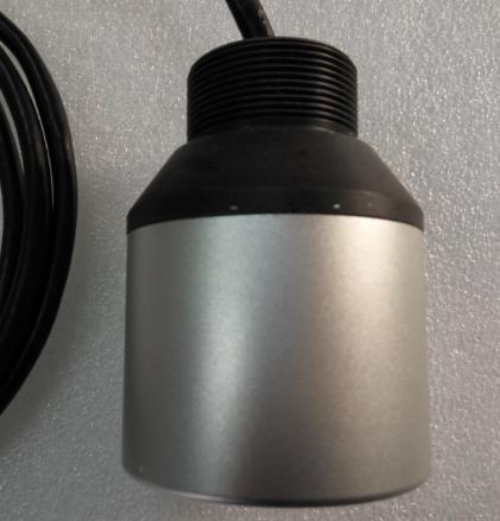
Principle: The "Round Trip" of Underwater Sound Waves
The customer's proposed solution was very scientific: deploy the transducer on the seabed and transmit ultrasonic waves upward. The sound waves travel through the water and first encounter the "water-ice" interface, where a portion of the energy is reflected back; the remaining energy penetrates the ice layer and is reflected again at the "ice-air" interface.
By receiving these two reflected signals with a hydrophone and combining them with the sound wave propagation speed in the medium, we can precisely calculate the ice thickness. It's like performing an ultrasound on the Earth—using the time difference of echoes to visualize the ice layer's "figure."
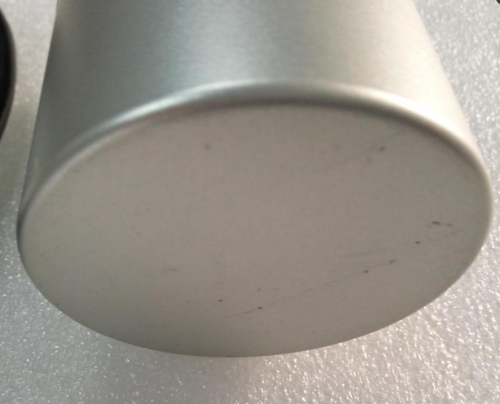
Core: The Hardcore Capability of the DYW-7-NB
The challenge in Arctic ice measurement lies in the fact that the ice layer is not homogeneous. The ice often contains air bubbles and cracks, and its density varies with temperature, which significantly affects sound wave scattering and absorption. If the transducer's frequency is not properly selected, the signal can easily attenuate during penetration, making the interface undetectable.
The DYW-7-NB underwater acoustic transducer is specifically designed for such high-precision detection. It features excellent directivity and high sensitivity, capable of emitting acoustic pulses with concentrated energy and a clean waveform. This means that even with thick or structurally complex ice layers, it can still clearly capture weak reflected signals, ensuring that the echoes from the "water-ice" and "ice-air" interfaces do not interfere with each other, thereby ensuring accurate thickness calculation.
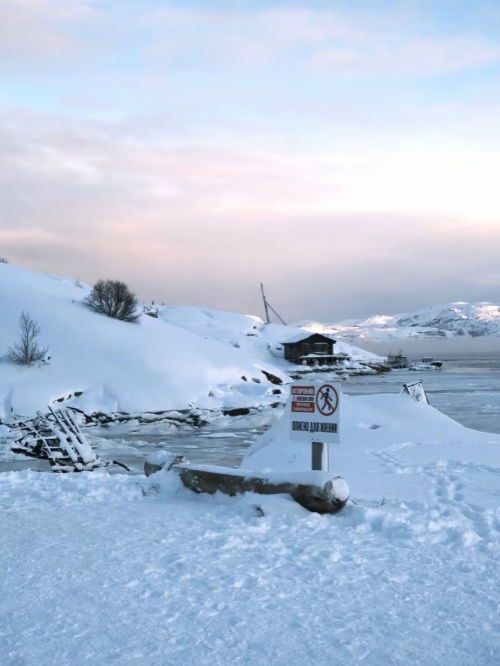
The customer chose to fix the transducer on the seabed rather than probing from above, which makes good sense. The seabed environment is relatively quiet, with less interference from wind, waves, and drifting ice impacts. Moreover, with sound waves traveling upward from the bottom, a single transmission can capture both the water-ice and ice-air interface information simultaneously, making calculations simple and reliability high.
Of course, polar operations come with their own special challenges—water temperatures near freezing require the equipment to withstand low temperatures, and sealing and pressure resistance must be up to standard. The DYW-7-NB was designed with these factors in mind. When paired with an appropriate hydrophone, the entire system can operate stably in Arctic conditions.
At present, this solution has entered the testing phase in several polar research projects. If you are also working on ice thickness monitoring or underwater acoustic detection projects, feel free to discuss your specific operating conditions with us. Dayu Electronics' underwater acoustic transducer series offers configuration options for everything from freshwater to seawater, and from temperate to polar regions.