
How to Use the DYA-21-G Ultrasonic Transducer for Indoor Positioning
Indoor positioning is an application proposed in recent years. How can ultrasonic transducers be used for indoor positioning? Take a recent experiment conducted by a university using the DYA-21-G ultrasonic transducer as an example, and here is a brief introduction.
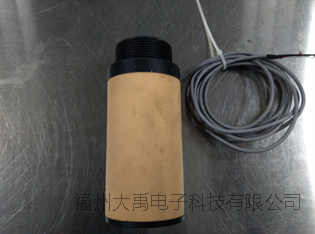
Figure 1: DYA-21-G horizontal omnidirectional air transducer as the transmitting source
The experiment was conducted indoors in a space of approximately 20 x 30 meters, with a ceiling height of about 3.5 meters. On the floor, there was an autonomous cart measuring 1 meter in length by 0.6 meters in width. The DYA-21-G, a horizontal omnidirectional air transducer, was placed flat on the cart as the transmitting source. Depending on the experimental requirements and the cart's surface area, multiple transducers could be placed. While the cart was in motion, the DYA-21-G air transducer continuously emitted ultrasonic waves at around 21 kHz, transmitting in a 180-degree pattern toward the ceiling.
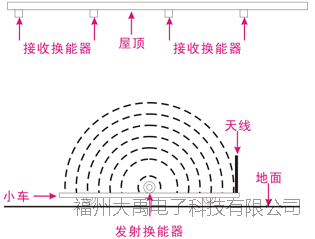
Figure 2: Schematic of the indoor positioning experimental cart in operation
To achieve effective indoor positioning, when the cart reaches a certain location, at least three receiving transducers must be able to detect the ultrasonic waves emitted by the DYA-21-G transducer. Therefore, the density of receiving transducers on the ceiling must be carefully considered. The site is 30 meters wide and 20 meters long, and the schematic of the transducers arranged on the ceiling is shown below:
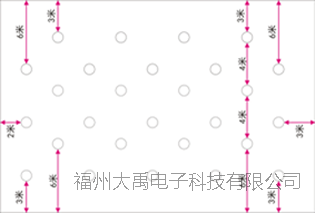
Figure 3: Schematic of the distribution of receiving transducers for ceiling-based positioning
The distribution of receiving transducers on the ceiling can be adjusted based on the transmitting angle of the transmitting transducer. Generally, the larger the transmitting angle, the fewer receiving transducers are needed.
To improve positioning accuracy, a transmitting antenna can be added to the cart to synchronize signal transmission. When the transmitting transducer emits a signal, the antenna broadcasts the transmission time so that the receiving transducers on the ceiling can receive the time of emission, thereby enhancing positioning accuracy.