
Pipe Sewage Flowmeter Selection: How to Choose for DN200 Working Conditions? [Dayu Electronics]
In actual sewage monitoring projects, DN200 pipes are very common, but selection often troubles engineers—full pipe or non-full pipe? Is the water quality clean? Is there backpressure at the outlet? These details directly determine which type of flowmeter should be used. In response to these field questions, we have sorted out recommended solutions for different working conditions for your reference.
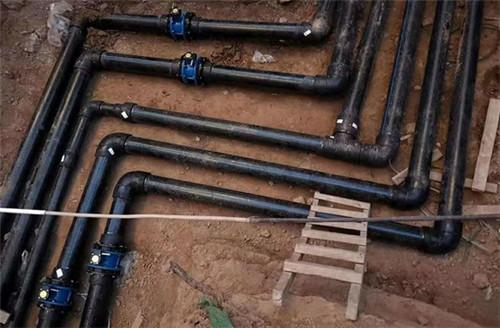
When the pipe is full and contains few impurities, prioritize insertion or spool-piece flowmeters
If the pipe is always filled with liquid and the sewage does not contain a large amount of suspended solids or bubbles, then traditional insertion or spool-piece electromagnetic flowmeters can handle the job. They offer high measurement accuracy, fast response, and relatively mature installation, making them a common choice for full-pipe clean liquid or lightly polluted sewage.
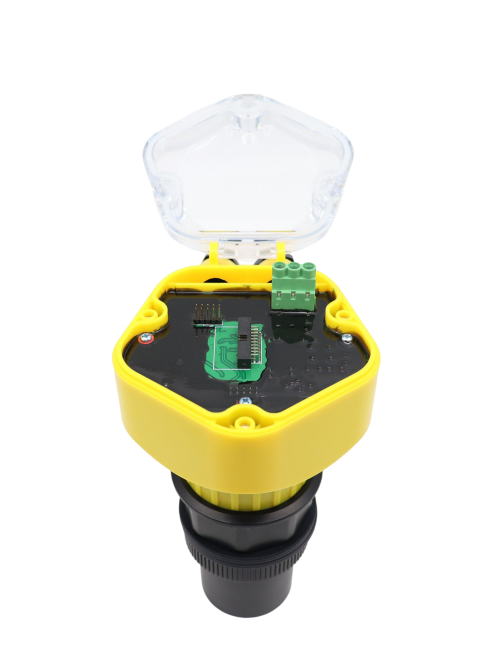
For non-full-pipe sewage, a Doppler flowmeter is a more suitable solution
Once the liquid level in the pipe is not full, or the sewage contains a large number of suspended particles or bubbles, the above two flowmeters will become inaccurate or even fail to work. This is where the advantages of a Doppler flowmeter come into play—it utilizes the ultrasonic Doppler effect and is specifically designed for liquids containing solid particles or bubbles. The sensor only needs to be installed on the outer wall of the pipe or inserted below the liquid surface, allowing stable flow velocity measurement under non-full-pipe conditions, which can then be converted to flow rate based on liquid level. For medium-diameter pipes such as DN200, the Doppler flowmeter offers flexible installation without the need for production shutdown during retrofits, making it especially suitable for complex working conditions such as municipal sewage and industrial wastewater.
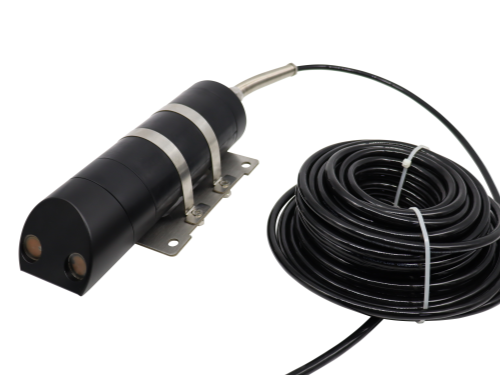
There is also a special case: for gravity flow without backpressure, a weir/flume-free open channel flowmeter may also be considered
If the pipe outlet discharges directly to the atmosphere, the water flows naturally by gravity, and downstream water levels will not back up and cause water accumulation in the pipe, a weir/flume-free open channel flowmeter can be installed to calculate the flow rate by measuring liquid level and flow velocity. However, this solution has strict requirements on field conditions, requiring the pipe to remain in a non-full and free-discharge state at all times, which imposes certain limitations in practical applications.
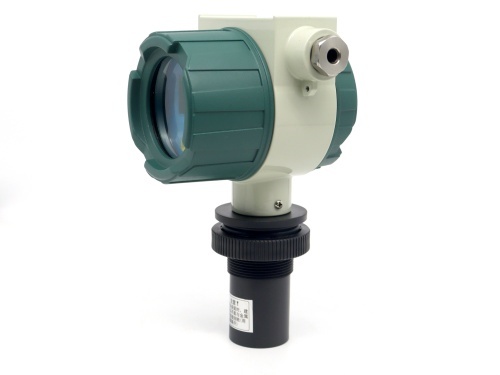
Overall, for sewage measurement in DN200 pipes, if the site frequently operates under non-full-pipe conditions or with dirty water quality, the Doppler flowmeter is the most adaptable and hassle-free choice. It is not picky about liquid level or medium, and the clamp-on installation requires no pipe cutting, making it very friendly to existing pipelines. Of course, the final selection should also take into account the actual liquid level variations, sediment conditions, and downstream hydraulic conditions at your site. If specific parameters need to be verified, please feel free to contact the Dayu Electronics technical team, and we can perform a detailed working-condition adaptation analysis for you.