
In-Depth Reveal! How ADCP Becomes a Powerful Tool for Water Velocity Measurement? [Dayu Electronics]
ADCP (Acoustic Doppler Current Profiler) The working principle, especially its method of measuring layered flow velocity, can be explained in detail as follows:
1. Doppler Effect Basics
The Doppler effect is a physical phenomenon where the frequency of sound waves received by an observer changes when there is relative motion between the sound source and the observer (or reflector). This frequency change is related to the relative velocity between the source and the observer. Simply put, if the source and observer move closer, the received frequency increases; if they move apart, the frequency decreases.
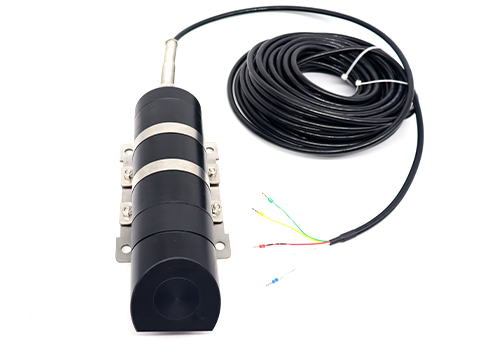
2. Working Principle of ADCP
ADCP uses the Doppler effect to measure water flow velocity. It is typically equipped with one or more ultrasonic transducers that can both transmit ultrasonic waves and receive the reflected echoes.
Ultrasonic Transmission:
The transducers of ADCP transmit ultrasonic waves into the water. These waves propagate through the water and encounter particles, bubbles, or other reflectors.
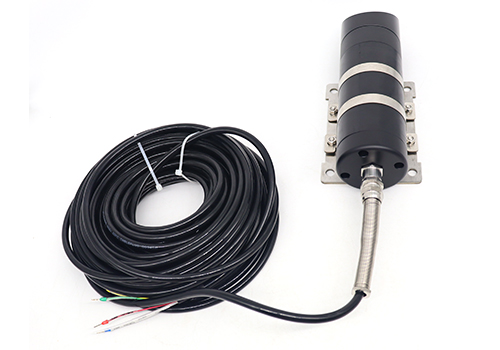
Ultrasonic Reflection and Reception:
The transmitted ultrasonic waves are reflected back upon encountering reflectors and are captured by the receiving transducers of ADCP.
Based on the time difference between transmission and reception, ADCP can calculate the distance between the reflector (i.e., particles or bubbles in the water) and the transducer, thereby determining the depth of different water layers.
Doppler Frequency Shift Measurement:
When ultrasonic waves interact with particles or bubbles in the water, if there is relative motion (i.e., water flow velocity) between them, the frequency of the reflected ultrasonic waves will change, which is the Doppler frequency shift.
ADCP can calculate the flow velocity of the corresponding water layer by measuring the difference between the transmitted frequency and the received frequency.
Layered Flow Velocity Measurement:
By repeating the above process at different time intervals and considering the transducer design (e.g., multi-beam or single-beam), ADCP can measure the flow velocity of different water layers.
These data can be used to generate a vertical profile of water flow velocity, providing important information about the structure and dynamics of the water flow.
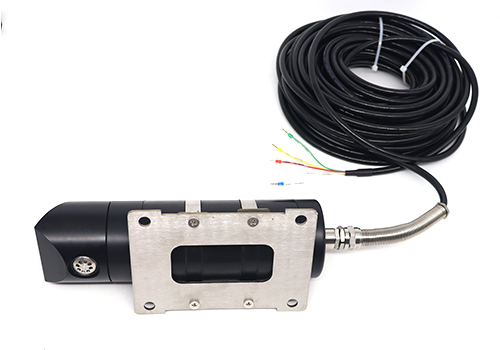
3. Summary
ADCP utilizes the Doppler effect to accurately measure the flow velocity of different water layers by measuring the propagation time, reflection, and frequency shift of ultrasonic waves in water. This technology has broad applications in fields such as hydrology, oceanography, and environmental science, providing researchers with valuable water flow velocity data to better understand the physical properties and dynamic processes of water bodies.