
Open Channel Flow Meter for 800×800 Trench Slurry Monitoring[Dayu Electronics]
Technical solution for 800×800mm trench slurry flow measurement — slurry flow monitoring system design based on open channel flow meter
I. Technical Background and Requirement Analysis
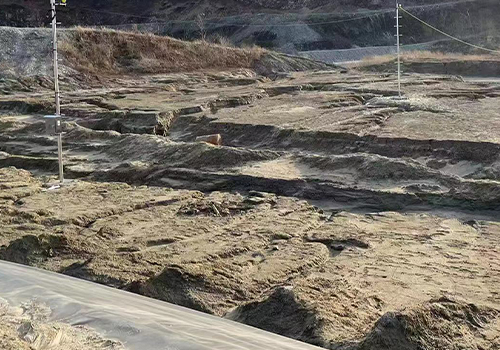
Slurry flow measurement is a critical process in mining, metallurgy, chemical and other industries, especially in slurry transportation and tailings treatment scenarios, requiring precise monitoring of instantaneous and cumulative slurry flow. For 800×800mm trench (cross-sectional area 0.64m²) with slurry depth ≤300mm, traditional contact flow meters are susceptible to wear and sediment buildup from slurry particles, leading to decreased measurement accuracy. As a non-contact measurement device, the open channel flow meter enables real-time slurry flow monitoring through ultrasonic, Doppler effect, or velocity-water level calculation methods, offering advantages such as easy installation, low maintenance cost, and strong anti-interference capability.
II. Open Channel Flow Meter Technical Principle and Selection Basis
1. Working Principle
- Ultrasonic open channel flow meter: Based on ultrasonic transit time method, it calculates the liquid level height by transmitting and receiving ultrasonic signals, combined with the trench geometric dimensions (width 800mm, depth 300mm) and the vertical plane velocity correction coefficient, to compute the flow rate through microprocessor calculations.
- Doppler open channel flow meter: Utilizes the Doppler effect of sound waves to measure the reflected signals from particles in the slurry, calculating the velocity distribution and, combined with the trench cross-sectional area, deriving the instantaneous flow rate.
- Velocity-water level calculation method: Measures the liquid level height (H) and flow velocity (V), combined with the trench geometric parameters (width B, side slope coefficient m), and calculates the flow rate using the formula Q=B×H×V×K (K is the correction coefficient).
2. Selection Basis
- Measurement range: Slurry flow velocity range 0.03m/s to 5.0m/s, flow range 0.019m³/s to 0.96m³/s (calculated based on full trench flow).
- Accuracy requirements: Liquid level measurement accuracy ≤0.5%, flow velocity measurement accuracy ≤±3‰, overall system error ≤±2.5%.
- Environmental adaptability: Protection rating IP68, operating temperature -20°C to +60°C, impact resistance to slurry particles ≥100N.
- Communication interface: Supports RS485, MODBUS protocol, optional GPRS wireless transmission module.
III. System Architecture and Installation Plan
1. System Architecture
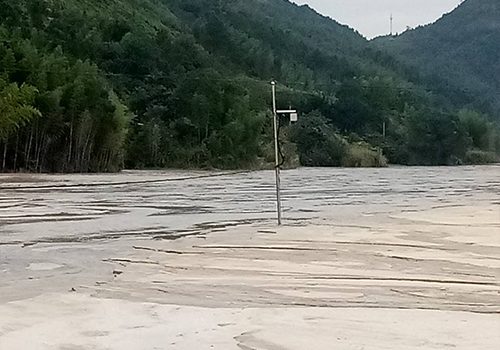
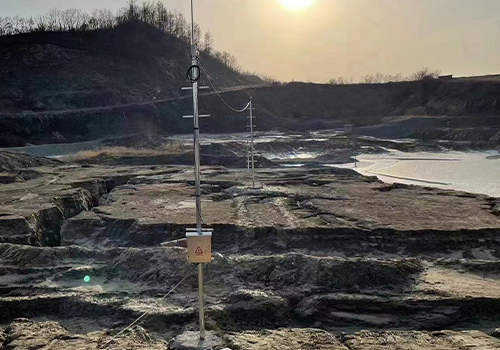
- Front-end sensor: Uses a split-type ultrasonic open channel flow meter, with the transducer installed on the trench side wall, 300mm from the trench bottom, with the emitting surface parallel to the liquid surface to avoid bubble interference.
- Data acquisition unit: RTU device with integrated 16-bit ADC, supporting 4-20mA/RS485 dual-mode output, sampling frequency ≥10Hz.
- Back-end analysis platform: GIS map-based visualization system, displaying flow rate, liquid level, and velocity data in real time, with historical data retrieval and anomaly alarm functions.
2. Installation Plan
- Installation location: Select a straight section of the trench, avoiding turbulent areas such as elbows and valves, ensuring straight pipe sections of 5 times the trench width both upstream and downstream.
- Fixing method: Use a clamp-type locking device to secure the sensor to the trench outer wall, avoiding direct contact with the slurry.
- Calibration and commissioning: Perform on-site calibration using the float method (surface velocity υ=L/t, correction coefficient K=0.84 to 0.90) or daily discharge estimation method (Qp=Qd×Ku/H), ensuring measurement error ≤±2%.
IV. Technical Advantages
1. Technical Advantages
- Non-contact measurement: Avoids sensor wear from slurry particles, service life ≥5 years.
- High accuracy and wide range: Liquid level resolution 1mm, flow velocity resolution 0.01m/s, adaptable to slurry concentration fluctuations (10% to 60%).
- Low power consumption: Total power consumption ≤150mW, supports solar power supply, suitable for remote mines.
V. Technical Verification and Standard Compliance
1. Laboratory Testing
- Sensitivity test: Under 0.1MPa pressure, can clearly identify small changes in slurry flow velocity of 0.03m/s.
- Durability test: After continuous operation for 5000 hours, liquid level measurement error ≤0.3%, flow velocity measurement error ≤0.5%.
2. Industry Standard Compliance
- Meets GB/T 28169-2011 "Open Channel Flow Meters" requirements, passes EMC electromagnetic compatibility certification (GB/T 17626 series standards).
- Complies with MT/T 1082-2008 "Flow Sensors for Coal Mines" requirements for explosion-proof and anti-corrosion of mining equipment.
VI. Conclusion and Outlook
The open channel flow meter, with its advantages of non-contact measurement, high accuracy, and wide range, provides a reliable technical solution for 800×800mm trench slurry flow monitoring. In the future, with the development of AI algorithms and multi-sensor fusion technology, open channel flow meters will achieve more efficient slurry flow pattern analysis and fault warning, driving the intelligent transformation of the mining industry.