
Transducer Maintenance Costs Cut by 800,000 Yuan Annually! Dayu's New Structure Reduces Failure Rate by 70%
As the "eyes and ears of underwater acoustic equipment," underwater acoustic transducers can transmit or receive sound waves and complete the conversion between the information and energy carried by the sound waves and electrical signals. They are widely used in marine equipment. Their research status and development are as follows:
Research Status
1. Technological Progress: After decades of development and research, underwater acoustic transducer technology has gradually entered a stage of systematic and holistic development. While strengthening basic research on underwater acoustic physics and signal processing methods, scholars from various countries have also focused on new mechanisms, new materials, new processes, and array technologies, proposing new structures to improve and enhance the comprehensive technical performance of underwater acoustic transducers.
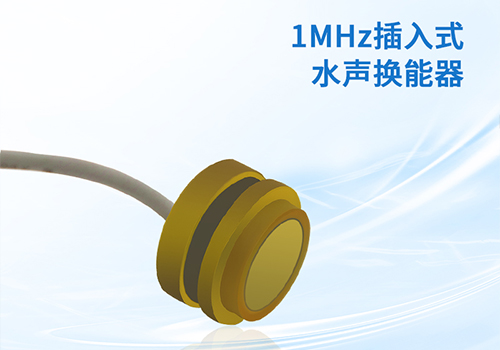
2. Material Innovation: Currently, commonly used materials for underwater acoustic transducers include lead zirconate titanate piezoelectric ceramics, rare-earth giant magnetostrictive materials, and relaxor ferroelectric single crystals. Among them, relaxor ferroelectric single crystals have ultra-high piezoelectric performance, making them more suitable for the development of high-efficiency, high-sensitivity transmitting and receiving transducers. Rare-earth giant magnetostrictive materials, due to their huge magnetostrictive coefficient, are widely used in the development of high-power, low-frequency sonar and transmitting underwater acoustic transducers.
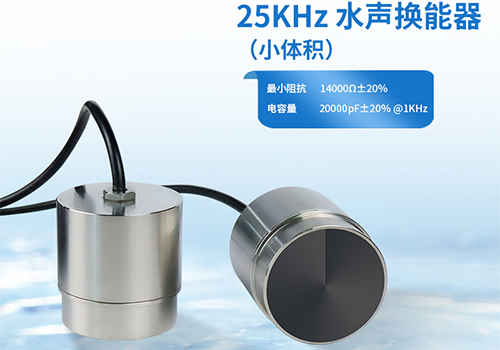
3. Structural Diversity: Common underwater acoustic transducers include Tonpilz transducers, split-ring transducers, flexural disk transducers, and piezoelectric ceramic bending disk transducers. With the accumulation of technology, China is now able to design and manufacture various types of transducers to meet engineering needs, with performance comparable to that of foreign counterparts.
Development Trends
1. Technological Innovation: With the increasing demand for underwater acoustic communication technology in military and civilian fields, technological innovation in underwater acoustic transducers will continue. In the future, underwater acoustic transducers will adopt more advanced materials, processes, and structures to improve performance and reduce costs.
2. Multifunctionality: To meet the needs of different fields, underwater acoustic transducers will develop towards multifunctionality. For example, integrating sensors, signal processing circuits, etc., to form intelligent underwater acoustic transducer systems.

3. Wide Application: With the development and utilization of marine resources, underwater acoustic transducers will play an increasingly important role in marine exploration, marine military, marine engineering, and other fields. At the same time, they will also find broader applications in underwater communication, underwater navigation, and more.
In summary, underwater acoustic transducers, as an important component of underwater acoustic technology, currently exhibit characteristics of technological progress, material innovation, and structural diversity. In the future, with continuous technological innovation and expansion of application fields, underwater acoustic transducers will embrace even broader development prospects.