
Dayu Electronics: How to Choose an Ultrasonic Level Meter in 80°C High-Temperature Environments with Water Vapor
In tank measurement applications within the chemical, pharmaceutical, or food industries, the liquid temperature inside the tank can reach up to 80°C and is often accompanied by large amounts of water vapor. Many users worry about whether our standard ultrasonic level meter can still be used. Today, Dayu Electronics provides a clear answer for this scenario.
First, it is important to understand that as long as the liquid surface temperature does not exceed 80°C, our ultrasonic level meter itself can operate normally.
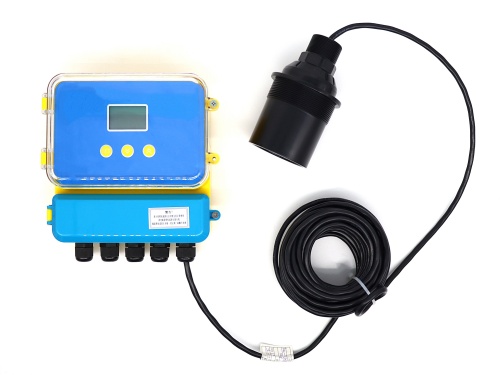
The issue lies in the fact that liquid at 80°C inevitably produces substantial water vapor, which condenses into fine water droplets when it encounters the relatively cooler probe surface. These droplets adhering to the probe's transmitting surface significantly attenuate the ultrasonic signal, leading to unstable echoes or even signal loss.
To address this issue, the probe material must be made of polytetrafluoroethylene (PTFE). Why? Because the PTFE surface exhibits excellent hydrophobicity, making it difficult for water droplets to adhere. Even if minor condensation occurs, it can quickly slide off or evaporate. Compared to standard ABS material, PTFE maximizes the likelihood of keeping the probe surface dry, ensuring effective transmission and reception of ultrasonic waves.
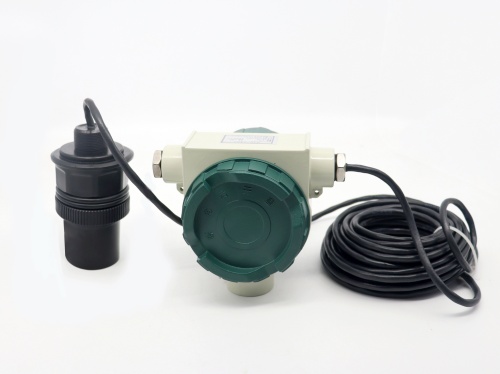
Second, you must choose a four-wire ultrasonic level meter rather than a two-wire one.
This distinction is crucial: within the same measurement range, a four-wire system separates power supply and signal transmission, allowing for higher transmission power and stronger ultrasonic energy, which naturally enhances its ability to penetrate water vapor. A two-wire system, limited by its power supply method, has weaker transmission energy and is prone to signal attenuation and measurement fluctuations in steam environments.
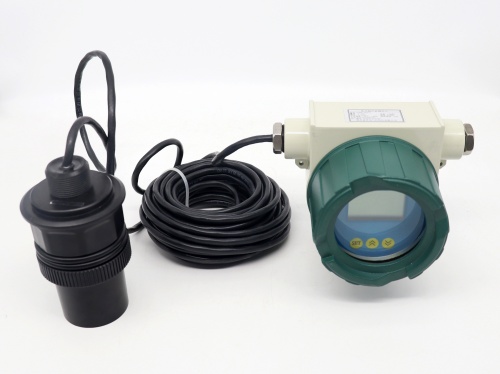
If the site conditions are within 80°C and involve water vapor, as long as you follow the combination of "PTFE probe + four-wire system," measurement is completely feasible. This is not merely based on experience but is a conclusion validated through numerous field applications.
Finally, a reminder: during installation, try to position the probe away from the direct impact direction of steam, and appropriately shorten the distance between the probe and the liquid surface to further enhance stability. If your operating conditions are more complex, such as higher temperatures or extremely high steam concentrations, we recommend contacting our technical team directly, and we will provide customized advice based on specific parameters.