
Dayu Electronics Ultrasonic Development Board Frequency Compatibility: Flexible Support from 7 kHz to 10 MHz
"Can this development board drive the transducer I have on hand?" When engineers working on ultrasonic applications are selecting components, the compatibility of the development board is the core concern. Especially when faced with probes of different frequencies, the biggest worry is that the board won't be compatible and will be useless after purchase.
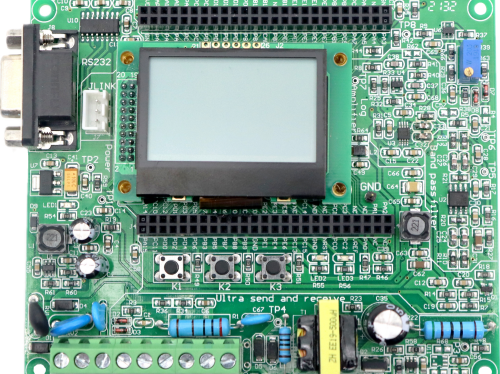
Regarding the adaptation range of Dayu Electronics' ultrasonic development board, the conclusion is clear: by modifying the corresponding hardware and software configurations, it can support ultrasonic transducers within the frequency range of 7 kHz to 10 MHz.
This span covers multiple fields, from low-frequency liquid flow measurement and geological exploration to high-frequency precision cleaning and medical imaging. The reason we can achieve such a wide frequency coverage is that we reserved sufficient flexibility at the design stage. However, there is a very important prerequisite here—"modifying hardware and software."
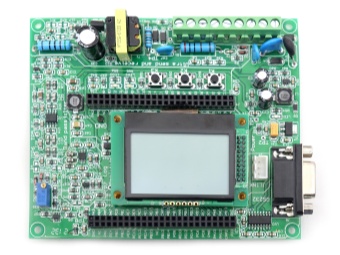
This development board was designed with versatility in mind from the outset. The clock frequency of the main control chip is adjustable, and combined with the gain and filtering configurations of the external analog front-end circuit, it can provide matching excitation signals and receive amplification for transducers of different frequencies. In simple terms, multiple matching network positions are reserved on the hardware, and by modifying parameters in the software, the transmission frequency and receiving bandwidth can be adjusted to achieve coverage from tens of kilohertz to megahertz levels.
This is why it cannot be used directly out of the box—transducers of different frequencies have different impedance characteristics, driving voltages, and excitation pulse widths. It is like driving a car: the engine parameters of a small car and a large truck are different, so the transmission and throttle calibration naturally need to be adjusted accordingly. Low-frequency transducers typically require greater driving power and different matching circuits, while high-frequency transducers demand extremely high signal purity and sampling rates. If you force-drive them without any adjustments, you may end up with weak signals and inaccurate measurements at best, or at worst, burn out the power amplifier chip.
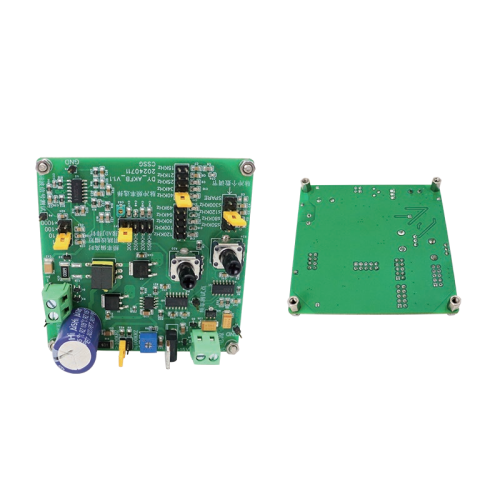
Therefore, if you have purchased our development board and intend to use it with a transducer that is not at the default factory frequency, please do not power it on directly. The correct approach is to first confirm the center frequency of the transducer, and then contact our technical team. Based on the specific frequency point, we will guide you on how to adjust the jumpers on the board, replace matching components, and flash the corresponding low-level driver program for you.
Dayu Electronics is always committed to providing customers with "easy-to-use and flexible" R&D tools and one-stop ultrasonic solutions. If you are planning a new ultrasonic project or need a reliable testing platform for transducers of specific frequencies, please feel free to contact our technical team.