
Dayu Electronics: Why the 64KHz IP68 Ultrasonic Level Gauge Is Recommended for Manhole Liquid Level Measurement
In municipal pipeline network operations, manhole liquid level monitoring is a critical part of flood control and drainage. Recently, many engineers have asked: for a narrow manhole with a depth of 6 meters and an opening diameter of only 600–700 mm, how should the frequency of an ultrasonic level gauge be selected? Dayu Electronics' clear recommendation is to prioritize an IP68 ultrasonic level gauge with a 64 kHz frequency.
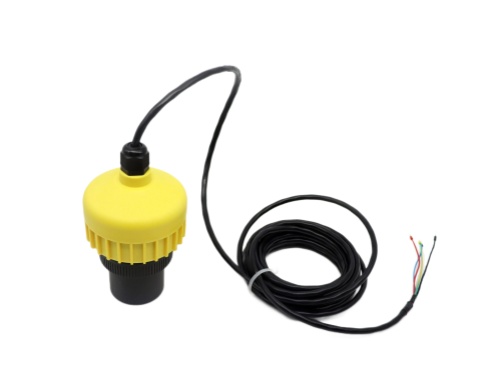
This recommendation is not arbitrary—it is based on the physical propagation characteristics of ultrasound in confined, narrow spaces.
In a semi-enclosed cylindrical structure like a manhole, when ultrasonic waves propagate within a circular well wall of limited diameter, the sound waves undergo multiple reflections and superposition between the walls, creating an acoustic phenomenon similar to a "bundle tube effect." This significantly amplifies the intensity of the echo signal received by the level gauge—typically 1.5 to 2 times that in an open environment.
This means that a 64 kHz level gauge originally rated for a 5-meter range can easily cover liquid levels of 6 meters or even deeper within a manhole, fully meeting on-site requirements.
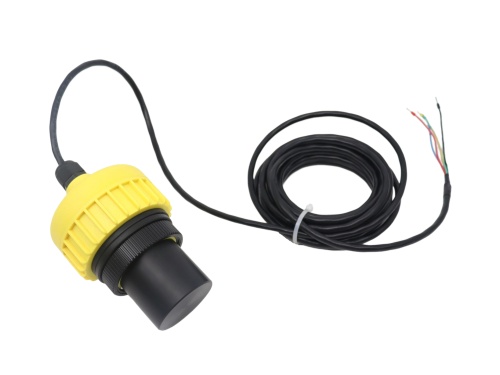
In contrast, if a low-frequency probe (e.g., 40 kHz) is chosen to pursue longer measurement distances, although the direct propagation distance is longer, the excessively wide beam angle in a narrow shaft tends to generate excessive near-field interference, enlarging the blind zone near the bottom of the probe and even causing false readings due to sound waves reflecting off the shaft walls.
Furthermore, the 64 kHz beam angle is relatively narrow, allowing the energy to be more concentrated. In a well opening with a diameter of 600–700 mm, it can better avoid the shaft walls, align vertically with the water surface, and reduce measurement errors caused by wall reflections. Combined with the high protection rating of IP68, the device can operate stably even when submerged in water for extended periods.
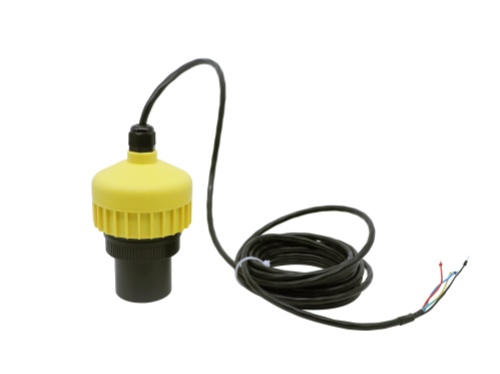
In summary, for standard 6-meter-deep manhole applications, the 64 kHz frequency is the "optimal solution" that balances signal gain, anti-interference capability, and measurement accuracy. Of course, to ensure long-term data stability, the probe should be installed as close to the center of the well opening as possible, avoiding direct contact with the shaft walls or internal ladders.
If you are currently selecting a model or have questions about your existing manhole monitoring solution, please feel free to contact the Dayu Electronics technical team. We will provide you with one-on-one working condition analysis and product matching services.