
Dayu Electronics: With 500Vpp Transmission for Anemometer Transducer, How Is Power Calculated?
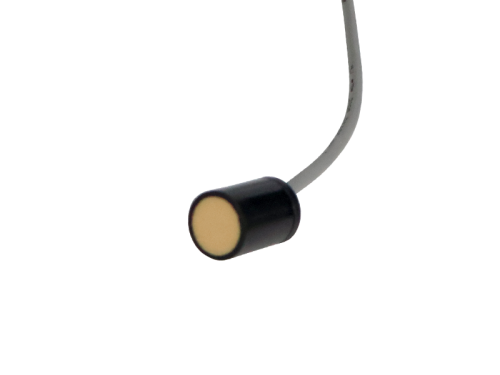
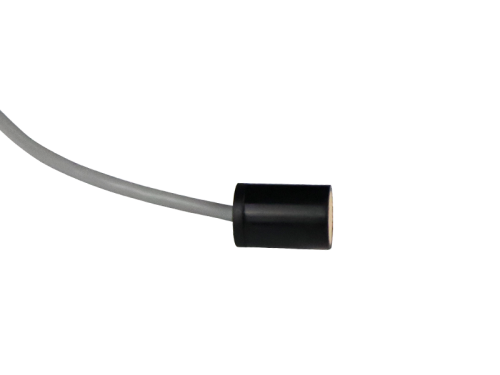
In underground monitoring scenarios such as coal mine roadways and tunnel construction, accurate wind speed data is directly related to production safety. As the core sensing component of anemometers, the DYA-40-12Jroadway anemometer transducer has always been a key focus for customer inquiries. Recently, many engineers have asked: "If this transducer is driven with 500Vpp, what is the actual power?" Today, we will clarify this core issue.
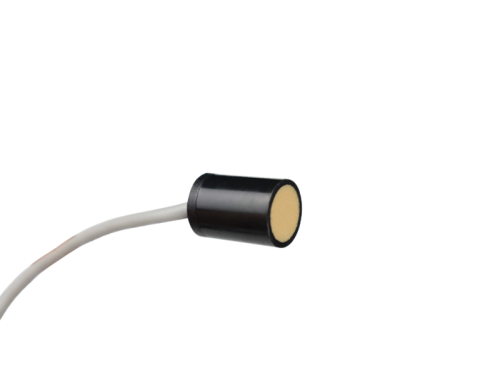
First, it is important to establish a key premise: The DYA-40-12J is a voltage-driven device that uses a pulsed voltage drive mode. This means its power is not a continuous steady-state value but is concentrated as peak power at the moment of transmission—this is also a typical characteristic of ultrasonic transducers.
How is it calculated? The formula is simple: Peak power = Transmission voltage × Transmission voltage ÷ Transducer impedance. Here, the transmission voltage refers to the peak-to-peak voltage (Vpp) during pulsed transmission, and the impedance is the transducer's internal resistance (in ohms).
Let's use an example for clarity. Suppose the transmission voltage is 100Vpp and the transducer internal resistance is 50Ω. Then the instantaneous peak power is 100×100÷50=200W. This is the electrical power at the moment of transmission, not continuous power.
Returning to the DYA-40-12J, its working voltage peak is less than 1500Vpp. If you drive it with 500Vpp, and you know the transducer's impedance at the 40KHz frequency point, you can plug these values into the formula to calculate the corresponding instantaneous peak power.
A special note here: Instantaneous peak power and average power are two different things. Because the transducer operates in a pulsed mode—not continuously powered—the actual average power is much lower. Average power equals instantaneous peak power multiplied by the duty cycle—the duty cycle is the ratio of pulse-on time to the total period. In the actual working state of an anemometer, the pulse duration is extremely short and the duty cycle is very small, so the average power consumption is actually quite low.
Therefore, when the transducer is driven with 500Vpp, the instantaneous peak power is calculated as voltage squared divided by impedance. This power is the electrical power at the pulse instant and does not represent continuous power consumption. If you have further questions about the specific value, please feel free to contact Dayu Electronics for discussion.