
500-Meter Depth Challenge: Bottlenecks in Ultrasonic Underwater Communication Sensor Applications [Dayu Electronics]
Ultrasonic Underwater Communication Sensor
(Case Study)
1. Project Background
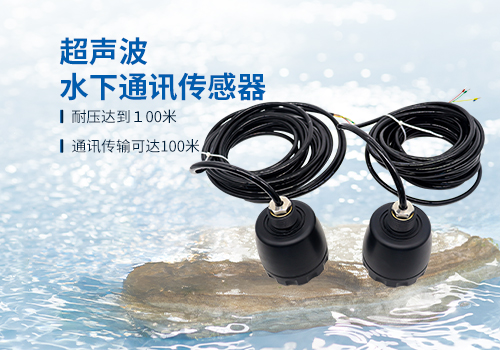
Mr. Wu is the project manager for an underwater communication project at Dongying Fulide Petroleum Technology Development Co., Ltd. The project primarily requires testing in a water-oil mixture environment at 45 degrees Celsius, with a measurement depth of up to 500 meters.
2. Challenges and Pain Points
1. Obstruction of ultrasonic propagation by non-homogeneous media
Severe signal attenuation: When ultrasonic waves traverse the oil-water interface, part of the energy is reflected, and part is scattered (oil droplets act like "small mirrors" dispersing the sound waves), and the effective signal strength reaching the receiving end may drop to below 10% of the initial value.
2. High-pressure environment at 500 meters depth
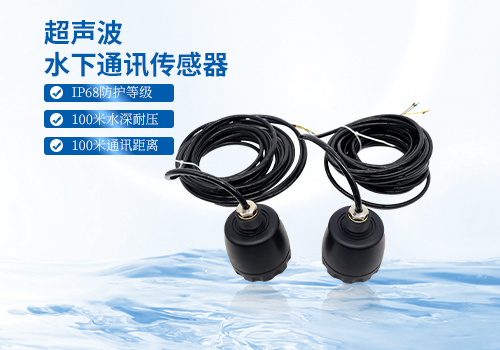
Insufficient housing pressure resistance: If ordinary metals (e.g., aluminum alloy) are used for the housing, deformation or even rupture may occur due to high pressure, leading to direct equipment failure;
Seal failure risk: High pressure intensifies gap pressure between components. If the sealing structure is poorly designed (e.g., using a single O-ring), "pressure leakage" may occur, where external media seeps into the equipment through micro-gaps.
3. Solution
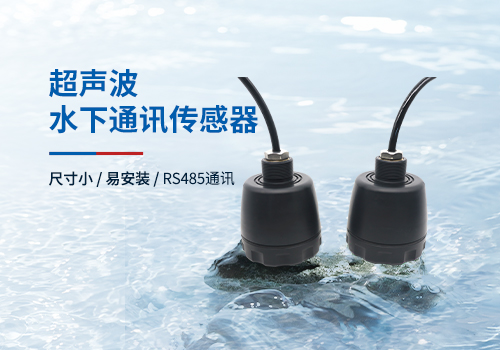
It is necessary to adapt acoustic wave technology for non-homogeneous media, ensure equipment stability in medium-temperature environments, implement structural and pressure-resistant design for high-pressure environments, and enhance communication reliability and endurance.
However, since our current ultrasonic underwater communication sensors cannot support testing at 500 meters, underwater communication testing at 500 meters is temporarily not achievable.