
Zero Error at 43°C: Field Test Record of Dayu Electronics Radar Level Gauge Liquid Surface Monitoring
Many times, a device's 'quality' isn't found in the spec sheet, but in that one glance on-site—you stare at the liquid surface, and it gives you an equally steadfast number; you push the environment to be harsher, and it remains unflustered.
This verification of the Dayu Electronics radar level gauge was precisely such a 'putting it in no uncertain terms' scenario: the drilling fluid temperature reached up to 43°C, and the customer's feedback after testing was—virtually no error between the measured value and the level gauge's detection value. One simple sentence, but behind it lies a true plus for reliability.
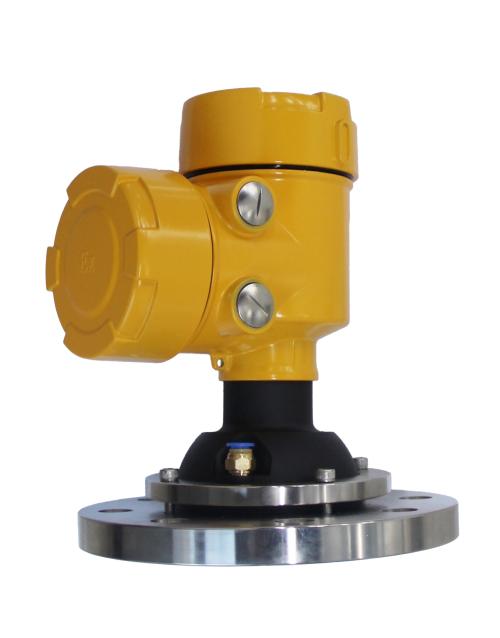
A full-scale test was also conducted during the verification process, and a phenomenon worthy of careful recording emerged: the sensor response was relatively slow.
The specific performance was:
Liquid surface height at 1.50 m;
After obstruction, the sensor measured 0.30 m;
It took approximately 3 minutes.
This data does not need to be 'glossed over'. On the contrary, it makes this verification more like the real world: accuracy is one thing, but response speed can exhibit a different rhythm under certain test actions. Writing it down clearly is more meaningful than just saying 'excellent performance'—because next time you change the operating conditions, change the installation position, or change the tank structure, you'll have more confidence.
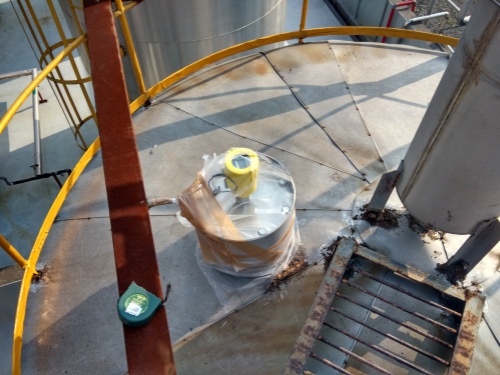
Standby tank scenario: small fluctuations, a greater test of 'stable tracking'
As of June 9, 2025, this radar level gauge was installed on a tank in standby status. This premise is crucial: the liquid surface fluctuation range in a standby tank is relatively small.
It was precisely under these operating conditions that we observed—the radar level gauge's detection results maintained a very high degree of agreement with the actual measured liquid surface height, with extremely small fluctuation amplitude.
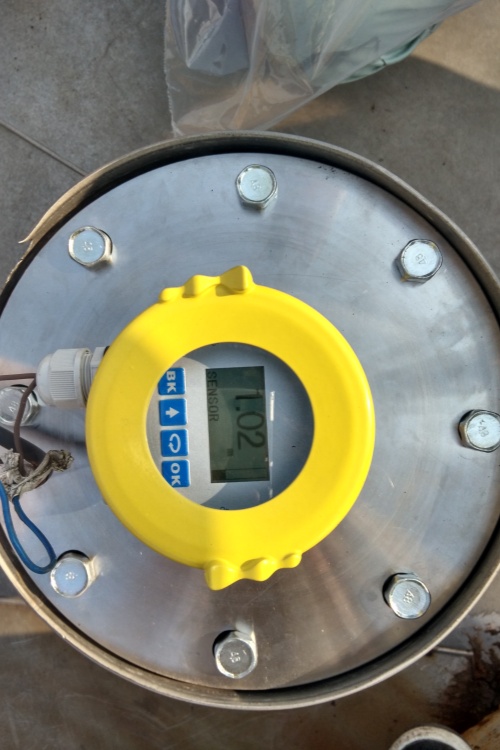
Some devices appear very sensitive during 'large ups and downs', but in 'small fluctuations', they tend to drift, wobble, and give readings that don't track accurately. What this record shows, however, is high consistency in a small-fluctuation environment: however the liquid surface moves, it follows, with a very high degree of agreement.
Under the 43°C drilling fluid temperature condition, the customer-side verified measurement accuracy; during the full-scale test action, the characteristic of slower response was recorded; and in the long-term standby tank environment with minimal fluctuations, a high degree of agreement between measurement and actual liquid surface height was further observed.
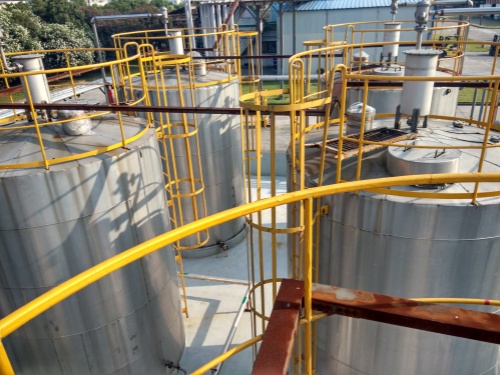
Reliability has never been just a slogan, but the result of 'you measured it, you recorded it, you compared it.'
If you are also using similar operating conditions for level monitoring, what would you prioritize verifying first—accuracy, response, or long-term tracking stability? Feel free to leave your on-site conditions in the comments, and let's work together to clarify the measurement matters.