
How to Select an Underwater Acoustic Communication Transducer? 40m Horizontal Omnidirectional, Recommended Model DYW-35-G
In underwater communication, positioning, or data acquisition projects, signals often need to be transmitted between underwater devices. In such cases, the underwater acoustic transducer serves as the system's "mouth" and "ears"—it converts electrical signals into sound waves that propagate through water, and then converts received sound waves back into electrical signals.
Recently, a customer was looking for an underwater acoustic communication transducer with a communication distance of up to 40 meters and no blind spots in the horizontal direction. The customer's exact words were: "360° horizontal omnidirectionality." This requirement is very clear and fits the typical scenario of underwater acoustic communication—where underwater nodes do not know each other's direction, making omnidirectional coverage a must.
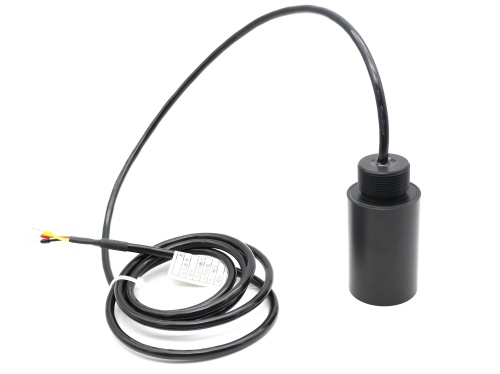
For this typical short-range underwater acoustic communication need, Dayu Electronics can provide a clear and professional answer: for communication distances within 40 meters, we strongly recommend the model DYW-35-G horizontal omnidirectional cylindrical underwater acoustic transducer. This transducer is specifically designed for short-range, omnidirectional underwater communication scenarios and can perfectly meet your project requirements.
Why choose a horizontal omnidirectional cylindrical underwater acoustic transducer?
First, consider the communication distance. The customer requires 40 meters, but the effective propagation distance of DYW-35-G in clean water far exceeds this value; short-range underwater acoustic communication within 50 meters is well within its comfort zone. Choosing it is like picking a car that can run 160 km/h to drive on an 80 km/h highway—ample margin and stable performance.
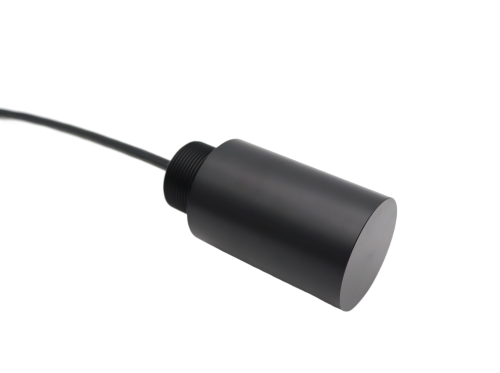
Next, consider directionality. This transducer features a cylindrical structure that provides 360° coverage without dead spots in the horizontal direction. This means that regardless of the direction of the communication target, the transducer can transmit and receive signals without needing to be precisely aligned—ideal for applications where the positions of underwater nodes are not fixed.
One more advantage: its center frequency is 35 kHz, with a bandwidth of 35 ± 7.5 kHz. The wide bandwidth is very favorable for communication—it allows for a larger information-carrying capacity and stronger anti-interference capability, ensuring higher quality in the transmission of sound or data.
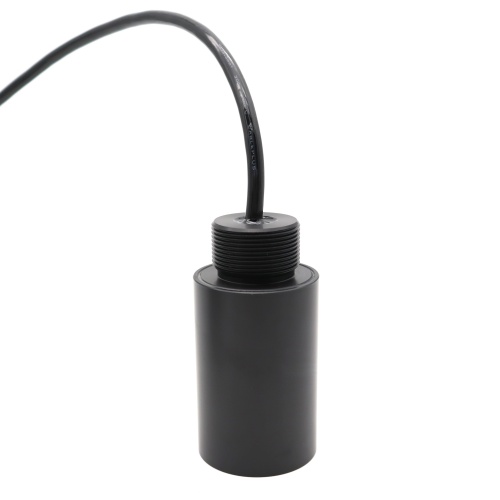
DYW-35-G has already been successfully applied in ultrasonic flowmeters and underwater rangefinders, and it is equally suitable for underwater acoustic communication scenarios within 40 meters, such as:
? Short-distance command interaction between underwater equipment and the surface
? Data communication between nodes in an underwater sensor network
? Short-range acoustic communication between divers and the mother ship
Its operating temperature range is -40°C to +80°C, with an IP68 protection rating and a POM housing, allowing it to work underwater for extended periods.
If you are looking for a horizontal omnidirectional transducer for underwater acoustic communication within 40 meters, the DYW-35-G is a reliable choice. Feel free to contact Dayu Electronics technical support at any time, and we can provide more detailed recommendations based on your specific application scenario.